Packed Column Liquid Distributor Problems: Causes and Fixes

Bulk Density vs Void Fraction in Ceramic Tower Packing
November 5, 2026
Molecular Sieve Breakthrough: Causes, Signs and Fixes
November 12, 2026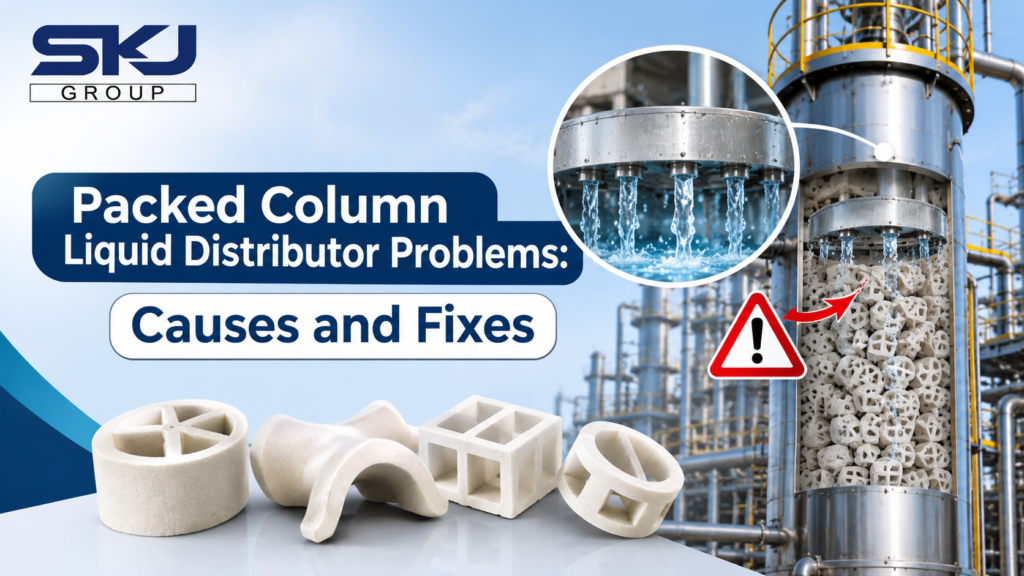
Packed column liquid distributor problems usually come from four causes: plugged orifices, an unlevel distributor, flow outside the design range, and damaged parts. They show up as poor separation, uneven pressure drop and early flooding. You can confirm them with a gamma scan while running or a water test at shutdown, then fix them by cleaning, levelling, repairing or replacing the distributor and the bed top.
In short:
- Main causes: plugging, poor levelling, wrong flow rate, corrosion damage and a messy bed top.
- Warning signs: product quality swings, pressure drop changes and uneven temperatures.
- Best check: a water test and a visual inspection at shutdown.
- First fixes: clean, level, repair and add a filter upstream.
Why the Liquid Distributor Matters
The liquid distributor sits above the packed bed and spreads liquid across the full cross-section of the column. The packing can only do its job if liquid reaches every part of it. When the first spread is poor, the error carries down the bed, and no packing can correct it.
A good distributor does four things:
- Sends the same flow through every hole or outlet
- Covers the whole bed, including the edges
- Works across your normal flow range, from low to high
- Leaves clear paths for gas to rise
Warning Signs of a Distributor Problem
Watch for these signs before they turn into a shutdown:
- Product purity drops or swings without a change in feed
- Pressure drop is higher or less steady than design
- The column floods at a lower rate than before
- Temperatures differ across the bed, with hot or cold spots
- You need more reflux or solvent to get the same result
- At shutdown, you see dry patches or liquid tracks along the wall
Common Causes
| Cause | What happens | Typical clue |
| Plugged orifices (scale, rust, solids, packing fragments) | Some holes stop flowing while others overflow | Higher distributor inlet pressure, dry zones |
| Distributor out of level | Liquid pools on the low side | Wet and dry areas side by side |
| Flow outside the design range | Too low: liquid does not spread. Too high: troughs overflow | Trouble appears when rates change |
| Damaged or corroded parts | Leaks, bypassing, wrong hole size | Visible at shutdown |
| Fouled or crushed packing at the top | Uneven bed top blocks or redirects liquid | Broken pieces and dust under the distributor |
| Wall flow in tall beds | Liquid drifts to the wall | Poor efficiency even with a clean distributor |
How to Inspect a Liquid Distributor
While the Column Is Running
You can learn a lot without opening the column:
- Track product quality, pressure drop and distributor inlet pressure over weeks, not days.
- Compare temperature readings across the bed.
- Use a gamma scan if you suspect dry or flooded zones.
During a Shutdown
Follow your plant’s safety rules, including work permits and confined-space entry. Then work through these steps:
- Photograph first. Take pictures before you clean anything, and compare with the drawings.
- Check levelness. Measure across the distributor with a level or by filling it with water.
- Run a water test. Flow water through and check that each outlet delivers evenly.
- Inspect the parts. Look at orifices, troughs, pipes and gaskets for plugging, corrosion and damage.
- Check the bed top. Look for fines, broken pieces and an uneven surface.
- Check the support. Make sure the support layer and any hold-down are intact.
Corrective Actions That Work
Match the fix to the cause:
- Plugged orifices: clean and flush them, then add a strainer or filter upstream.
- Out of level: re-level the distributor and check the support ring and fasteners.
- Damaged parts: repair or replace them, and check hole size and count against the drawings.
- Flow outside the range: adjust the operating rate or use liquid recycle. If the new rate is permanent, ask the designer to re-rate the distributor.
- Messy bed top: remove broken pieces, top up with sound packing and level the surface.
- Wall flow: ask your designer about a redistributor or wall wipers for tall beds.
When you reorder support layers or packing, ask your ceramic grid block supplier for the exact dimensions, material grade and chemical resistance for your service, so replacements match the original.
Seeing signs of poor liquid distribution in your column?
Packing and Support Can Help or Hurt Distribution
A Stable Support Layer
A weak or blocked support layer can cause problems from below. It can crush packing, slow drainage and push liquid to one side. As a ceramic grid block manufacturer, SKJ Group makes grid blocks for gas-liquid distribution and chemical resistance in industrial towers. To see where they fit, read how ceramic grid block packing improves liquid distribution.
Packing With Built-In Flow Paths
Some packing helps spread liquid inside the bed. Partitioned rings are designed to break up liquid paths, which can support even wetting. They cannot fix a poor distributor, though. If you buy from a ceramic ring partitioned manufacturer, confirm the ring size, wall thickness and chemical grade before you order.
FAQs About Liquid Distributor Problems
1. What are the most common liquid distributor problems in a packed column?
The most common problems are plugged orifices, an unlevel distributor, flow outside the design range, corrosion or damage, and an uneven bed top. Each one sends liquid unevenly into the packing and lowers separation efficiency.
2. How do I know if my liquid distributor is plugged?
Signs include higher pressure at the distributor inlet, dry zones in the bed and falling product quality. A water test at shutdown shows which outlets are blocked, and a gamma scan can show dry areas while the column runs.
3. Can a bad liquid distributor cause flooding?
Yes. If too much liquid reaches one area, that part of the bed can flood while the rest runs normally. Check the distributor before you change the packing or the operating rates.
4. How often should a liquid distributor be inspected?
Inspect it at every planned shutdown, and sooner if efficiency or pressure drop changes. Services with solids or scaling may need more frequent checks. [CONFIRM: any SKJ-recommended interval]
5. What is turndown, and why does it matter?
Turndown is the range of liquid flow a distributor can handle while still spreading liquid evenly. Below the range, liquid may not spread. Above it, troughs can overflow. Check your operating range against the distributor design.
6. Does the packing type change distributor needs?
Yes. Structured packing generally needs more drip points per unit of area than random packing, so the distributor must match the packing. Your designer or packing supplier can confirm this for your column.
Conclusion
Most distributor problems are found by tracking trends, confirmed by a water test or scan, and fixed with simple steps: clean, level, repair and keep the bed top sound. Do this before you blame the packing or redesign the column.
SKJ Group works with plant teams that need dependable ceramic packing and support layers, and as a ceramic grid block exporter we also ship to overseas projects. Share your column size, service and fluid, and we will suggest suitable support and packing.