What Is the Purpose of Ceramic Structured Honeycomb in India?

What Are PP Saddles Used For?
April 7, 2026
What Are the 5 Benefits of Ceramic Ring Material in India?
April 9, 2026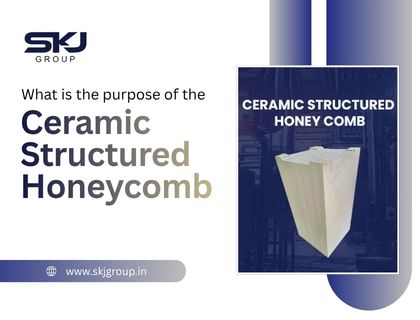
Ceramic Structured Honeycomb is one of the most versatile materials used across industrial sectors today. In India alone, the industrial ceramics market is valued in the billions, growing steadily as manufacturing, power, and automotive sectors expand. This honeycomb ceramic material is engineered with a precise grid of parallel channels that allow heat, air, and gases to pass through with minimal resistance.
The unique porous ceramic structure delivers performance that metals and plastics simply cannot match in extreme environments. From factories in Pune to refineries in Gujarat, Ceramic Structured Honeycomb in India is becoming a backbone material in heat management and emission control.
How Ceramic Honeycomb Structure Works: The Science Behind the Design
The geometry of a honeycomb structure in ceramics is not random. Each channel is designed to maximize surface area while keeping the overall weight low.
Key structural properties include:
- High surface area-to-volume ratio that enables faster chemical reactions and efficient heat transfer
- Thin cell walls that reduce pressure drop across the structure, improving air flow optimization
- Thermal shock resistance that prevents cracking when temperatures change rapidly
- Low thermal mass that allows systems to reach operating temperature faster
- Chemical inertness that keeps the material stable in acidic, alkaline, and high-temperature environments
This combination of features makes the industrial ceramic honeycomb suitable for environments where no other material survives reliably.
Primary Purpose: Catalyst Support in Emission Control Systems
One of the most well-known uses of Ceramic Structured Honeycomb is as a catalyst support honeycomb in automotive and industrial emission control.
In a catalytic converter, the honeycomb acts as a substrate on which precious metal catalysts such as platinum, palladium, or rhodium are coated. When exhaust gases pass through the channels, the catalyst triggers chemical reactions that convert harmful pollutants into harmless compounds.
This is why every modern vehicle in India fitted with BS6-compliant engines uses a ceramic honeycomb structure inside its exhaust system. The efficiency of this conversion depends on the uniformity of the channel geometry, the surface area available, and the thermal stability of the ceramic base.
Thermal Insulation and Heat Management Applications
The heat resistant ceramic blocks that form a structured honeycomb are widely used in regenerative heat exchangers, industrial kilns, and furnaces.
In a regenerative thermal oxidizer (RTO), hot exhaust air passes through a ceramic honeycomb bed, transferring its heat to the structure. When fresh cool air then passes through, it absorbs that stored heat, reducing the energy needed to reach operating temperature.
Benefits in thermal systems include:
- Reduction in fuel consumption due to improved heat recovery
- Longer equipment lifespan because the ceramic tolerates repeated thermal cycling
- Lower operational costs for industries like glass, ceramics, steel, and chemicals
- Consistent performance at temperatures exceeding 1200 degrees Celsius
- Compatibility with corrosive gas environments where metal exchangers fail
Air Flow Optimization and Industrial Filtration
Beyond heat and catalysis, Ceramic Structured Honeycomb in India is also used as an air flow optimization material in filtration and separation systems.
The uniform channel structure allows precise control over how gases or liquids move through the material. In industrial filtration, this means particulate matter, dust, and contaminants are captured or filtered at a consistent rate without causing blockages or pressure spikes.
Industries that depend on this application include:
- Cement plants filtering kiln exhaust gases
- Power stations managing flue gas desulfurization
- Chemical plants handling corrosive vapors
- Food processing units requiring clean air systems
- Electronics manufacturing requiring contamination-free environments
Comparison Table: Ceramic Structured Honeycomb vs Other Materials
| Property | Ceramic Honeycomb | Metal Foam | Activated Carbon |
| Max Operating Temperature | Above 1200°C | Up to 800°C | Below 200°C |
| Chemical Resistance | Excellent | Moderate | Limited |
| Pressure Drop | Very Low | Low | Moderate |
| Thermal Shock Resistance | High | Low | Low |
| Surface Area | Very High | Moderate | Very High |
| Lifespan in Industrial Use | Long | Medium | Short |
| Catalyst Coating Compatibility | Excellent | Limited | Poor |
This comparison confirms why Ceramic Structured Honeycomb manufacturers across India have seen growing demand from industries looking for a durable, long-lasting solution.
Role of Ceramic Structured Honeycomb Manufacturers and Exporters in India
India has emerged as a significant production and export hub for Ceramic Structured Honeycomb. Ceramic Structured Honeycomb exporters in India serve markets in Southeast Asia, the Middle East, Europe, and Africa.
The manufacturing process involves precise extrusion of ceramic compounds, followed by controlled drying and sintering at high temperatures. The quality of the finished product depends on raw material purity, extrusion accuracy, and thermal processing consistency.
Reputable Ceramic Structured Honeycomb manufacturers follow standards aligned with ISO 9001 and industry-specific requirements to ensure that every batch meets performance specifications for catalytic, thermal, and filtration applications.
Benefits of Ceramic Structured Honeycomb in Thermal Systems
The benefits of ceramic structured honeycomb in thermal systems are well documented across global industries.
In regenerative and recuperative systems, this material plays a direct role in energy savings. A well-designed ceramic honeycomb heat exchanger can recover a significant portion of waste heat that would otherwise be lost through exhaust stacks.
For Indian industries facing high energy costs and regulatory pressure to reduce emissions, investing in high-quality thermal insulation ceramic structures is both an operational and a compliance decision.
Case Study
Background: A mid-sized cement manufacturing plant in Rajasthan was struggling with high fuel consumption in its rotary kiln system and failing to meet pollution control board emission standards for particulate matter and nitrogen oxides.
Challenge: The plant needed a solution that could handle temperatures above 900 degrees Celsius, withstand repeated thermal cycling, and reduce both energy costs and emissions simultaneously.
Solution Applied: The plant replaced its aging metal heat exchanger media with Ceramic Structured Honeycomb blocks supplied by a leading Indian manufacturer. The ceramic honeycomb was installed in the regenerative section of the kiln’s heat recovery system.
Outcome: Within months of installation, the plant reported improved heat recovery efficiency in its kiln system, a reduction in fuel usage, and emission readings that fell within CPCB limits. The ceramic media showed no signs of thermal cracking or degradation after continued use, confirming the material’s long-term suitability for this application.
This case reflects a growing pattern seen across Indian industries where Ceramic Structured Honeycomb in India is being adopted as a practical solution to both energy and compliance challenges.
FAQ’s About Ceramic Structured Honeycomb in India
Q1. What is the purpose of ceramic structured honeycomb in industry?
It supports catalysts, recovers heat, and filters gases in high-temperature industrial systems efficiently.
Q2. How does ceramic honeycomb improve heat resistance in applications?
Its low thermal mass and shock resistance allow it to perform reliably through repeated temperature cycles.
Q3. What are the uses of ceramic honeycomb structure in catalytic converters?
It acts as a substrate holding catalyst metals that convert harmful exhaust pollutants into safe compounds.
Q4. What are the benefits of ceramic structured honeycomb in thermal systems?
It recovers waste heat, lowers fuel consumption, and extends equipment life in industrial heat exchangers.
Q5. Why is ceramic honeycomb used in industrial filtration systems?
Its uniform channel structure removes particulates and contaminants from gases without causing high pressure drops.
Q6. What industries use ceramic structured honeycomb in India?
Cement, automotive, power generation, glass, chemical, and electronics manufacturing industries use it widely.
Q7. How is ceramic structured honeycomb manufactured?
It is made by extruding ceramic compounds, then drying and sintering them at controlled high temperatures.
Q8. What makes ceramic honeycomb better than metal heat exchange media?
Ceramic withstands higher temperatures, resists chemical corrosion, and lasts longer than metal alternatives.
Conclusion
Ceramic Structured Honeycomb has proven itself as a critical material across industrial applications in India and globally. Its ability to handle extreme heat, support catalytic reactions, and optimize air flow makes it a practical and long-term investment for any serious industrial operation. As emission norms tighten and energy costs rise, the demand for reliable Ceramic Structured Honeycomb in India will only grow stronger. Businesses that partner with experienced Ceramic Structured Honeycomb manufacturers and suppliers gain a clear advantage in performance, compliance, and cost efficiency. SJK India stands ready to deliver quality, consistency, and expertise with every order.