What Are the 5 Benefits of Ceramic Ring Material in India?

What Is the Purpose of Ceramic Structured Honeycomb in India?
April 8, 2026
How to Choose Ceramic Tiles: Design and Durability
April 10, 2026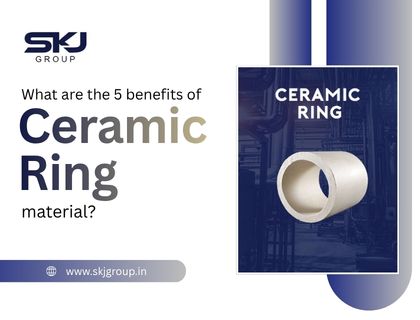
Ceramic ring material has quietly become one of the most relied-upon components in industrial processing towers across the world. India’s chemical and petrochemical sector alone accounts for a significant share of global tower packing consumption, and ceramic ring in India are at the center of that demand. These small, precisely shaped rings are placed inside industrial columns to improve contact between liquids and gases.
The result is better separation, cleaner output, and more efficient processing. As industries face tighter regulations and rising operational costs, the choice of ceramic packing material directly impacts both performance and profitability.
Why Ceramic Ring Material Is a Top Choice in Industrial Tower Packing
Before exploring the five key benefits, it helps to understand what makes industrial ceramic rings different from plastic or metal alternatives.
Ceramic ring material is made from high-grade alumina, silica, or a blend of both. The manufacturing process involves shaping, drying, and firing at extremely high temperatures. This produces a material that is dense, chemically stable, and dimensionally consistent across every batch.
Industries that rely on tower packing solutions need media that will not degrade, react with process chemicals, or collapse under thermal stress. Ceramic rings meet all three of these requirements reliably.
Benefit 1: Outstanding High Temperature Resistance
The first and most valued benefit of ceramic ring material is its ability to withstand extreme heat without losing structural integrity.
In industries like sulfuric acid production, petrochemical refining, and fertilizer manufacturing, process temperatures can reach several hundred degrees Celsius. Metal rings can warp or weaken. Plastic media melts or deforms. High temperature resistance ceramic rings, however, maintain their shape and performance even in these harsh conditions.
Five reasons this matters in practice:
- Equipment downtime is reduced because the packing media does not need frequent replacement
- Process consistency improves since the ring dimensions remain stable under heat
- Safety risks are lowered as structural failure of packing media is prevented
- Systems can operate at higher temperatures without redesigning the tower
- Energy efficiency improves because stable media maintains optimal flow paths throughout the column
Benefit 2: Superior Corrosion Resistance in Harsh Chemical Environments
Chemical towers handle acids, alkalis, solvents, and other aggressive substances daily. The packing material placed inside must resist chemical attack over a long service life.
Corrosion resistant packing material like ceramic rings does not react with most industrial chemicals. This makes them the preferred choice in acid absorption towers, solvent recovery columns, and wastewater treatment systems.
Unlike metals that rust or corrode when exposed to acids, and plastics that swell or degrade in solvents, ceramic rings in India hold its form and surface texture through years of continuous chemical exposure.
This is a primary reason why ceramic ring manufacturers in India continue to see growing demand from the chemical and pharmaceutical sectors.
Benefit 3: Improved Mass Transfer and Chemical Tower Efficiency
The entire purpose of tower packing is to create maximum contact between a liquid phase and a vapor or gas phase. The geometry and surface texture of the packing media directly determines how well this contact happens.
Ceramic ring material provides a high surface area per unit volume. The open ring structure allows liquid to spread across the surface while gases flow freely through the channels.
This improves mass transfer performance in the following ways:
- More gas-liquid contact points are created per unit height of the tower
- Liquid distribution across the packing bed remains uniform throughout operation
- Pressure drop across the column stays low, reducing energy consumption
- Separation efficiency improves, leading to higher purity output streams
- Towers can handle higher flow rates without flooding or channeling issues
For industries where chemical tower efficiency directly affects product quality and yield, this benefit alone justifies the use of ceramic packing material over cheaper alternatives.
Benefit 4: Exceptional Durability and Long Service Life
Durable industrial ceramics are known for their resistance to physical wear, thermal cycling, and chemical degradation simultaneously. This combination of properties translates directly into a longer service life compared to other packing materials.
A properly selected and installed bed of ceramic rings can remain in service for many years without the need for replacement. This is a significant operational advantage for industries where tower shutdowns are costly and disruptive.
The durability of ceramic ring material also means:
- Lower long-term material costs despite a higher upfront investment
- Fewer maintenance interventions and associated labor costs
- Consistent bed height and packing density throughout the service period
- Reduced risk of contamination from media breakdown or particle shedding
- Better return on investment compared to plastic or metal alternatives over the full equipment lifecycle
Benefit 5: Broad Chemical Compatibility Across Industrial Processes
One of the most practical advantages of ceramic rings in India is its compatibility with a wide range of process chemicals and conditions.
Whether the application involves strong acids, strong alkalis, organic solvents, or mixed chemical streams, ceramic packing material performs reliably without reacting with the process fluid. This broad compatibility makes it a single solution suitable for multiple tower types within the same plant.
Industries that benefit from this versatility include:
- Sulfuric acid and hydrochloric acid production plants
- Pharmaceutical and fine chemical manufacturers
- Fertilizer production and ammonia absorption towers
- Petroleum refining and solvent recovery units
- Effluent treatment and air scrubbing systems
This is why ceramic ring suppliers across India serve such a diverse range of industrial clients, from small specialty chemical units to large integrated refinery complexes.
Comparison Table: Ceramic Ring vs Other Tower Packing Materials
| Property | Ceramic Ring | Plastic Ring | Metal Ring |
| Temperature Resistance | Excellent (above 1000°C) | Poor (below 100°C) | Moderate (below 600°C) |
| Chemical Resistance | Excellent | Moderate | Limited |
| Surface Area | High | Moderate | Moderate |
| Durability | Very Long | Short to Medium | Medium |
| Mass Transfer Efficiency | High | Moderate | High |
| Cost Over Full Lifecycle | Low | Medium | High |
| Suitability for Acids | Excellent | Poor | Poor |
This table confirms why ceramic rings in India are the preferred material for demanding industrial applications where reliability and chemical resistance are non-negotiable.
Case Study
Background: A chemical processing company in Maharashtra, India, was operating a hydrochloric acid absorption tower. The tower had been using plastic packing rings, which were degrading rapidly due to the acidic environment and elevated operating temperatures.
Challenge: Frequent replacement of plastic packing was causing unplanned shutdowns, increased maintenance costs, and inconsistent absorption efficiency. The plant needed a longer-lasting and chemically stable alternative.
Solution Applied: The plant switched to ceramic ring material supplied by a reputed ceramic ring manufacturer in India. The ceramic rings were selected based on their compatibility with hydrochloric acid and their thermal stability at the tower’s operating conditions.
Outcome: After switching to ceramic rings, the tower operated continuously without packing replacement for an extended period. Absorption efficiency improved noticeably, and the plant reported a clear reduction in maintenance-related downtime. The ceramic packing material showed no signs of degradation or chemical attack throughout the observation period, confirming the material’s suitability for this demanding application.
FAQ’s About Ceramic Ring
Q1. What are the benefits of ceramic ring packing material?
Ceramic ring packing offers heat resistance, chemical durability, high surface area, long service life, and broad compatibility.
Q2. Why use ceramic rings in chemical industry towers?
Ceramic rings resist corrosive acids and alkalis while improving gas-liquid contact and mass transfer efficiency reliably.
Q3. What are the advantages of ceramic ring in tower packing systems?
They provide stable packing beds, low pressure drop, uniform liquid distribution, and long-lasting performance in demanding towers.
Q4. How does a ceramic ring improve mass transfer efficiency?
The open ring geometry creates high surface area contact between gas and liquid phases inside industrial columns.
Q5. What is the best ceramic ring material for industrial applications?
High-alumina ceramic rings are best suited for high-temperature, high-acidity, and chemically aggressive industrial tower applications.
Q6. How long do ceramic rings last in a chemical tower?
With proper installation and compatible process conditions, ceramic rings can last many years without replacement or degradation.
Q7. Which industries use ceramic ring packing in India?
Chemical, pharmaceutical, fertilizer, petroleum refining, acid production, and effluent treatment industries commonly use ceramic ring packing.
Q8. What is the difference between ceramic rings and plastic packing media?
Ceramic rings handle higher temperatures and stronger chemicals, while plastic media is limited to mild conditions and lower temperatures.
Conclusion
Ceramic ring material stands out as one of the most dependable solutions available for industrial tower packing applications. Its ability to handle extreme heat, resist aggressive chemicals, and deliver consistent mass transfer performance makes it the right choice for industries that cannot afford process failures. Ceramic rings in India are no longer just a commodity purchase but a strategic material decision that affects plant efficiency, product quality, and long-term costs. Partnering with experienced ceramic ring manufacturers and suppliers like SJK India ensures that every ring you install meets the quality standard your process demands. Invest in the right material and your towers will deliver results.