How Ceramic Grid Block Packing Improves Liquid Distribution

Why High Alumina Ceramic Balls Are Used in Reactors
April 14, 2026
Why Choose High-Quality Plywood? Top Advantages for Long-Term Use
April 16, 2026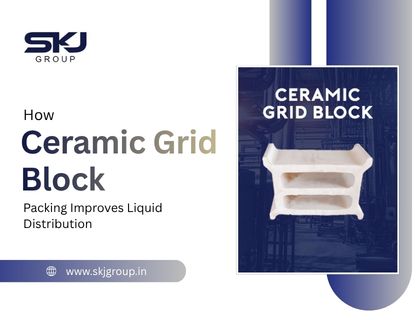
Industrial towers used in distillation, absorption, and scrubbing depend entirely on how well liquid spreads across the packing surface. Poor liquid distribution reduces contact between liquid and gas phases, which directly lowers process efficiency. Grid Block in Mandsaur from SJK India addresses this challenge with precision engineered ceramic grid block packing that creates uniform flow paths throughout the column. Studies in chemical process engineering confirm that structured packing design significantly impacts separation efficiency in industrial towers.
SJK India has supplied ceramic grid block products to industries across India for years. As a trusted ceramic grid block manufacturer and ceramic grid block exporter, we understand what plant engineers need when designing or retrofitting tower internals. Our products combine high temperature ceramic media properties with consistent dimensional accuracy for reliable column performance.
What Is Ceramic Grid Block Packing and How Does It Work?
Ceramic grid block packing is a structured type of tower packing material shaped as interlocking or stackable grid units made from fired ceramic. Each block contains an open grid structure that channels liquid downward while allowing gas to rise in a controlled pattern.
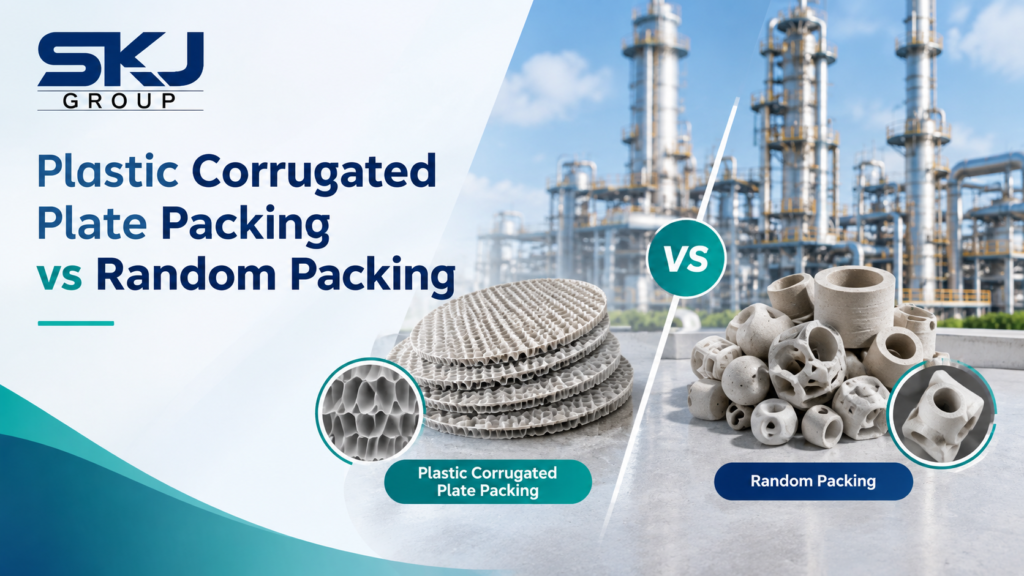
This geometry creates a large surface area for liquid and gas to make contact. More contact area means better mass transfer enhancement, which is the core goal of any absorption or distillation process. Unlike random packing, grid blocks offer predictable flow behaviour because of their regular geometry.
The ceramic material used in ceramic tower packing is selected for its ability to handle aggressive chemicals, high temperatures, and continuous wet-dry cycling without degrading. This makes ceramic grid block a long-term solution compared to plastic or metal alternatives in corrosive environments.
How Grid Block in Mandsaur Solves Liquid Maldistribution Problems
Liquid maldistribution is one of the most common causes of poor column performance. When liquid channels along the column wall or pools in one zone, the active packing surface in other areas becomes dry and inactive. Grid Block in Mandsaur from SJK India is engineered to break this channeling pattern.
The open-grid structure forces liquid to spread laterally as it moves downward. Each layer of ceramic grid block packing redirects liquid flow, ensuring fresh liquid reaches all parts of the column cross-section. This self-redistributing property is a key advantage over many chemical process packing alternatives.
Plant engineers working on distillation column upgrades consistently report better tray efficiency when switching to ceramic grid block packing. The improvement in liquid distribution efficiency translates directly into better separation, lower reflux ratios, and reduced energy consumption at the column level.
Benefits of Ceramic Grid Block Packing in Chemical Industries
The adoption of ceramic grid block packing for better mass transfer efficiency has grown across the chemical, petrochemical, and pharmaceutical sectors. Below are five core benefits that make it the preferred industrial packing solution for modern process plants:
- Liquid distribution efficiency is improved because the grid geometry forces liquid to spread evenly across the full column diameter, eliminating dry zones and improving gas-liquid contact throughout the tower.
- Mass transfer enhancement is achieved through the high surface area of each block, which provides more opportunity for gas and liquid phases to exchange components during absorption or distillation operations.
- Corrosion resistant packing properties of fired ceramic mean the blocks perform reliably in acidic, alkaline, and solvent-rich environments where metal or plastic packing would degrade quickly over time.
- High temperature ceramic media characteristics allow these grid blocks to operate in columns running at elevated temperatures, including hot gas scrubbing and high-temperature absorption applications found in industrial plants.
- Structured packing performance is consistent because each ceramic grid block is manufactured to precise dimensions, ensuring that stacked layers behave predictably and maintain designed void fraction throughout the service life.
Comparison of Tower Packing Materials for Liquid Distribution
| Property | Ceramic Grid Block | Random Ceramic Packing | Plastic Packing | Metal Structured Packing |
| Liquid Distribution | Excellent | Moderate | Good | Excellent |
| Temperature Resistance | Very High | High | Low | High |
| Chemical Resistance | Excellent | Excellent | Moderate | Moderate |
| Pressure Drop | Low to Moderate | Moderate | Low | Low |
| Service Life | Very Long | Long | Short | Medium |
| Best Application | Corrosive, High-temp towers | General absorption | Low-temp, low-corrosion | Clean service columns |
Use of Ceramic Grid Blocks in Distillation Column Liquid Distribution
Distillation columns separate mixtures based on boiling point differences. For this separation to work efficiently, liquid must contact rising vapour uniformly across the entire column cross-section. Use of ceramic grid blocks in distillation column liquid distribution ensures this contact happens at every level of the packing bed.
In a poorly packed column, rising vapour finds paths of least resistance, bypassing wet packing zones. Ceramic grid block packing eliminates this bypass by creating a consistent tortuous path for vapour while maintaining steady liquid downflow. The result is sharper separation between components and higher product purity from the same column.
Refineries and specialty chemical plants that process heat-sensitive materials particularly benefit from ceramic tower packing because ceramic does not react with process streams and introduces no contamination risk. This is a critical advantage in pharmaceutical and food-grade chemical processes.
Industrial Applications of Ceramic Grid Block Packing in India
The industrial applications of ceramic grid block packing in India span a wide range of process industries. SJK India as a leading ceramic grid block supplier serves clients in the following sectors:
Sulphuric acid plants use ceramic grid block packing in absorption towers where liquid sulphuric acid and sulphur trioxide gas must make thorough contact. The corrosion resistance of ceramic makes it the only practical material choice in these towers.
Fertiliser plants use ceramic tower packing in their scrubbing columns to remove ammonia and other gases from process streams. The high surface area of grid blocks improves absorption efficiency, reducing emissions and recovering valuable process gases.
Petrochemical plants rely on industrial packing solutions using ceramic grid blocks for cooling tower fill and gas scrubbing applications where both high temperature and chemical resistance are required simultaneously.
Why SJK India Is a Trusted Ceramic Grid Block Manufacturer and Exporter
SJK India operates from Mandsaur, Madhya Pradesh, and has established a strong presence as a ceramic grid block manufacturer serving domestic and international markets.
Our manufacturing process uses high-quality ceramic raw materials and precision moulds to produce grid blocks with consistent dimensions and surface finish. Each batch is tested for water absorption, compressive strength, and dimensional accuracy before leaving our facility.
As a Grid Block in Mandsaur specialist, SJK India offers customisation in block size and ceramic grade to match specific column diameter and process temperature requirements. Our technical team assists engineers in selecting the right packing configuration for their application.
Case Study
A mid-sized sulphuric acid manufacturer in Gujarat was facing consistently low absorption efficiency in their main absorption tower. The existing random ceramic packing was not distributing liquid evenly, and the plant was recording higher than expected sulphur trioxide slip at the tower outlet. The plant team contacted SJK India and replaced the random packing with ceramic grid block packing from our Mandsaur facility. Within the first operating cycle after the upgrade, the plant reported noticeably better liquid coverage across the tower cross-section. Sulphur trioxide absorption improved and the plant was able to reduce acid recirculation rates, which also lowered pump energy consumption. The plant continues to use SJK India ceramic grid block in all subsequent packing replacements.
FAQs About Grid Block in mandsaur
Q1. What is ceramic grid block packing used for?
It is used to improve liquid distribution and mass transfer efficiency inside industrial absorption, distillation, and scrubbing towers.
Q2. How does ceramic grid block packing improve liquid distribution?
Its open grid structure forces liquid to spread laterally as it flows down, covering the full tower cross-section evenly.
Q3. What industries use ceramic grid block packing?
Sulphuric acid plants, fertiliser units, petrochemical facilities, and pharmaceutical chemical manufacturers commonly use ceramic grid block packing.
Q4. Is ceramic grid block packing suitable for high-temperature applications?
Yes, high temperature ceramic media properties allow grid blocks to operate reliably in columns running at elevated process temperatures.
Q5. How does ceramic grid block compare to random packing?
Ceramic grid block offers better and more predictable liquid distribution than random packing because of its regular, structured geometry.
Q6. Can ceramic grid block packing handle corrosive chemicals?
Yes, fired ceramic is chemically resistant to acids, alkalis, and most industrial solvents, making it ideal for corrosive tower environments.
Q7. What sizes does SJK India offer for ceramic grid block?
SJK India offers ceramic grid blocks in multiple sizes customised to match specific column diameter and process requirements.
Q8. How can I order a ceramic grid block from SJK India in Mandsaur?
Contact SJK India directly through our website or sales team to discuss specifications, quantity requirements, and delivery timelines.
Conclusion
Ceramic grid block packing is a proven solution for improving liquid distribution in industrial towers. Its structured geometry, corrosion resistance, and thermal stability make it suitable for the most demanding chemical process environments. SJK India, as a trusted ceramic grid block manufacturer, supplier, and exporter based in Mandsaur, brings engineering expertise and consistent product quality to every order. Choosing Grid Block in Mandsaur from SJK India means investing in better column performance, longer packing life, and lower operating costs for your plant.