Benefits of PP Pall Rings for Wastewater Treatment Plants

Use of Metal Gauze in Environmental and Filtration Systems
May 18, 2026
Why Ceramic Honeycomb Is Essential for Modern Pollution Control
June 3, 2026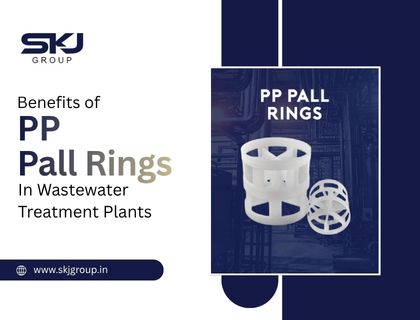
India produces more than 62,000 million litres of wastewater every single day. Most of this water carries chemicals, organic waste, and harmful gases that need to be treated before release. Treatment plants across the country are looking for packing media that works well, lasts long, and costs less.
PP Pall Rings in India have become the go-to solution for this problem. Made from polypropylene, these rings are lightweight, chemically resistant, and designed to improve contact between liquid and gas inside treatment towers. SJK Group, a trusted PP Pall Rings manufacturer in India, supplies these to industries across chemicals, textiles, pharma, and food processing.
What Are Pall Rings Used For?
Many plant engineers ask this question before making a purchase decision. Pall Rings are used as random packing media inside industrial columns, scrubbers, and towers. Their main job is to create more contact between liquid flowing down and gas flowing up inside the tower.
When liquid and gas touch more often, treatment becomes faster and more complete. This is the basic science behind all tower packing systems.
In wastewater treatment, PP Pall Rings for wastewater treatment are placed inside:
- Scrubber towers to remove gases like H2S and ammonia
- Biofilter towers to support bacterial growth for biological treatment
- Effluent treatment plants to strip dissolved pollutants
- Cooling towers for better heat exchange
- Absorption columns for chemical process packing needs
Their open-lace design creates a large surface area inside a small volume. This means fewer rings are needed to do more work, which saves both space and money.
Why Pall Ring is Used for Packing Material?
Older packing types like Raschig Rings create high resistance inside towers. Fluids have to push harder to pass through, which wastes energy. Pall Rings solved this with a smarter design. Small finger-like tabs punched into the ring wall allow liquid to spread across the full surface evenly.
This design brings two key benefits. First, it lowers the pressure drop across the column, which directly cuts energy bills. Second, it prevents liquid from collecting at one spot, a common problem called channelling. Even liquid spread means better mass transfer efficiency from top to bottom of the tower.
Polypropylene as the base material adds even more value. It resists corrosion, does not react with most acids and alkalis, and stays stable across a wide temperature range. This is exactly why polypropylene Pall Ring packing is preferred in chemical and industrial wastewater systems.
What is the Purpose of a PP Pall Ring?
The purpose of a PP Pall Ring is simple. It acts as a contact surface inside a treatment column.
As wastewater flows downward and air or treated gas flows upward, the rings create hundreds of small interaction zones. At each zone, harmful substances transfer out of the water or get broken down by bacteria living on the ring surface.
This transfer process is what makes the water cleaner. The corrosion-resistant packing material quality of polypropylene means the rings keep performing this function for years without degrading. Unlike metal rings, they do not rust or need protective coatings.
Top Benefits of PP Pall Rings in Industrial Wastewater Treatment Plants
Here is why plant engineers and procurement teams prefer PP Pall Rings across India:
High Surface Area Each ring has an internal structure that multiplies the available contact surface. More surface area means more treatment happening inside the same tower volume.
Low Pressure Drop The open design allows gas and liquid to flow through with minimal resistance. Lower pressure drop means lower energy consumption for blowers and pumps.
Corrosion Resistance Polypropylene does not react with most acids, alkalis, or organic solvents found in industrial effluents. This makes PP Pall Rings a reliable long-term investment.
Lightweight and Easy to Install PP Pall Rings weigh far less than ceramic or metal options. They are easy to load into towers and simple to replace during scheduled maintenance.
Uniform Liquid Distribution The tab structure inside each ring spreads liquid evenly across the packing bed. This prevents dry zones and keeps mass transfer efficiency high throughout the column.
Chemical and Thermal Stability Polypropylene Pall Ring packing handles temperatures up to 100 degrees Celsius and remains stable across a pH range of 1 to 14. This suits a wide range of industrial wastewater conditions.
Long Service Life With proper installation, PP Pall Rings in India typically last between 5 and 10 years. This gives plants a strong return on their investment compared to media that degrades faster.
Cost-Effective for All Plant Sizes Compared to ceramic or metal packing, polypropylene is affordable and widely available. PP Pall Rings suppliers in India like SJK Group offer bulk pricing that makes upgrading accessible for small and large plants alike.
Comparison Table: PP Pall Rings vs Other Packing Media
| Feature | PP Pall Rings | Ceramic Raschig Rings | Metal Pall Rings |
| Material | Polypropylene | Ceramic | Stainless Steel |
| Corrosion Resistance | Excellent | Moderate | Good |
| Weight | Very Light | Heavy | Medium |
| Pressure Drop | Very Low | High | Low |
| Surface Area | High | Moderate | High |
| Chemical Resistance | Excellent | Good | Moderate |
| Cost | Low | Medium | High |
| Best Application | Wastewater, Scrubbers | Acid Towers | High-Temp Columns |
This comparison makes it clear why industrial wastewater treatment media specialists choose PP Pall Rings for most standard applications.
Why Use PP Pall Rings for Wastewater Treatment Tower Packing
When a plant chooses tower packing, it is choosing between energy cost, performance, and maintenance effort every single day. PP Pall Rings for wastewater treatment score well on all three.
Their low pressure drop reduces blower energy. Their large surface area improves removal of BOD, ammonia, and dissolved gases. Their chemical resistance cuts maintenance frequency. And their low weight makes replacement faster and safer for the maintenance team.
Biofilter tower packing solutions using PP Pall Rings also support microbial colonies that grow on the ring surface. These bacteria do much of the actual treatment work in biological systems. The bigger and more stable the surface, the stronger the bacterial colony, and the better the treatment result.
According to the US EPA guidelines on industrial wastewater treatment, high-surface-area random packing media in biological treatment towers achieves significantly better BOD and ammonia removal than older media types. Source: epa.gov
The Water Environment Federation also confirms that optimised wastewater scrubber packing material reduces energy costs in aeration and stripping operations. Source: wef.org
NPTEL’s Chemical Engineering resources cover mass transfer packing design in detail for those looking to understand the technical side further. Source: nptel.ac.in
Advantages of Polypropylene Pall Rings in Effluent Treatment Systems
Effluent treatment plants handle complex mixtures of chemicals, dyes, biological waste, and suspended solids. Standard packing media often fails or clogs quickly in these conditions.
Polypropylene Pall Ring packing is built for exactly this kind of environment. It does not absorb moisture, does not swell, and does not break down under chemical attack. Plants in the textile, pharmaceutical, and petrochemical sectors across India have reported strong performance improvements after switching to PP Pall Rings.
Demand from PP Pall Rings structured packing exporters in India has also been rising steadily, with buyers from Southeast Asia, the Middle East, and Africa sourcing from Indian manufacturers due to quality and competitive pricing.
Case Study: Textile Effluent Plant in Gujarat Upgrades Packing Media
A textile dyeing unit in Surat, Gujarat was operating an effluent treatment plant with old ceramic packing. The plant faced high pressure drop, frequent clogging, and BOD removal efficiency sitting at only 72 percent.
The plant manager contacted SJK Group for a technical review. After assessing the tower dimensions and flow rates, SJK Group recommended replacing the ceramic media with PP Pall Rings in India across both the stripping column and the biofilter tower.
Results recorded after six months of operation:
- Pressure drop across the tower reduced by 28 percent
- BOD removal efficiency improved from 72 percent to 89 percent
- Blower energy costs dropped by 22 percent
- Zero clogging incidents during the entire six-month period
- Maintenance visits reduced from every month to once per quarter
The plant is now exploring upgrading a second scrubber tower using wastewater scrubber packing material from SJK Group. This case confirms the real-world impact that switching to quality PP Pall Rings can deliver.
FAQ’s About PP Pall Rings
1. What are Pall Rings used for in wastewater treatment?
Pall Rings are used as random packing media inside scrubber towers, biofilters, and stripping columns. They increase contact between liquid and gas, helping remove pollutants like ammonia, H2S, and BOD from industrial wastewater efficiently and consistently.
2. Why is Pall Ring used for packing material?
Pall Rings are preferred because their open-tab design lowers pressure drop and prevents channeling. This improves liquid spread and mass transfer efficiency inside towers. Polypropylene versions also resist corrosion, making them more durable than ceramic options in acidic or alkaline wastewater conditions.
3. What is the purpose of a PP Pall Ring?
The purpose of a PP Pall Ring is to provide a large contact surface inside a treatment column. It supports liquid-gas interaction and microbial growth for biological treatment. Its corrosion-resistant packing material quality ensures it performs reliably for years in industrial environments
4. What sizes of PP Pall Rings are available?
PP Pall Rings in India are commonly available in 25mm, 38mm, 50mm, and 76mm sizes. The correct size depends on tower diameter, liquid flow rate, and process type. SJK Group provides technical guidance to help plants choose the best size for their specific application.
5. Are PP Pall Rings suitable for acid and alkali environments?
Yes. Polypropylene resists most acids, alkalis, and organic solvents. This makes PP Pall Rings highly suitable for chemical plants, pharmaceutical effluent systems, and textile wastewater treatment where aggressive fluids are common across different processing stages.
6. How long do PP Pall Rings last?
With correct installation and routine maintenance, polypropylene Pall Ring packing lasts between 5 and 10 years. Service life depends on operating temperature, chemical exposure levels, and how carefully the rings are handled during maintenance procedures.
7. Can PP Pall Rings support biological wastewater treatment?
Yes. The large surface area of PP Pall Rings for wastewater treatment supports the growth of beneficial bacteria. This makes them ideal for biofilter tower packing solutions and trickling filter systems used in aerobic biological treatment stages.
8. Where can I buy PP Pall Rings in India?
SJK Group is a leading PP Pall Rings manufacturer in India and trusted among PP Pall Rings suppliers in India. We supply packing media across India and export globally. Contact us for pricing, technical specifications, bulk orders, and fast delivery support.
Conclusion
PP Pall Rings in India have established a strong track record in wastewater treatment plants of all sizes. Their combination of high surface area, low pressure drop, chemical resistance, and long service life makes them one of the most practical upgrades a plant can make.
Whether the application involves scrubbing toxic gases, supporting biological treatment, or improving effluent quality before discharge, PP Pall Rings deliver consistent results without demanding high maintenance attention. As pollution control norms in India tighten further, more plants will need to upgrade their packing media to stay compliant.
Plastic tower packing technology has come a long way in the last two decades. Polypropylene Pall Rings sit at the top of that progress. They are proven in the field, easy to source from reliable PP Pall Rings suppliers in India, and cost-effective over their full service life.
SJK Group brings technical experience, reliable supply, and export capability to every order. From selecting the right ring size to advising on tower design, the team supports plants through every stage of the upgrade process.
If your plant is dealing with high energy costs, poor treatment results, or frequent maintenance, it is time to look at your packing media. PP Pall Rings may be the one change that makes everything else work better.