What is a Ceramic Honeycomb Structure in Construction?

What Are Partitioned Ceramic Rings Used For? Benefits and Applications in Filtration
November 12, 2024
What is the Purpose of a PP Pall Ring?
November 20, 2024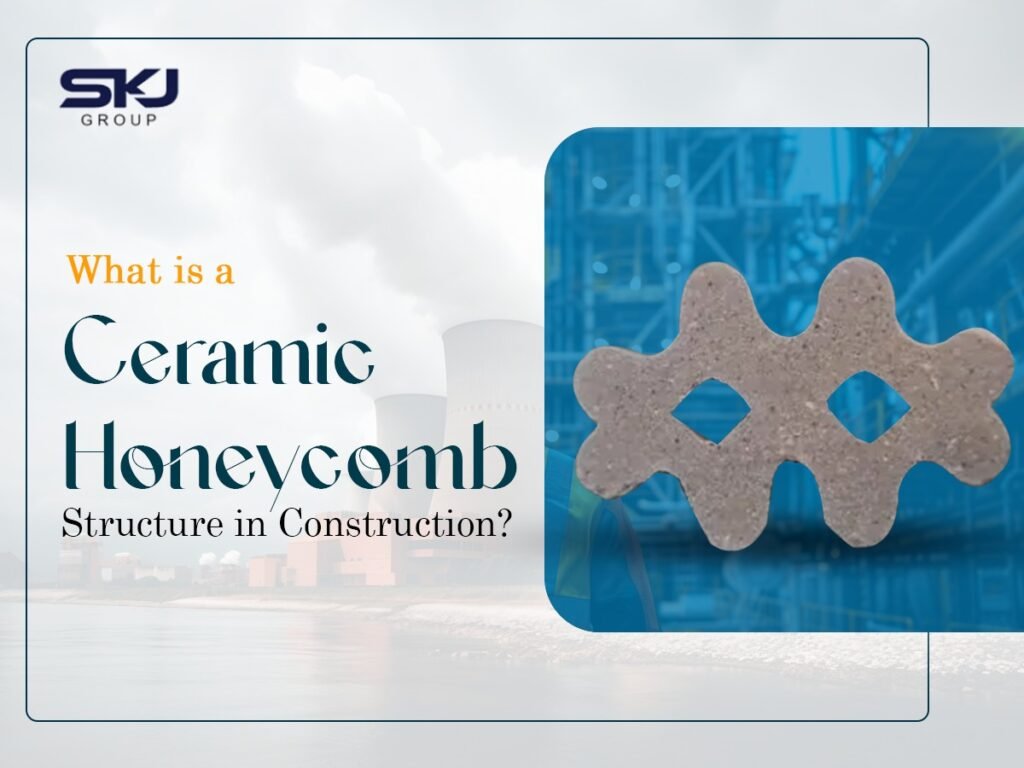
This image showcases a ceramic honeycomb structure, widely used in construction for its lightweight, high-strength, and durable properties. Its unique design enhances thermal insulation, load-bearing capacity, and material efficiency, making it ideal for walls, partitions, and sustainable building applications. Architects and engineers rely on ceramic honeycomb structures to optimize energy performance, reduce construction material usage, and improve long-term structural integrity.
A ceramic honeycomb structure is a block or panel with thin ceramic walls that form many parallel cells. The cell pattern keeps weight low while still carrying compressive load, and the ceramic resists heat, fire and corrosion. In construction and building-related plants, it is used where heat, fire or weight matter most, such as kiln linings, high-heat partitions and heat-recovery systems.
Here is how it works, where it fits and what to check before you buy.
Quick facts
- What it is: A ceramic block or panel made of thin-walled parallel cells
- Why it is used: High heat resistance, low weight for its volume and no rusting
- Best for: Kilns, furnaces, heat-recovery systems and high-heat zones
- Not ideal for: Impact-heavy locations, since ceramic is brittle
Why Does the Honeycomb Shape Work So Well?
The cells spread load across many thin walls instead of a few thick points. It is the same idea behind the honeycomb cores used in lightweight aircraft panels.
- Load spreads across every wall, so there are fewer weak points
- Less material is needed for the same stiffness, which cuts weight
- Open channels let air or gas pass through when the design needs it
- Ceramic does not rust and handles heat that would soften plastics and many metals
Is It the Same as a Honeycomb Panel on a Facade?
Not always. Many honeycomb wall and facade panels use an aluminium or paper core with a stone or ceramic skin. A fully ceramic honeycomb is chosen where the part must handle high temperature, such as furnaces, kilns and exhaust treatment systems. Ask which type a supplier means before you compare prices.
What Separates a Good Ceramic Honeycomb From a Weak One?
Quality depends on process control. A reliable honeycomb manufacturer follows these steps closely:
- Mix the clay body to a controlled consistency
- Extrude it through a die that forms the cell pattern in one continuous pass
- Cut to length and dry slowly under controlled humidity
- Fire in a kiln at the right temperature and hold time
- Inspect dimensions and look for deformed cells
The two steps that cause the most hidden problems are drying and firing. Rushing the drying cycle can cause internal cracks that only show up under load months later. Two pieces that look identical on a shelf can perform very differently once installed.
Where Is It Used in Buildings and Plants?
- Kiln and furnace linings: Ceramic holds its shape under sustained heat, so it suits kiln walls, oven linings and high-temperature zones.
- Fire-rated or high-heat partitions: Boiler rooms and plant rooms often need heat-resistant dividers. The finished assembly must still carry a certified fire rating, not just the material.
- Heat recovery and air treatment: Industrial plants use ceramic honeycomb to store and release heat in exhaust treatment systems. See our RTO and RCO honeycomb ceramic for this use.
- Lightweight inserts and panels: Where a design calls for it, the cell structure cuts weight on upper floors and retrofit work, after load testing.
How Does It Compare With Other Materials?
| Material | Weight | Heat resistance | Fire behaviour | Best fit |
| Ceramic honeycomb | Low for its volume | High | Does not burn | Kilns, furnaces, heat recovery, high-heat zones |
| Solid brick or block | High | Moderate | Good | General walls and load-bearing work |
| Gypsum board | Low | Low | Moderate | Interior partitions |
| Synthetic foam panel | Very low | Low | Weak | Insulation away from heat |
Ceramic honeycomb costs more than gypsum board, so it earns its place where heat, fire or weight decide the design.
How Is Ceramic Honeycomb Different From Aluminium Honeycomb?
Aluminium honeycomb is lighter and tougher against impact, so it is common in facade and interior panels. Ceramic honeycomb is heavier and more brittle, but it keeps its shape at temperatures that would soften aluminium. Choose by the job:
| Ceramic honeycomb | Aluminium honeycomb | |
| Heat resistance | Very high | Low |
| Weight | Low for its volume | Very low |
| Impact toughness | Brittle | Tougher |
| Typical use | Kilns, furnaces, heat recovery | Facade, door and interior panels |
Specifying materials for a kiln, plant or heat-recovery project? Send your temperature, size and load, and our team will suggest a suitable grade and share data sheets.
What Should You Ask Before You Order?
Choosing a ceramic honeycomb supplier comes down to data, not claims. Ask for:
- Compressive strength that matches your load calculation
- Maximum working temperature and thermal shock resistance
- Cell size and wall thickness, with the tolerance range
- Fire rating proof if the part sits inside a rated assembly
- A sample piece before the full order
- Lead time and batch consistency for repeat orders
Vague answers on strength or temperature limits are a warning sign. Your engineer needs those numbers to sign off the design.
Where Do Buyers Usually Go Wrong?
- Choosing on size alone: Wall thickness and firing quality affect strength more than overall depth.
- Ignoring the fixing method: A part rated for your load still fails if the support or bedding is wrong.
- Skipping the sample: Colour, finish and size can vary between batches.
- Buying through a trader: A direct honeycomb blocks manufacturer controls extrusion and firing, so quality questions get real answers.
- Mixing up fire resistant and fire rated: A material can resist fire while the full assembly still lacks a certified rating.
For related ceramic parts in plant projects, our guide to where high alumina ceramic products fit in industry is worth a read before you finalise specs.
Ceramic Honeycomb Structure FAQs
1. What is a ceramic honeycomb structure?
It is a ceramic block or panel made of many thin-walled cells in a repeating pattern. The design keeps weight low while handling load and high temperature.
2. Is a ceramic honeycomb structure fire resistant?
Ceramic itself does not burn and handles high heat. For a fire-rated wall or partition, the whole assembly needs a certified rating, so ask for proof.
3. Is ceramic honeycomb used for walls?
Mostly in high-heat settings such as kilns, furnaces and plant rooms. Facade panels often use aluminium or paper cores instead, so confirm the material before you order.
4. How long does ceramic honeycomb last?
It does not rust or break down from heat the way many metals and plastics do. Service life depends on temperature cycles, chemical exposure and installation quality.
5. Can ceramic honeycomb be cut on site?
It can be cut with suitable tools, but cutting through cell walls reduces edge strength. Factory-cut sizes are the better choice where possible.
6. Can you export ceramic honeycomb?
Yes. SKJ Group supplies ceramic honeycomb for industrial buyers in India and overseas. Share your size, temperature and quantity, and we will confirm availability.
7. What is ceramic honeycomb made of?
Most ceramic honeycomb is made from cordierite or other heat-resistant ceramic clay bodies. The grade is chosen by operating temperature and the gases or chemicals it will meet.
8. What affects the price of ceramic honeycomb?
Price depends on the ceramic grade, cell size and wall thickness, block size and tolerance, order quantity and packing for transport. Send your specification for an accurate quote.
Final Thoughts
A ceramic honeycomb structure earns its place where heat, fire or weight decide the design. Match the material to the job, ask for real data, and test a sample before the full order.
Planning a project that needs ceramic honeycomb? Talk to our team for sizes, temperature limits and lead times.