Packed Column Flooding: Causes, Warning Signs and Fixes

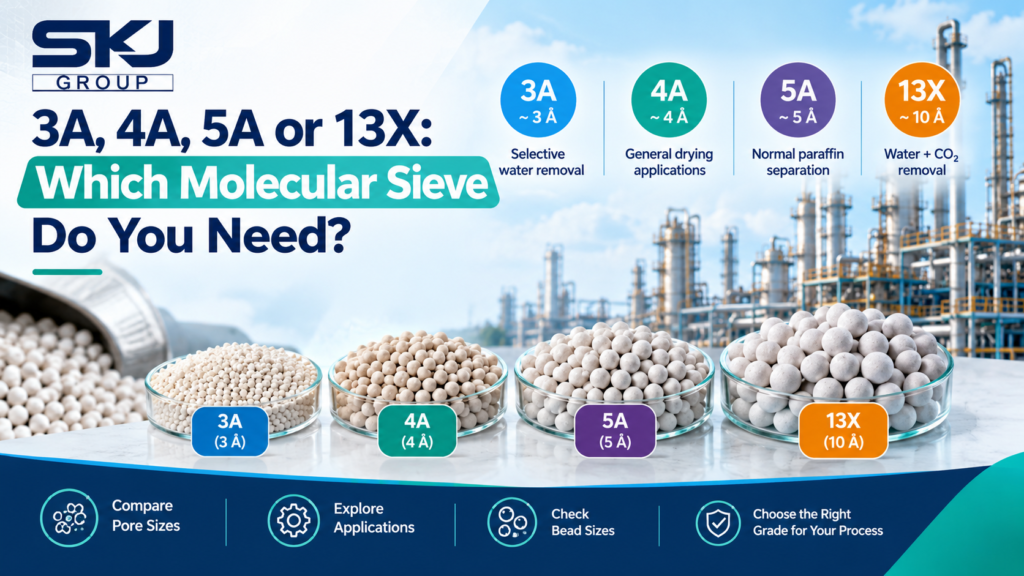
3A, 4A, 5A or 13X: Which Molecular Sieve Do You Need?
October 12, 2026
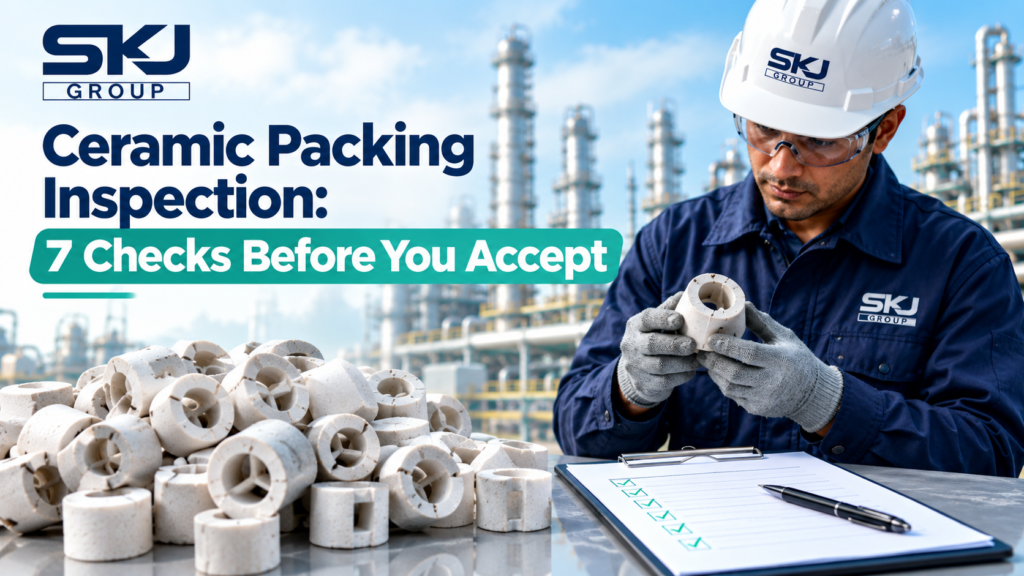
Ceramic Packing Inspection: 7 Checks Before You Accept
October 23, 2026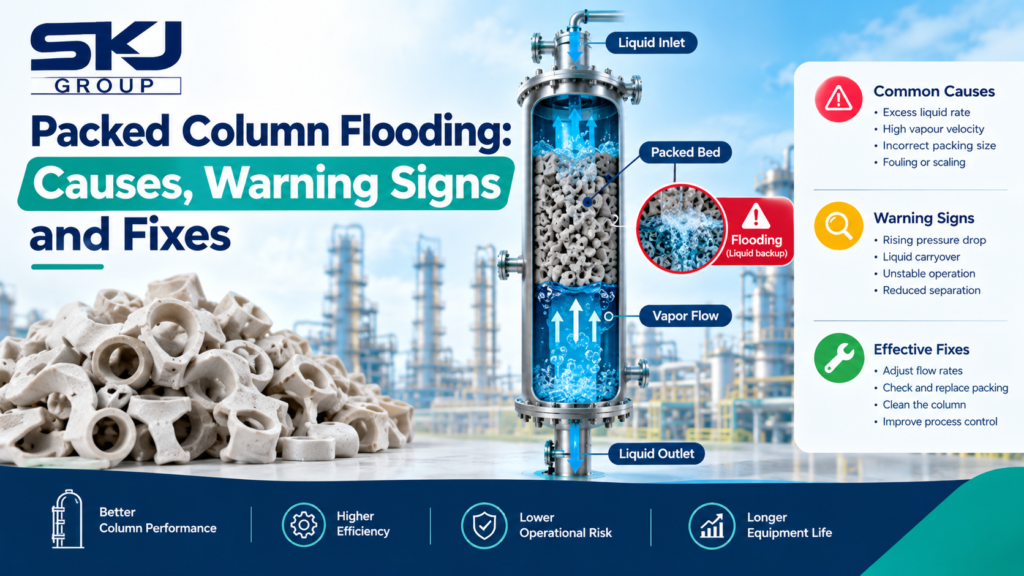
Packed column flooding happens when liquid can no longer drain down against the rising gas, so it builds up inside the bed. The usual causes are running above design capacity, fouled or broken packing that cuts open space, poor liquid distribution and foaming. Watch for a sharp rise in pressure drop, liquid carried overhead and falling separation, and diagnose the cause before you repack, because each cause has a different fix.
Rising Pressure Drop Is the Warning. Flooding Is a Failure.
Flooding rarely arrives without notice. Pressure drop climbs first, and the plants that catch it early avoid the shutdown.
- Pressure drop rises faster than flow. A sharp jump, not a smooth curve, usually means you are near the flood point.
- Liquid or mist reaches the overhead line. The bed can no longer hold it back.
- Separation gets worse at the same duty. Product drifts off spec at normal rates.
- Readings turn unstable. Pressure and temperature surge instead of holding steady.
Many design guides target roughly 60 to 80 percent of flood in normal service, and lower for vacuum or fouling duty. A column that already runs near flood at normal rates can be tipped over by a small change in feed or temperature.
Diagnose the Cause: Symptom to Fix
Do not repack on a hunch. Match the symptom first.
| What you see | Likely cause | Quick check | Usual fix |
| Pressure drop jumps as you raise gas or liquid rate | Running above capacity | Compare current flow with design and flood estimate | Reduce rate, or move to a more open packing or larger column |
| Pressure drop creeps up over weeks at the same flow | Fouling, scale or broken pieces | Compare with your start-up baseline | Clean, filter the feed, or replace the bed |
| Pressure drop jumped right after a repack | Packing broken during loading | Check bed height, look for fines | Reload using the wet method |
| One zone floods while another runs dry | Poor liquid distribution | Check distributor and temperature profile | Clean and level the distributor |
| Sudden flooding with foamy liquid | Foaming from a feed change | Sample the liquid, review recent feed changes | Treat the feed, add antifoam |
| Flooding starts at the bottom of the bed | Support plate with too little free area | Inspect the support for blockage | Clean it or fit a more open support |
➜ Pressure drop climbing and not sure why? Send us your column details and get a packing recommendation
Cause 1: Broken Packing That Chokes the Bed
Ceramic is hard but brittle. Ceramic intalox saddles survive acids and heat for years, yet one rough load can crack pieces, and the fragments settle into the gaps between whole saddles. Less open space means higher pressure drop at the same flow, so the column floods earlier than it should.
If pressure drop jumped soon after a repack, suspect loading damage before anything else. Our guide to loading ceramic tower packing, wet vs dry fill shows how to avoid it, and why recording a start-up pressure drop gives you a baseline to compare against later.
Cause 2: Packing That Is Too Tight for the Job
Packing size and shape set how much gas and liquid a column can handle. Smaller pieces give more surface but less room, so capacity drops and pressure drop rises. Intalox saddle packing has a high open area and resists stacking inside itself, which is why it is a common answer where a ring design keeps flooding.
Moving up a size or to a more open shape raises capacity, usually at a small cost in separation efficiency. That trade is worth making when the alternative is a column that cannot hold its rate.
Cause 3: Fouling, Foaming and Uneven Distribution
- Fouling: solids and scale narrow the channels, and pressure drop rises slowly. Random ceramic beds tolerate suspended solids better than tight structured packing, but they still need clean feed.
- Foaming: flooding that appears suddenly after a feed change often points to foam. A contaminant in the feed is the usual culprit.
- Uneven distribution: a blocked or unlevel distributor floods one zone while another stays dry. A skewed temperature profile gives it away.
- Support plate limits: if the support has too little free area, the bed can flood from the bottom first.
Quick Checks Before You Shut Down
- Compare pressure drop with your start-up baseline and your design value.
- Raise or lower rates slowly. A sharp jump in pressure drop at one rate points to a capacity limit.
- Look at the overhead for liquid carryover.
- Review recent changes in feed composition, temperature or contaminants.
- Back off the rate until pressure drop settles, following your plant’s operating procedure. If it recovers, capacity is the problem. If not, suspect the packing or the internals.
When Repacking Is the Right Fix
Repack when inspection shows crushed, fouled or wrongly sized packing. When you do, specify ceramic saddles tower packing sized for your actual flow and load it with the wet method, so the new bed starts clean. Check the liquid distributor and support plate at the same time, because new packing in a blocked distributor will flood just as the old one did.
If your rates have grown since the column was designed, ask whether a more open packing shape is a better fix than the same shape in a new bed.
Where SKJ Group Fits In
SKJ Group makes ceramic packing for chemical, refinery and absorption columns, and we would rather talk through your sizing before a repack than after the column floods again. If you are sourcing a ceramic super intalox saddle in Mandsaur, our Super Intalox saddles and ceramic saddles cover the common sizes used in these columns.
Frequently Asked Questions
1. What causes flooding in a packed column?
Flooding happens when liquid cannot drain against the rising gas. The main causes are running above design capacity, fouled or broken packing that cuts open space, poor liquid distribution, foaming and a support plate with too little free area.
2. Why is my packed tower pressure drop increasing?
A slow rise at steady flow usually means fouling, scale or broken packing. A sharp rise as you raise rates points to a capacity limit. Compare today’s reading with your start-up baseline to tell which.
3. What are the warning signs of flooding?
Pressure drop climbing faster than flow, liquid carried into the overhead, worsening separation and unstable pressure or temperature readings.
4. Can broken packing cause flooding?
Yes. Fragments settle into the gaps between whole pieces and cut the open space, which raises pressure drop and moves the flood point lower.
5. How often should tower packing be replaced?
There is no fixed interval. In clean, non-fouling service, ceramic packing can run for many years, so replace it when inspection or pressure drop shows fouling or breakage, not by the calendar.
6. Can I stop flooding without a shutdown?
Sometimes. Reducing gas or liquid rate can bring the column back below flood and confirm a capacity limit. If pressure drop stays high, the cause is likely inside the bed and needs an inspection.
Fix the Cause, Not Just the Symptom
Repacking a column without finding the cause is the quickest way to repeat the problem. If you need a dependable Ceramic Saddles Supplier for your next repack, SKJ Group can help you match packing size and shape to your actual flow and load.
➜ Request a Quote and Packing Recommendation and our team will walk you through options for your column.