Get an Export Quote from a Ceramic Saddles Manufacturer: International Buyer’s Checklist

Commercial Plywood Suppliers in India: How to Compare Quality, Price & Bulk Supply
August 22, 2026
Coal-Based Activated Carbon Price in India: What Determines Cost for Industrial Buyers?
September 5, 2026
A precise export quote for ceramic saddles depends on five things: the saddle size and grade, order quantity, port of destination, packaging type, and Incoterm. Share these details upfront with saddle manufacturers in India, and you will get a quote within a day or two instead of going back and forth for a week. This guide walks you through exactly what to prepare and what to check before you sign off on a supplier.
Why Your First Enquiry Often Gets a Vague Quote
Most international buyers send a one-line message like “please quote ceramic saddles” and then wait days for a response that still feels incomplete. The problem isn’t the supplier being slow. It’s that ceramic saddle pricing depends on variables that a generic enquiry simply doesn’t cover.
A manufacturer needs to know the saddle size (from 6mm lab-grade pieces to 76mm industrial saddles), the raw material grade (porcelain, high alumina, or acid-resistant ceramic), and how the packing will be used, whether that’s a distillation column, a scrubber, or a gas absorption tower. Without this, any quote you receive is a rough estimate at best.
What to Prepare Before You Reach Out
Before contacting any exporter, gather this information. It takes ten minutes and saves you days of email delays.
- Application details – Is the saddle going into a chemical column, a cooling tower, or a filtration bed? The operating temperature and the chemicals involved change which grade suits you.
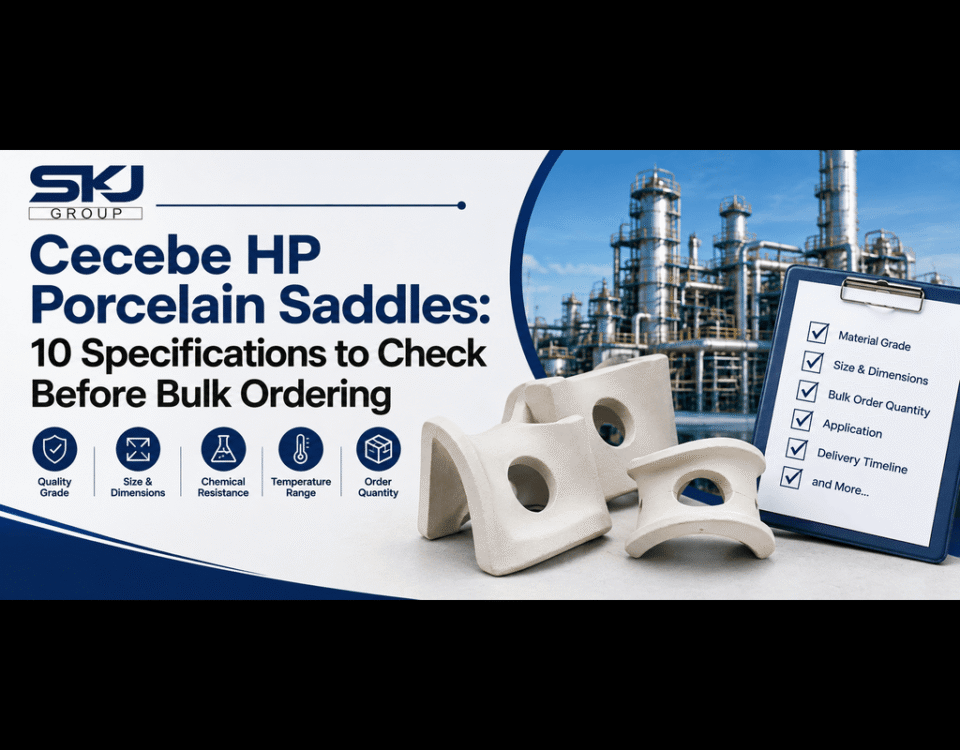
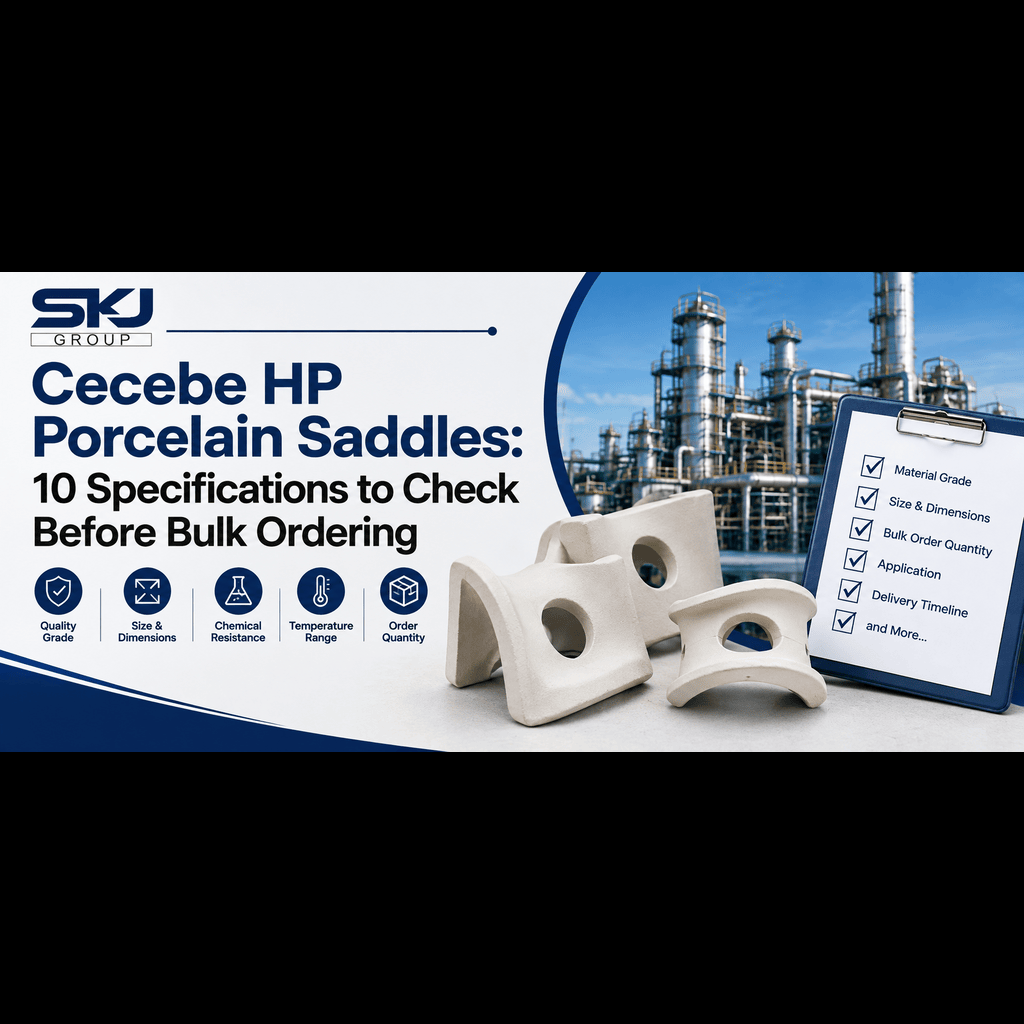
- Size and shape – Confirm whether you need standard Intalox-style saddles, Super Intalox, or Cecebe HP porcelain saddles.
- Order volume – State this in cubic meters or metric tons, not just “a container load,” since container capacity varies by saddle size.
- Destination port – This affects freight cost, transit time, and which Incoterm makes sense for your shipment.
- Delivery timeline – Urgent orders may need air freight for samples and sea freight for the bulk order.
- Compliance needs – Some buyers require a Certificate of Analysis, ISO documentation, or a specific packaging standard for customs clearance.
The Export Quote Checklist
Once you send your enquiry, a serious supplier’s quote should include the following line items. If any of these are missing, ask for them before moving forward.
- Product specification – size, shape, material grade, and bulk density
- Unit price – per kg or per cubic meter, clearly stated
- Minimum order quantity (MOQ)
- Incoterm – FOB, CIF, or EXW, with the relevant port named
- Packaging details – bags, drums, or bulk bags, and whether it’s palletized
- Lead time – production time plus shipping time, shown separately
- Payment terms – advance percentage, balance terms, and accepted methods
- Sample availability – cost and turnaround for pre-shipment samples
- Export documentation – commercial invoice, packing list, certificate of origin, and bill of lading support
Keep this list on hand while comparing quotes from different ceramic ring exporter or saddle suppliers. It turns a confusing back-and-forth into a simple side-by-side comparison.
Understanding Incoterms Before You Ask for a Quote
Buyers often lose money not because the product price was wrong, but because the Incoterm wasn’t clearly agreed upon. Here’s a quick breakdown:
- EXW (Ex Works) – You arrange pickup from the factory and handle everything after that, including export clearance.
- FOB (Free On Board) – The supplier delivers to the port and loads the goods; you take over from there.
- CIF (Cost, Insurance, Freight) – The supplier covers shipping and insurance to your destination port.
For first-time buyers working with a new supplier, FOB is usually the safer middle ground. It gives the exporter responsibility up to the port while still letting you control the shipping line and insurance on your end.
How Manufacturers Price Ceramic Saddles for Export
Ceramic saddle pricing isn’t arbitrary. It’s built from a few consistent cost layers, and understanding them helps you evaluate whether a quote is competitive or inflated.
- Raw material grade (standard porcelain vs. high alumina content)
- Firing and curing process, which affects strength and chemical resistance
- Order quantity and whether it meets factory batch sizes
- Packaging type, since bulk bags cost less than drums but offer less protection
- Freight and insurance, depending on your chosen Incoterm
A well-established manufacturer will break these down for you rather than handing over a single flat number. That transparency is usually a good sign of how the rest of the working relationship will go.
Questions to Ask Before Finalizing a Supplier
- Can you share a Certificate of Analysis or a third-party test report?
- What is your defect or breakage rate during transit, and how do you package to reduce it?
- Do you provide export documentation support, including certificate of origin?
- Have you shipped to my country or region before?
- Can I get a small sample order before committing to the full quantity?
If a supplier hesitates on any of these, treat it as a signal to look elsewhere. A genuine exporter, whether you’re sourcing ceramic saddles, a PP Pall Ring Exporter, or ceramic rings, should answer these without friction.
A Quick Word on Working With SKJ Group
At SKJ Group, export enquiries are handled with full specification sheets, sample options, and clear Incoterm-based pricing from the first response. This structured approach is also covered in more depth in our earlier guide on choosing the best ceramic saddles manufacturer, which walks through supplier evaluation criteria in detail. Buyers exporting from India often find that having this checklist ready before the first call saves at least a week of clarification emails.
Frequently Asked Questions
Q: How long does it take to get an export quote for ceramic saddles?
Most manufacturers respond within 24 to 48 hours if you share size, grade, quantity, and destination port upfront. Vague enquiries take longer since suppliers need to follow up for missing details.
Q: What is the typical minimum order quantity for ceramic saddles export?
This varies by manufacturer and saddle size, but many exporters accommodate MOQs starting from a single container load, roughly 18 to 20 metric tons depending on saddle dimensions.
Q: Should I request samples before placing a bulk export order?
Yes. A small sample shipment lets you verify size accuracy, material strength, and packaging quality before committing to a full container order, especially for a new supplier relationship.
Q: Which Incoterm is best for a first-time international buyer?
FOB is generally recommended for first orders. It keeps the supplier accountable up to the port of loading while giving you control over freight and insurance choices.
Q: Do saddle manufacturers in India provide export documentation support?
Established exporters typically assist with commercial invoices, packing lists, and certificates of origin, though customs clearance in your own country remains your responsibility.
Ready to Get an Accurate Quote?
If you’re comparing ceramic saddle suppliers for an upcoming shipment, gather your specifications using the checklist above and send them across in one message. It’s the fastest way to get a quote that actually reflects your order, not a generic estimate. Reach out to our export team with your requirements, and we’ll walk you through pricing, samples, and shipping timelines suited to your destination.