How Premium Plywood Ensures Long-Term Durability

High-Efficiency Thermal Storage RTO RCO Ceramic Honeycomb
October 15, 2025
Key Benefits of Inert Ceramic Balls for Modern Industrial Use
November 19, 2025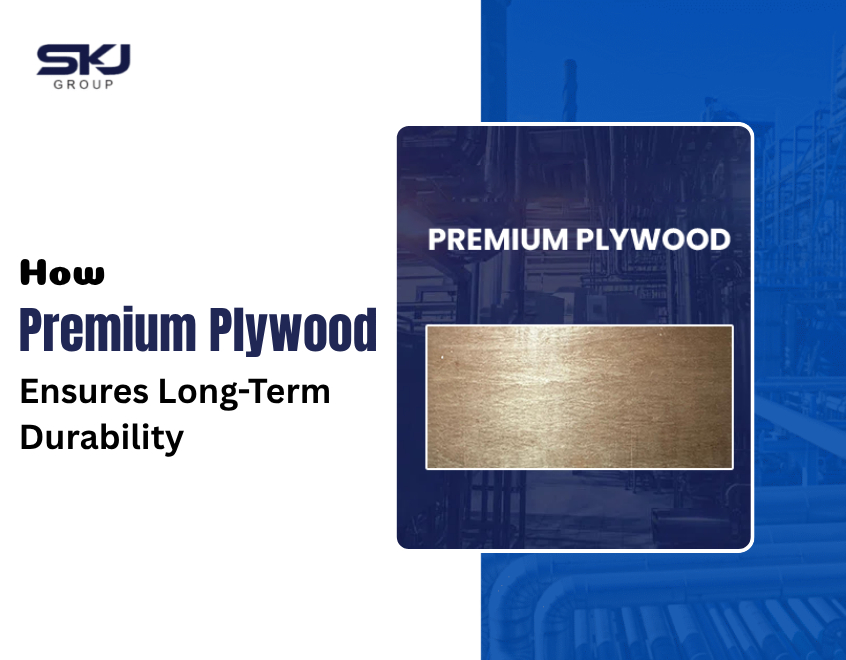
Premium plywood ensures long-term durability through three things working together: a cross-bonded core that resists splitting under load, a waterproof phenolic resin adhesive that keeps layers from separating, and a dense veneer structure that resists warping under years of structural stress. In commercial and structural settings, that combination is what decides whether a formwork panel, a partition wall, or a retail fixture holds its shape for twenty years or starts failing within three. Getting this material choice wrong on a commercial project is expensive, since replacing structural plywood usually means tearing into finished work to fix it.
This guide focuses specifically on how premium plywood performs in commercial and structural applications, shuttering, partitions, office and retail fit-outs, so if you’re specifying material for a construction or commercial interiors project, you’re in the right place.
What Makes Premium Plywood Structurally Durable?
Key properties that separate premium plywood from standard-grade boards:
- Cross-grain construction, where veneers are bonded at alternating angles, which distributes load evenly and resists splitting under weight
- Dense, void-free core layers that hold screws and fasteners without loosening over time
- Phenol-formaldehyde (PF) resin bonding, which resists heat, humidity, and long-term delamination
- Consistent thickness calibration across the sheet, which matters for structural formwork where even small variances affect load distribution
Standard boards often skip one or more of these steps to hit a lower price point, and the failure usually shows up years later as bowing, delamination, or fastener pull-out, exactly when it’s most disruptive to fix.
A Weak Core Doesn’t Show Up Until Year Three
Why Core Strength Matters in Commercial and Structural Use
The core determines how much load, pressure, or repeated stress a panel can take before it weakens. For commercial applications, this isn’t a minor spec.
Where core strength shows up in real projects:
- Shuttering and formwork plywood that needs to hold concrete pours without bulging or cracking
- Structural partitions and wall sheathing that carry fittings, shelving, and fixtures over years of use
- Retail and office fit-outs where repeated assembly, disassembly, and reconfiguration puts stress on joints and fasteners
- Load-bearing subflooring in commercial spaces, where sagging becomes a safety issue, not just a cosmetic one
A void in the core might not show up on day one, but it becomes the weak point that fails first under sustained commercial use.
How Moisture and Chemical Resistance Extend Service Life
Commercial buildings deal with humidity, cleaning chemicals, and temperature swings in ways residential interiors often don’t, especially in retail spaces, warehouses attached to office units, and buildings in humid regions.
What moisture-resistant treatment actually protects against:
- Swelling and bubbling in boards used near HVAC condensation points or exterior-facing walls
- Delamination in partitions exposed to repeated cleaning with commercial-grade chemicals
- Mold growth inside wall cavities, which is a bigger liability in commercial spaces due to occupancy regulations
- Long-term dimensional stability, so doors, partitions, and fixtures stay aligned instead of shifting out of true
Boiling waterproof (BWP) grade plywood is the standard specification for any commercial application where moisture exposure is a realistic risk, not just an occasional one.
Guessing on Moisture Grade Gets Expensive Fast
Where Premium Plywood Gets Used in Commercial Projects
- Structural formwork and shuttering for concrete construction, where panel strength directly affects pour quality
- Office partitions and wall cladding that need to stay dimensionally stable through years of reconfiguration
- Retail fixtures and store interiors that see constant handling and need to hold their finish
- False ceilings and structural paneling in commercial buildings, where long-term stability matters more than initial cost
How to Specify the Right Grade for a Commercial Project
A quick checklist before finalizing a plywood order for commercial or structural use:
- Confirm BWP or MR grade based on actual moisture exposure, not just building type
- Ask for core composition details, since void-free cores cost more but last considerably longer under load
- Check thickness calibration on a sample sheet, especially for formwork applications
- Confirm termite and borer treatment for any application near flooring or wall cavities
- Buy from a manufacturer who can document consistency across production batches, not just a single sample sheet
If you’re sourcing plywood for furniture or home interiors instead of a commercial or structural project, our detailed guide on why high-quality plywood matters for long-term use covers veneer grading, BIS certification, and a full cost comparison for residential buyers, which is a better starting point for that use case.
As a Commercial Plywood Manufacturer supplying both structural and interior-grade boards, SKJ Group works directly with contractors and project managers to match the right core, grade, and thickness to the actual load and moisture conditions a project will face, rather than defaulting to whatever grade is cheapest on the quote.
Frequently Asked Questions
1. What makes plywood suitable for structural or commercial use?
Structural-grade plywood needs a void-free, cross-bonded core and phenol-formaldehyde adhesive to handle sustained load and repeated stress, properties that standard interior-grade boards aren’t built to sustain over time.
2. Is BWP-grade plywood necessary for all commercial projects?
Not always. It’s essential wherever moisture exposure is a real risk, such as spaces near HVAC condensation, exterior walls, or areas cleaned with commercial chemicals. Dry interior partitions can often use MR-grade instead.
3. How long does premium plywood last in commercial construction?
Well-specified premium plywood in structural or commercial applications commonly lasts 20 to 30 years, though the actual lifespan depends on load conditions, moisture exposure, and installation quality.
4. What’s the difference between formwork plywood and regular commercial plywood?
Formwork plywood is engineered specifically for repeated concrete pours, with a stronger core and often a coated or filmed surface for easy release and reuse, while general commercial plywood is built more for partitions, fixtures, and cladding.
5. Can premium plywood handle repeated reconfiguration in office and retail spaces?
Yes, provided it has a void-free core and strong screw retention. Boards with weaker cores tend to loosen at fastener points after repeated disassembly and reinstallation, which shows up as wobbling partitions or misaligned fixtures over time.
Talk to a Commercial Plywood Supplier Before You Order
Specifying the wrong grade on a commercial project is a costly mistake to fix later. As a Commercial Plywood Supplier in Mandsaur, our team can help you match the right core, grade, and thickness to your project’s actual load and moisture conditions before you place an order.