How to Choose PP Pall Ring Packing: Materials, Dimensions & Industrial Applications

How ceramic saddles improve distillation efficiency in chemical plants
April 3, 2026
What Are PP Saddles Used For?
April 7, 2026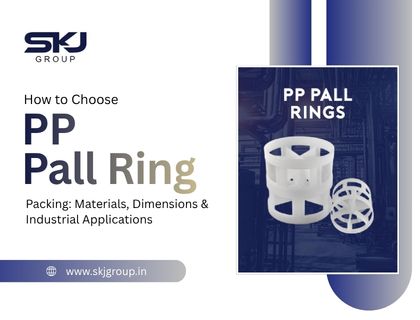
Choosing the right tower packing material is one of the most important decisions in any industrial process design. The wrong packing leads to poor mass transfer, increased pressure drop, operational inefficiency, and higher long-term costs. Getting it right from the start saves time, money, and system downtime.
PP Pall Ring in Mandsaur from SJK India has become a preferred choice for process engineers and procurement teams across India and export markets. As a trusted PP Pall Ring manufacturer SJK India brings together material expertise, dimensional precision, and application knowledge in every product it delivers.
Polypropylene pall rings are widely used in scrubbers, absorption columns, stripping towers, and distillation systems. Their open structure, large surface area, and corrosion resistant materials properties make them suitable for a wide range of aggressive chemical environments. This guide walks you through how to choose the right PP Pall Ring packing for your specific application.
What Is a PP Pall Ring and How Does It Work?
A plastic pall ring is a cylindrical random packing element made from polypropylene. It features internal cross members and finger-like projections on the outer wall that improve liquid and gas distribution inside a packed column.
This structure increases the available contact surface between liquid and vapour phases. Better contact means better mass transfer efficiency, which is the primary goal of any packed tower system. The open geometry of polypropylene pall rings also reduces pressure drop compared to older packing types like Raschig rings.
PP Pall Ring packing sits at the intersection of performance and practicality. It combines the benefits of lightweight packing media with strong chemical resistance packing properties. This makes it suitable for both new installations and retrofits where weight loading on existing columns is a concern.
PP Pall Ring Material Selection for Industrial Applications
PP pall ring material selection for industrial applications is not a one-size-fits-all decision. The right material depends on the chemical environment, operating temperature, and the nature of the fluids being processed.
Polypropylene is the most widely used material for pall rings in moderate temperature and chemical service. It resists acids, alkalis, and a broad range of organic solvents. It performs well in scrubbing systems handling acidic gases and in absorption towers processing caustic solutions.
For higher temperature applications, other plastic grades or ceramic alternatives may be required. However, for the majority of chemical packing media applications in India, polypropylene pall rings offer the best combination of performance, availability, and cost. SJK India as a pall rings manufacturer provides material guidance as part of every technical inquiry.
Choosing the Right PP Pall Ring Size for Tower Packing
Best polypropylene pall ring size for tower packing depends on the column diameter, the required separation efficiency, and the acceptable pressure drop for your process.
Here are five key factors that guide size selection for PP Pall Ring packing in industrial systems:
- Column diameter determines the minimum packing size. Smaller rings in large columns create unnecessary pressure drop and channeling effects.
- Mass transfer requirements influence whether finer or coarser packing is needed. Higher separation demands typically favour smaller ring sizes with more surface area.
- Liquid and gas flow rates affect how the packing behaves under operating conditions. Incorrect sizing leads to flooding or poor wetting of the packing surface.
- Pressure drop tolerance of the system limits how dense or compact the packing bed can be. Lightweight packing media like PP pall rings help manage this effectively.
- Chemical compatibility of the polypropylene with the process fluid must always be confirmed before finalising the size and grade of packing selected.
SJK India’s technical team assists buyers in making these decisions accurately. As a reliable PP Pall Ring exporter, SJK India supplies standard and custom sizes to match specific project needs.
Industrial Applications of Polypropylene Pall Ring Packing
The industrial applications of polypropylene pall ring packing span a remarkably wide range of process industries. This versatility is one of the main reasons PP Pall Ring packing has become a standard choice in packed tower design globally.
| Industry | Application | Why PP Pall Ring Is Used |
| Chemical Processing | Absorption and stripping towers | High chemical resistance, low weight |
| Pharmaceuticals | Solvent recovery columns | Non-reactive, clean surface, FDA-compatible grades available |
| Petrochemicals | Gas scrubbing systems | Handles acidic and caustic gases effectively |
| Water Treatment | Air stripping towers | Durable, low fouling, easy to clean |
| Fertiliser Plants | Ammonia scrubbing columns | Resists nitrogen compounds, stable under load |
| Power Generation | Flue gas desulphurisation | Resists sulphuric acid, long service life |
This table reflects the breadth of environments where PP Pall Ring in Mandsaur from SJK India is actively specified and used. Each application demands slightly different considerations, and SJK India’s team provides application-specific guidance for every project.
Advantages of PP Pall Ring Packing in Scrubber Systems
Advantages of PP pall ring packing in scrubber systems are particularly significant because scrubbers operate in some of the most chemically aggressive environments in industry.
Polypropylene pall rings do not corrode when exposed to acidic or alkaline gases. They maintain their structural integrity over long operational cycles. Their low weight reduces the mechanical load on scrubber shells and support grids, which extends equipment life. The open lattice design promotes uniform gas and liquid distribution, which is essential for effective gas absorption.
Tower packing materials made from polypropylene also require less maintenance than metal alternatives. They do not rust, scale, or degrade from wet-dry cycling. For scrubber operators managing high volumes of corrosive exhaust gas, corrosion resistant materials like PP pall rings represent a practical and economical long-term solution.
Case Study
The plant was experiencing poor absorption efficiency and high pressure drop in its existing packed scrubber columns. The original ceramic packing was heavy, prone to breakage during maintenance, and causing structural stress on ageing column supports. The plant’s process team contacted SJK India for an assessment. After reviewing the column dimensions, gas flow rates, and chemical environment, SJK India recommended replacing the ceramic packing with polypropylene pall rings of a suitable size. The installation was completed during a scheduled maintenance shutdown. After restart, the plant reported noticeably improved gas absorption, a reduction in pressure drop across the column, and significantly easier maintenance access. The lighter weight of the PP pall rings also removed the structural load concern entirely.
FAQ’s About PP Pall Ring
Q1. What is a PP Pall Ring used for in industry?
PP Pall Rings are used in absorption towers, scrubbers, and stripping columns to improve mass transfer and gas-liquid contact.
Q2. How do I choose the right PP Pall Ring size for my tower?
Select size based on column diameter, flow rates, separation requirements, and acceptable pressure drop for your specific process.
Q3. What makes polypropylene better than ceramic for pall ring packing?
Polypropylene is lighter, corrosion resistant, and easier to handle than ceramic, making it ideal for most chemical environments.
Q4. What industries use PP Pall Ring packing most commonly?
Chemical processing, pharmaceuticals, petrochemicals, water treatment, fertiliser plants, and power generation use PP Pall Ring packing regularly.
Q5. What temperature range can PP Pall Rings handle?
Polypropylene pall rings perform well in moderate temperature service. Higher temperatures may require HDPE or other engineered plastic grades.
Q6. Are PP Pall Rings resistant to acids and alkalis?
Yes, polypropylene pall rings offer excellent resistance to a wide range of acids, alkalis, and common industrial solvents.
Q7. Can SJK India supply custom sizes of PP Pall Rings?
Yes, SJK India as a PP Pall Ring manufacturer and supplier provides standard and custom sizes for specific industrial project needs.
Q8. How can I get PP Pall Ring packing supplied from Mandsaur?
Contact SJK India directly as a trusted PP Pall Ring supplier and exporter in Mandsaur for pricing, sizing, and delivery details.
Conclusion
Selecting the right PP Pall Ring packing is a technical decision that directly shapes the efficiency, cost, and reliability of your industrial process. From material selection to size optimization, every choice matters.
PP Pall Ring in Mandsaur from SJK India combines proven polypropylene pall rings quality with genuine application expertise. Whether you need a trusted PP Pall Ring manufacturer, a reliable PP Pall Ring supplier, or an experienced PP Pall Ring exporter for international projects, SJK India is equipped to deliver.