What is 4A Molecular Sieve and How Does It Work?

How to Choose Ceramic Tiles: Design and Durability
April 10, 2026
Why High Alumina Ceramic Balls Are Used in Reactors
April 14, 2026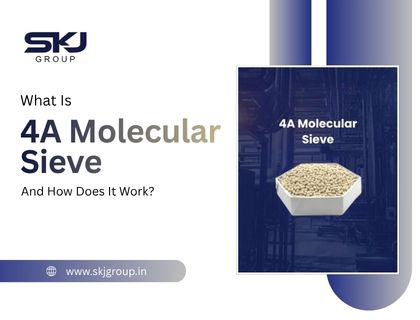
4A Molecular Sieve is one of the most widely used industrial adsorption materials across chemical, pharmaceutical, and gas processing industries today. India’s industrial sector consumes significant volumes of molecular sieve adsorbent annually, driven by growing demand in petrochemical refining, air separation, and solvent dehydration processes. 4A Molecular Sieve in India is manufactured and supplied by specialized producers who meet both domestic and international quality standards.
This material works by selectively trapping molecules smaller than a specific size while allowing larger molecules to pass through freely. Understanding how it works helps industries choose the right desiccant material for each application and achieve consistent, reliable drying performance.
What Is 4A Molecular Sieve and Why Does Pore Size Matter?
4A Molecular Sieve belongs to the zeolite family of crystalline aluminosilicate materials. The “4A” designation refers to a pore opening size of approximately four angstroms, which is the measurement unit used to describe the size of the channels within the material’s crystal structure.
This precise pore size determines which molecules the sieve can capture and which it cannot. Molecules smaller than four angstroms are adsorbed and held inside the crystal structure. Molecules larger than this size pass through without being captured.
This selective adsorption is the foundation of how Zeolite 4A functions in industrial processes. The material does not absorb molecules randomly. It filters them based purely on size, making it highly predictable and repeatable across different applications.
How Does 4A Molecular Sieve Remove Moisture From Industrial Systems?
The moisture adsorption process in 4A Molecular Sieve relies on the physical and chemical affinity of the zeolite crystal structure for water molecules.
When a gas or liquid stream containing moisture passes through a bed of 4A molecular sieve, water molecules are captured inside the pores due to strong electrostatic forces within the crystal lattice. The water is held firmly until the sieve is regenerated by applying heat, at which point the adsorbed moisture is released and the sieve can be reused.
Five reasons this process is valuable for industrial operations:
- Water removal from gas streams prevents corrosion and equipment damage in downstream processing units
- Solvent dehydration using 4A molecular sieve produces high-purity anhydrous solvents required by pharmaceutical and chemical manufacturers
- Moisture control in packaging and sealed systems prevents product degradation during storage and transport
- Air separation technology systems depend on dry feed air, making molecular sieve pre-drying a critical upstream step
- Consistent moisture removal improves the reliability and lifespan of catalysts and sensitive process equipment
Working Principle of 4A Molecular Sieve Adsorption Explained
The working principle of 4A Molecular Sieve adsorption involves three stages: adsorption, saturation, and regeneration.
During the adsorption stage, the dry molecular sieve bed captures moisture and small molecules from the passing gas or liquid stream. This continues until the sieve approaches saturation, at which point its adsorption capacity begins to decline.
Once saturated, the sieve is regenerated by heating it to a high temperature, which drives off the adsorbed water and restores the material to its original adsorption capacity. This cycle can be repeated many times without significant loss of performance, making 4A molecular sieve a cost-effective and sustainable desiccant material for continuous industrial use.
What Is 4A Molecular Sieve Used for in Industry?
4A Molecular Sieve in India serves a broad range of industrial applications due to its reliable moisture and small molecule adsorption capability.
Primary industrial uses include:
- Gas drying applications in natural gas processing, where the sieve removes water vapor before gas enters pipeline or liquefaction systems
- Dehydration of solvents such as ethanol, methanol, and acetone in pharmaceutical and chemical manufacturing
- Air drying in compressed air systems, instrument air networks, and industrial air separation plants
- Refrigerant drying in refrigeration and air conditioning systems where moisture causes system failure
- Insulating glass units where molecular sieve desiccant prevents condensation inside double-glazed window panels
Each of these applications depends on the sieve’s ability to deliver consistent, repeatable performance across thousands of adsorption and regeneration cycles.
Difference Between 3A, 4A, and 5A Molecular Sieves
A common question from industrial buyers is how 4A molecular sieve differs from the 3A and 5A variants. The primary difference lies in pore size and the specific molecules each type can adsorb.
| Type | Pore Size | Key Molecules Adsorbed | Primary Applications |
| 3A Molecular Sieve | 3 Angstrom | Water only | Ethanol dehydration, cracked gas drying |
| 4A Molecular Sieve | 4 Angstrom | Water, CO2, H2S, SO2 | General drying, air drying, refrigerants |
| 5A Molecular Sieve | 5 Angstrom | Water, mercaptans, normal paraffins | Natural gas, air separation, petroleum |
| 13X Molecular Sieve | 10 Angstrom | Large molecules, aromatics | Deep drying, air purification |
4A Molecular Sieve sits in the middle of the range, offering a balance between selectivity and capacity that makes it the most commonly used type across general industrial drying and purification applications.
Benefits of Using 4A Molecular Sieve in Air Drying Systems
4A Molecular Sieve delivers specific advantages in air drying applications that make it a preferred choice over silica gel and activated alumina in many industrial settings.
Key benefits include:
- Higher adsorption capacity at low moisture concentrations, allowing deeper drying than many alternative desiccant materials
- Stable performance across a wide temperature range, making it suitable for both ambient and cryogenic air drying systems
- Ability to adsorb carbon dioxide and hydrogen sulfide in addition to water, simplifying multi-contaminant removal in a single bed
- Predictable regeneration behavior that allows precise design of temperature swing adsorption systems
- Long service life with minimal degradation when operated within recommended temperature and humidity parameters
Industries using compressed air systems, instrument air networks, and air separation plants in India consistently prefer 4A Molecular Sieve manufacturers for these reasons.
4A Molecular Sieve Manufacturers and Suppliers in India
The availability of high-quality 4A molecular sieve in Mandsaur and other industrial centers in India reflects the country’s growing manufacturing capability in specialty adsorption materials.
4A molecular sieve manufacturers in India produce material in bead, pellet, and powder forms to suit different application requirements. Beads are preferred for packed bed adsorbers due to their low pressure drop and high mechanical strength. Pellets are used where a more uniform bed structure is required.
Reputable 4A molecular sieve suppliers provide full product documentation including adsorption capacity data, bulk density specifications, crush strength values, and moisture content certificates. This documentation is essential for process engineers designing adsorption systems to precise performance targets.
4A molecular sieve exporters based in India serve markets across Southeast Asia, the Middle East, Africa, and Europe, where Indian-manufactured molecular sieve is recognized for consistent quality and competitive pricing.
Case Study
Background: A pharmaceutical manufacturer based in Gujarat, India, was operating an ethanol recovery and dehydration unit as part of its active pharmaceutical ingredient production process. The plant required consistently anhydrous ethanol to meet product quality specifications.
Challenge: The existing desiccant system using silica gel was not achieving the required moisture removal depth. The output ethanol contained residual moisture that was causing quality failures in the downstream synthesis step, leading to batch rejections and production delays.
Solution Applied: The plant’s process engineering team switched to 4A molecular sieve beads supplied by a certified 4A molecular sieve manufacturer in India. The sieve was installed in a twin-tower temperature swing adsorption system, allowing one tower to adsorb while the other regenerated continuously.
Outcome: After switching to 4A molecular sieve, the plant achieved consistent anhydrous ethanol output that met its internal quality specification. Batch rejection rates in the downstream synthesis step dropped significantly. The molecular sieve bed showed stable performance across repeated adsorption and regeneration cycles, confirming the material’s reliability for continuous pharmaceutical production use.
FAQ‘s About 4A Molecular Sieve
Q1. What is 4A molecular sieve used for in industry?
It is used for drying gases, dehydrating solvents, purifying refrigerants, and removing moisture from compressed air systems.
Q2. How does a 4A molecular sieve remove moisture?
Water molecules enter the four-angstrom pores through electrostatic forces and are held until the sieve is thermally regenerated.
Q3. What is the working principle of 4A molecular sieve adsorption?
It selectively captures molecules smaller than four angstroms through physical adsorption inside its crystalline zeolite structure.
Q4. What are the benefits of using 4A molecular sieve in air drying systems?
It delivers deep moisture removal, stable capacity across temperature ranges, and long service life with predictable regeneration behavior.
Q5. What is the difference between 3A, 4A, and 5A molecular sieves?
Pore size differs across each type, determining which molecules are adsorbed and which industrial applications each type suits.
Q6. Can 4A molecular sieve be reused after saturation?
Yes, it is fully regenerated by heating to the recommended temperature, restoring its original adsorption capacity for continued use.
Q7. Where is 4A molecular sieve manufactured in India?
Leading production centers include Mandsaur and other industrial regions where specialized zeolite manufacturing infrastructure is established.
Q8. How is 4A molecular sieve different from silica gel as a desiccant?
Molecular sieve achieves deeper drying at low moisture levels, while silica gel is more suited for moderate humidity control applications.
Conclusion
4A Molecular Sieve is a reliable, high-performance desiccant material that has earned its place as a standard component in industrial drying and purification systems across India and globally. Its precise pore size, strong adsorption capacity, and regenerability make it suitable for a wide range of demanding applications from pharmaceutical solvent dehydration to industrial air separation. 4A Molecular Sieve in India is produced by manufacturers who understand the technical requirements of their industrial clients and deliver consistent, documented product quality with every batch. Working with trusted 4A molecular sieve manufacturers, suppliers, and exporters ensures that your adsorption system performs reliably from the first cycle through years of continuous operation. SJK India is ready to support your requirements with quality, expertise, and dependable supply.