What is a Ceramic Honeycomb Structure in Construction?

What Are Partitioned Ceramic Rings Used For? Benefits and Applications in Filtration
November 12, 2024
What is the Purpose of a PP Pall Ring?
November 20, 2024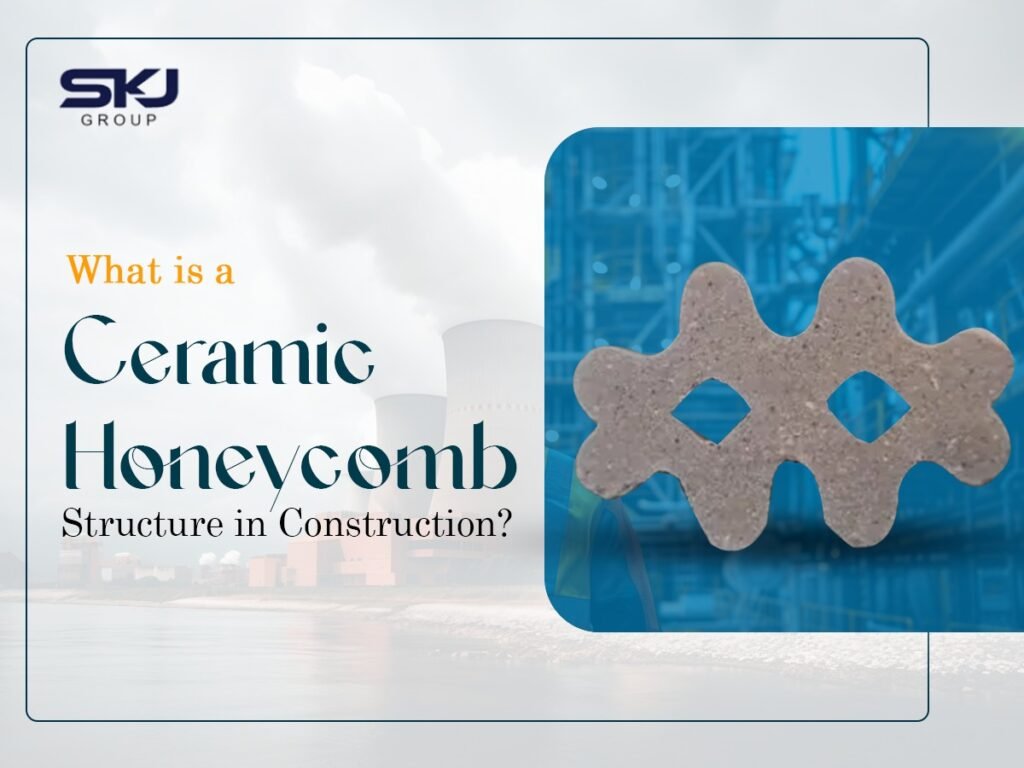
This image showcases a ceramic honeycomb structure, widely used in construction for its lightweight, high-strength, and durable properties. Its unique design enhances thermal insulation, load-bearing capacity, and material efficiency, making it ideal for walls, partitions, and sustainable building applications. Architects and engineers rely on ceramic honeycomb structures to optimize energy performance, reduce construction material usage, and improve long-term structural integrity.
A ceramic honeycomb structure is a panel built from thin ceramic walls arranged in a hexagonal grid, used in construction for its high strength-to-weight ratio. It reduces load on a building’s frame while still carrying real compressive weight, and the cellular design gives it strong thermal insulation and fire resistance. Architects specify it for facades, partition walls, and fireproof linings where heavier materials would add cost without adding performance.
Why the Hexagon Shape Does All the Work
The hexagonal cells spread weight evenly across the entire panel instead of concentrating it at a few points. It’s the same principle behind lightweight aerospace panels, applied to ceramic instead of metal.
- Hexagonal cells distribute load evenly, removing weak points
- Trapped air inside each cell slows heat transfer through the panel
- The ceramic resists corrosion without coatings or sealants
- Open cell design cuts material volume without cutting strength
This combination is why honeycomb construction has moved from a niche technique into a real building specification conversation over the past decade.
What Separates a Good Panel From a Weak One
Understanding the manufacturing process explains why quality varies so much between suppliers. It starts with a ceramic clay body mixed to a controlled consistency, extruded through a die that forms the hexagonal cell pattern in a single continuous pass, cut to length, dried slowly under controlled humidity, and fired in a kiln at high temperature.
- Die precision determines whether cell walls are uniform or vary in thickness across the panel
- Drying rate matters more than most buyers realise, since rushing it causes internal cracking that only shows up under load months later
- Firing temperature and hold time set the final density, hardness, and thermal performance
- Post-firing inspection should check dimensional tolerance and look for cell deformation
Two panels that look identical on a showroom shelf can behave very differently in a wall if one manufacturer shortened the drying cycle to increase output.
Where You’ll Actually See This in a Building
Wall panels and facades: Exterior and interior walls use these panels for combined insulation and soundproofing across residential, commercial, and industrial buildings. The weight saving is most valuable on upper floors and retrofit projects where the existing structure has limited spare load capacity.
Fireproof and high-heat areas: Kiln linings, oven walls, and fire-rated partitions rely on the panel’s heat resistance, since ceramic doesn’t degrade the way synthetic insulation does under sustained heat. This is also why industrial buildings often specify it for boiler room and plant room partitions.
Lightweight partition walls: In space-constrained builds, this gives a durable divider without the floor loading a solid wall adds. Office fit-outs and hospital interiors use it for exactly this reason.
Flooring and roofing systems: Larger projects use these panels where strength and thermal performance are needed in the same layer, reducing the number of separate build-up layers required.
How It Compares to Common Alternatives
| Material | Weight | Thermal Insulation | Fire Resistance | Typical Lifespan |
| Ceramic honeycomb panel | Low | High | Excellent | Very long |
| Solid brick or block | High | Moderate | Good | Very long |
| Gypsum board partition | Low | Low | Moderate | Moderate |
| Synthetic foam panel | Very low | High | Poor | Moderate |
Gypsum is cheaper upfront but offers little thermal benefit. Foam panels insulate well but fail badly in fire. Ceramic honeycomb sits in the useful middle: lightweight like a partition board, but with the fire and thermal performance of a heavy material.
Why Specify It Over Traditional Materials
Cost usually decides it once buyers see the full picture. These panels typically come in below heavy masonry per square meter once reduced foundation load and faster installation are factored in. Lighter panels also mean smaller lifting equipment on site and fewer labour hours per wall.
They’re made largely from natural mineral resources, so sustainability-focused projects can specify them without the trade-offs synthetic panels bring. For projects chasing green building certification, the combination of long service life, mineral composition, and reduced operational heating load all count in your favour.
If your project also needs structural ceramic components beyond wall panels, our guide on where high alumina ceramic products fit into industrial applications covers a related use case worth reviewing before you finalize specs.
Where Buyers Usually Go Wrong
- Choosing on thickness alone: Cell wall thickness and firing quality affect strength more than overall panel depth does.
- Ignoring the fixing system: A panel rated for your load will still fail if the bracket or adhesive system isn’t matched to it.
- Skipping the sample: Colour, surface finish, and dimensional consistency vary between batches, and a sample catches this before a full order arrives on site.
- Assuming all fire ratings are equal: A material being fire resistant is not the same as the assembly holding a certified rating.
What to Ask Before You Place an Order
Choosing a ceramic honeycomb structure supplier comes down to whether they can back up their claims with data:
- Confirm the compressive strength rating matches your load calculations, not just a general claim
- Ask for thermal conductivity figures at your specific panel thickness
- Check fire rating certification if the panel goes into a fire-rated assembly
- Request a sample panel before committing to a full project order
- Confirm lead time and batch consistency if the project needs repeat deliveries
A reliable ceramic honeycomb structure manufacturer will provide all of this without being asked twice. Vague answers on strength ratings are worth treating as a warning sign, since those are exactly the figures your structural engineer will need to sign off the design.
Frequently Asked Questions
1. What makes a ceramic honeycomb structure stronger than traditional wall materials?
The hexagonal cell arrangement spreads load evenly across the panel, giving high compressive strength while using far less material than a solid wall of the same thickness.
2. Is a ceramic honeycomb structure fire resistant?
Yes. Ceramic resists high heat without degrading, which is why these panels are used in fireproof walls, kiln linings, and high-temperature applications.
3. How long does ceramic honeycomb material last in a building?
With no coating breakdown or corrosion risk, these panels typically outlast comparable synthetic insulation and partition materials under normal conditions.
4. Does it need special installation?
It installs similarly to standard panel systems, though load calculations should confirm compatibility with your frame and foundation design, and the fixing system must be rated for the panel.
5. Is this a sustainable material choice?
Yes. It’s produced largely from natural mineral resources, and its long service life reduces replacement and material waste over a building’s lifetime.
6. Can these panels be cut or shaped on site?
Standard panels can be cut with appropriate tooling, though cutting through cell walls reduces edge strength, so factory-cut sizes are preferred where possible.
Talk to Our Team
If you’re specifying materials for an upcoming build and want technical data sheets or a sample panel, reach out to SKJ Group for sizing, thermal ratings, and lead times.