13X Molecular Sieve for Gas Drying and Air Separation: Complete Industrial Guide

Cordierite DPF Honeycomb Ceramic for Emission Control
January 9, 2026
Wood Based Granular Activated Carbon for Liquid Purification
January 21, 2026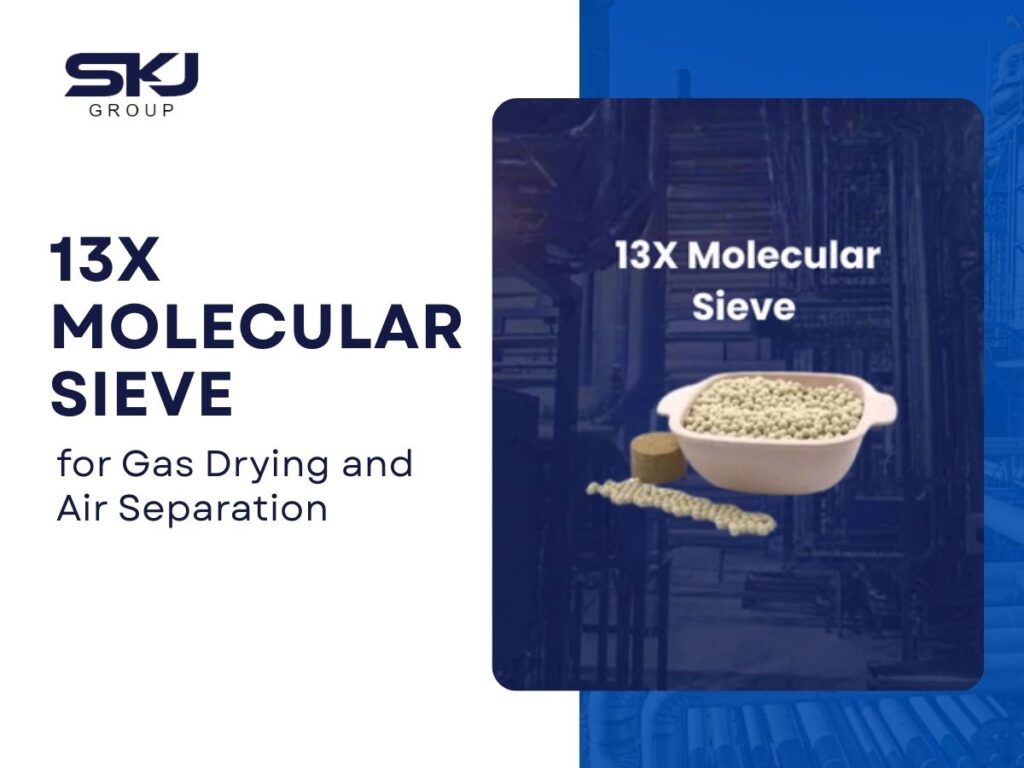
A major petrochemical facility in Gujarat achieved 99.9% moisture removal efficiency in their natural gas processing unit after switching to 13X molecular sieve adsorbents in 2024. This case study demonstrates how advanced molecular sieve desiccant technology delivers superior dehydration performance in demanding industrial applications.
Industrial gas drying and air separation require precise moisture control to ensure product quality, equipment protection, and process efficiency. 13X molecular sieve technology has emerged as the industry standard for removing water and other contaminants from gas streams across diverse applications.
This comprehensive guide explores how 13X molecular sieve for industrial dehydration applications delivers exceptional performance in gas drying, air separation, and purification processes. Understanding the capabilities of this microporous zeolite material enables informed decisions for optimizing your gas processing operations.
What is 13X Molecular Sieve?
The 13X molecular sieve is a synthetic zeolite 3A adsorbent with a sodium aluminosilicate crystal structure featuring uniform pore openings of approximately 10 angstroms. This precise pore size enables selective adsorption of molecules smaller than the pore diameter while excluding larger molecules.
The “13X” designation indicates the silica-to-alumina ratio in the zeolite framework. This composition creates a highly polar adsorbent surface with exceptional affinity for water molecules and other polar compounds, making it ideal for 13X molecular sieve for gas and air drying systems.
The three-dimensional cage structure of this potassium aluminosilicate molecular sieve provides high adsorption capacity and rapid mass transfer rates. These characteristics ensure efficient moisture removal even at low partial pressures and elevated temperatures.
Key Properties of 13X Molecular Sieve Material
1. Superior Adsorption Capacity
The 13X molecular sieve exhibits the highest water adsorption capacity among commonly used molecular sieves, achieving dynamic water uptake exceeding 25% by weight. This exceptional capacity reduces regeneration frequency and improves operational efficiency.
The material selectively adsorbs molecules including:
- Water vapor (H2O)
- Carbon dioxide (CO2)
- Hydrogen sulfide (H2S)
- Sulfur dioxide (SO2)
- Mercaptans and other sulfur compounds
2. Thermal Stability and Regenerability
Industrial grade 13X molecular sieve desiccant maintains structural integrity at regeneration temperatures up to 350°C. This thermal stability enables complete desorption of adsorbed molecules and restoration of full adsorption capacity.
Repeated adsorption and regeneration cycles demonstrate minimal capacity degradation when proper regeneration procedures are followed. This durability translates to extended service life and reduced operating costs.
3. Chemical Resistance
The aluminosilicate framework provides excellent resistance to most industrial gases and process streams. However, 13X molecular sieve can be damaged by strong acids, which break down the zeolite structure, and liquid water, which can cause particle breakdown.
Applications of 13X Molecular Sieve for Gas Processing
1. Natural Gas Dehydration
The 13X molecular sieve for industrial dehydration applications plays a critical role in natural gas processing by removing water vapor to prevent hydrate formation and pipeline corrosion. The adsorbent achieves dew points below -100°C, meeting stringent pipeline specifications.
The material simultaneously removes mercaptans and other sulfur compounds that contribute to gas odor and corrosivity. This dual functionality reduces equipment requirements and operational complexity.
2. Air Separation and Purification
In cryogenic air separation plants, 13X molecular sieve for gas and air drying systems removes water vapor and carbon dioxide from compressed air feeds. This pre-purification prevents ice and dry ice formation in cold boxes that would block equipment and disrupt operations.
The process typically employs dual-bed systems alternating between adsorption and regeneration cycles. This configuration ensures continuous operation while maintaining strict purity requirements for oxygen and nitrogen production.
3. Compressed Air Drying
Industrial compressed air systems utilize 13X molecular sieve beads in desiccant dryers to achieve pressure dew points of -40°C to -70°C. This deep drying protects pneumatic equipment, prevents corrosion, and ensures product quality in moisture-sensitive manufacturing processes.
The high adsorption capacity of 13X molecular sieve reduces bed size requirements compared to alternative desiccants. This compactness saves installation space and reduces pressure drop across the dryer.
4. Hydrogen Purification
The 13X molecular sieve effectively removes water, carbon dioxide, and light hydrocarbons from hydrogen streams in refineries and chemical plants. This purification enhances hydrogen purity for critical applications including hydroprocessing and fuel cell operations.
The material’s selectivity enables targeted contaminant removal without significantly adsorbing the desired hydrogen product. This characteristic maximizes hydrogen recovery while achieving required purity specifications.
Technical Specifications and Product Forms
1. Bead and Pellet Configurations
13X molecular sieve beads for solvent purification are available in various sizes to optimize performance for specific applications:
- 4×8 mesh (2.0-4.0mm) for high flow applications
- 8×12 mesh (1.4-2.0mm) for balanced performance
- 4×6 mesh (3.0-5.0mm) for low pressure drop requirements
Pelletized forms provide enhanced crush strength for applications with high mechanical stress. The choice between beads and pellets depends on pressure drop constraints, required adsorption capacity, and mechanical durability needs.
2. Quality Standards and Specifications
Industrial grade 13X molecular sieve desiccant from reputable 13X molecular sieve manufacturer facilities meets rigorous quality standards:
- Static water adsorption capacity: minimum 25% by weight
- Crush strength: 25-35 N for 8×12 mesh beads
- Bulk density: 640-680 kg/m³
- Loss on ignition: maximum 1.5%
- Particle size distribution: minimum 95% within specification range
SJK India: Trusted 13X Molecular Sieve Supplier
As a leading 13X molecular sieve manufacturer in India, SJK India produces high-performance zeolite 3A adsorbent materials meeting international quality standards. Our advanced manufacturing facilities ensure consistent product specifications and reliable supply.
Our role as a comprehensive 13X molecular sieve supplier extends beyond product delivery to include technical support, application engineering, and performance optimization services. We work closely with clients to select the optimal microporous zeolite material for their specific gas drying and purification requirements.
Operating as a global 13X molecular sieve exporter, we serve diverse industries including:
- Oil and gas processing
- Air separation and industrial gas production
- Petrochemical manufacturing
- Pharmaceutical production
- Electronics manufacturing
System Design Considerations
1. Bed Sizing and Configuration
Proper sizing of 13X molecular sieve beds requires analysis of feed gas flow rates, moisture content, required dew point, and cycle times. Undersized beds lead to premature breakthrough and inadequate drying, while oversized beds waste capital and increase operating costs.
Typical design approaches include:
- Temperature swing adsorption (TSA) for moderate moisture loads
- Pressure swing adsorption (PSA) for high-pressure applications
- Combined temperature and pressure swing for maximum efficiency
2. Regeneration Methods
Effective regeneration restores molecular sieve desiccant adsorption capacity by removing captured moisture and contaminants. Common regeneration methods include:
- Thermal regeneration: Heating the bed to 200-300°C with hot purge gas drives off adsorbed molecules. This method achieves complete regeneration but requires significant energy input.
- Pressure swing regeneration: Reducing system pressure allows desorption of adsorbed molecules. This approach works well for high-pressure adsorption applications with available low-pressure purge gas.
- Combined regeneration: Combining heat and pressure reduction optimizes energy efficiency and regeneration effectiveness for many applications.
3. Pretreatment Requirements
13X molecular sieve for gas and air drying systems requires proper feed gas pretreatment to maximize performance and service life:
- Particulate filtration to 3 microns removes solid contaminants
- Coalescing filtration eliminates liquid droplets
- Temperature control prevents thermal shock during startup
- Pressure regulation maintains design operating conditions
Performance Optimization Best Practices
1. Startup and Commissioning
New 13X molecular sieve installations require proper activation to remove manufacturing moisture and residual binder materials. Gradual temperature ramping during initial regeneration prevents thermal stress and ensures optimal performance.
Initial breakthrough monitoring verifies proper bed sizing, confirms effective regeneration, and establishes performance baselines. This data guides ongoing operation and identifies potential issues early.
2. Operational Monitoring
Regular monitoring of key performance indicators ensures optimal potassium based molecular sieve for moisture removal operation:
- Outlet dew point or moisture content
- Pressure drop across adsorbent beds
- Regeneration temperature profiles
- Cycle times and switching frequency
Trending this data identifies gradual performance degradation requiring maintenance intervention before process upsets occur.
3. Troubleshooting Common Issues
- Premature breakthrough: Indicates inadequate bed sizing, incomplete regeneration, or feedgas pretreatment problems. Verify regeneration temperatures, check pretreatment equipment, and analyze feedgas composition.
- Excessive pressure drop: Suggests bed channeling, fines migration, or particulate contamination. Inspect bed support media, verify backfill procedures, and evaluate upstream filtration effectiveness.
- Capacity degradation: Results from incomplete regeneration, liquid water exposure, or chemical contamination. Review regeneration procedures, check for process upsets, and consider adsorbent replacement if severe.
Environmental and Economic Benefits
1. Energy Efficiency Advantages
13X molecular sieve for industrial dehydration applications delivers superior energy efficiency compared to refrigeration-based drying methods. The adsorption process operates at ambient or elevated temperatures without requiring mechanical refrigeration equipment.
Optimized regeneration cycles minimize energy consumption while maintaining required dew points. Heat recovery from regeneration gas further reduces operating costs in many applications.
2. Process Reliability
The robust nature of industrial grade 13X molecular sieve desiccant ensures consistent performance across varying operating conditions. This reliability reduces unplanned downtime, eliminates product quality issues, and protects downstream equipment from moisture damage.
Automated control systems enable unmanned operation with minimal intervention. This operational simplicity reduces labor requirements and allows focus on core production activities.
3. Sustainability Impact
Removing moisture and contaminants from process gases reduces environmental emissions and improves product quality. 13X molecular sieve technology enables cleaner production processes while meeting increasingly stringent environmental regulations.
The regenerable nature of molecular sieves eliminates disposable desiccant waste. This sustainability advantage aligns with corporate environmental goals and reduces long-term material costs.
FAQ’s About 13X molecular sieve
1. What makes 13X molecular sieve ideal for gas drying applications?
13X molecular sieve offers the highest water adsorption capacity among zeolite types, achieving deep drying to -100°C dew points.
2. How long does 13X molecular sieve last in industrial applications?
With proper regeneration and operation, 13X molecular sieve typically provides 3 to 5 years of reliable service life.
3. Can 13X molecular sieve be regenerated and reused multiple times?
Yes, molecular sieve desiccant can be regenerated hundreds of times when proper temperature and purge procedures are followed.
4. What is the difference between 3A, 4A, 5A, and 13X molecular sieves?
The numbers indicate pore diameter: 3A (3Å), 4A (4Å), 5A (5Å), and 13X (10Å), determining which molecules are adsorbed.
5. How do you regenerate 13X molecular sieve effectively for gas drying?
Heat 13X molecular sieve to 200-300°C with dry purge gas for 3 to 6 hours to fully restore adsorption capacity.
6. What are the key specifications when selecting 13X molecular sieve suppliers?
Verify static water capacity (minimum 25%), crush strength, size distribution consistency, and quality certifications from 13X molecular sieve manufacturer facilities.
7. What pretreatment is required for 13X molecular sieve gas drying systems?
Remove particulates to 3 microns, eliminate liquid droplets, control temperature, and ensure stable pressure to protect 13X molecular sieve integrity.
8. How does 13X molecular sieve compare to silica gel for dehydration?
13X molecular sieve achieves lower dew points, higher capacity, and operates at elevated temperatures compared to silica gel desiccants.
Conclusion: Partner with SJK India for Superior Gas Drying Solutions
13X molecular sieve for gas drying and air separation represents the most effective solution for achieving ultra-low moisture levels in industrial gas processing applications. The combination of high adsorption capacity, thermal stability, and regenerability makes this microporous zeolite material the preferred choice across diverse industries.
As environmental regulations tighten and product quality requirements become more stringent, investing in proven 13X molecular sieve technology ensures operational reliability while reducing long-term costs.