The Role of Ceramic Saddles in Petrochemical Distillation Columns

Applications of 13X-HP Molecular Sieve in High-Pressure Gas Plants
February 25, 2026
How 13X Molecular Sieve Supports Oxygen Production Plants
March 2, 2026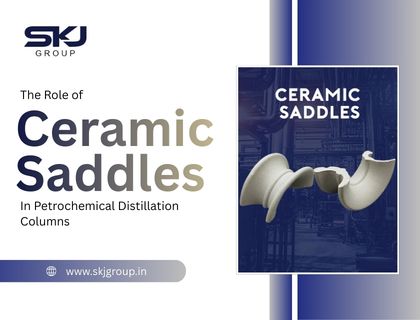
Petrochemical refining and chemical processing industries depend on efficient mass transfer and vapor-liquid contact within distillation columns to separate complex hydrocarbon mixtures. Ceramic saddles have established themselves as the industry standard for random tower packing, delivering exceptional performance in corrosive environments and high-temperature applications where alternative materials fail. As a leading ceramic saddles manufacturer, SJK India understands the critical role these versatile packing elements play in optimizing separation efficiency while withstanding the demanding conditions characteristic of petrochemical operations.
Ceramic saddle tower packing provides the essential surface area and flow distribution that enable efficient separation of crude oil fractions, petrochemical intermediates, and specialty chemical products. The unique saddle geometry creates turbulent flow patterns that maximize vapor-liquid contact while maintaining low pressure drop across packed beds, a crucial balance for energy-efficient column operation.
Understanding Ceramic Saddles Technology
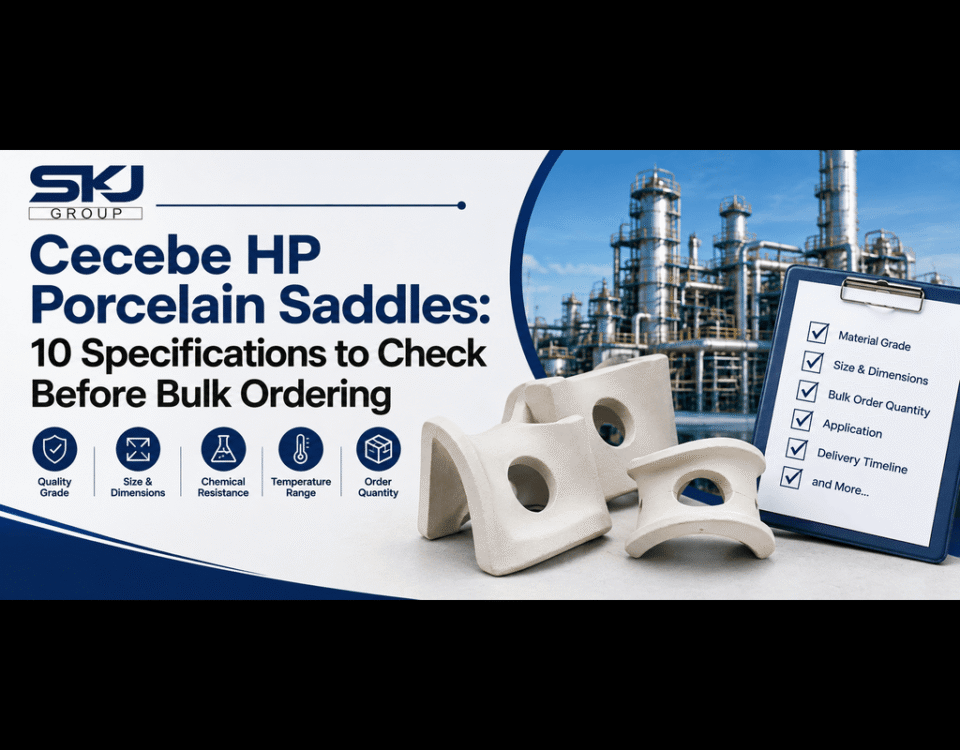
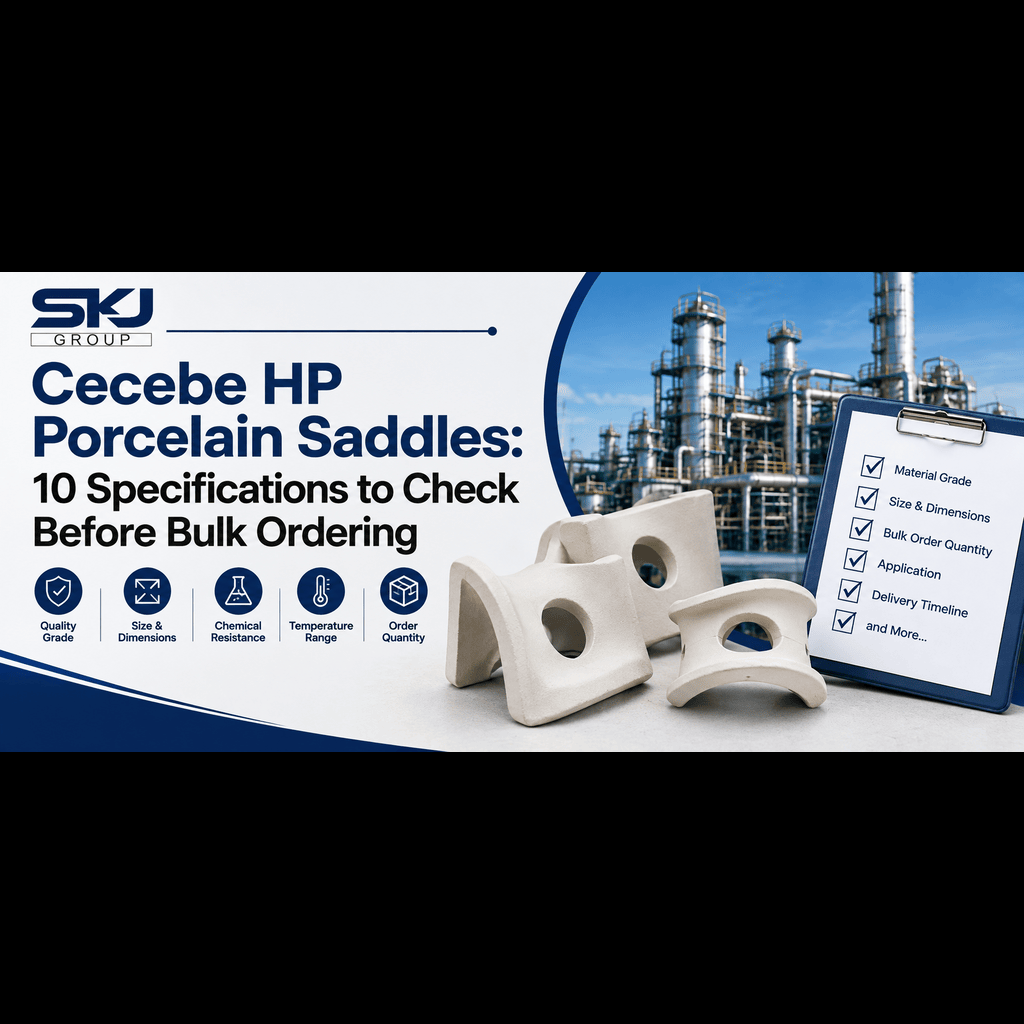
Ceramic saddles are manufactured from high-purity alumina, porcelain, or stoneware ceramics through precision molding and high-temperature firing processes. The saddle shape features a curved body with an arch-like structure that provides mechanical strength while creating void spaces for vapor flow and liquid distribution.
Intalox ceramic saddles represent the most widely used variant, featuring an improved design over earlier Berl saddles with enhanced mass transfer characteristics and lower pressure drop. The geometry includes partition walls within the saddle body that improve liquid distribution and create additional surface area for vapor-liquid contact.
Standard sizes available from ceramic saddles supplier companies range from 6mm to 75mm nominal diameter, with 25mm and 38mm being the most common in petrochemical applications. Size selection depends on column diameter, required theoretical stages, allowable pressure drop, and liquid/vapor loading conditions.
The ceramic material composition provides exceptional chemical resistance to acids, alkalis, solvents, and oxidizing environments that would rapidly degrade metal or plastic packing materials. Operating temperature capability extends from cryogenic conditions to 1200°C depending on specific ceramic formulation, accommodating virtually any petrochemical process requirement.
Critical Applications in Petrochemical Distillation
1. Crude Oil Fractionation
Atmospheric and vacuum distillation columns separating crude oil into gasoline, naphtha, kerosene, diesel, and residual fractions employ ceramic saddles in stripping sections and side-stream draw zones. The high-temperature stability proves essential in vacuum column bottoms operating at 350-400°C.
Ceramic saddles tower packing in crude distillation wash zones removes entrained salts and contaminants protecting downstream processing equipment from corrosion and fouling. The chemical resistance enables long service life despite exposure to acidic compounds and chlorides that attack metallic packings.
The loading capacity and efficiency of intalox ceramic saddles enable refineries to maximize throughput within existing column infrastructure. Retrofitting older columns with modern ceramic packing often increases capacity by 15-25% without requiring column shell modifications.
2. Aromatic Hydrocarbon Production
Benzene, toluene, and xylene (BTX) production involves precise separation of close-boiling aromatic compounds requiring high theoretical stage efficiency. Ceramic saddles in Mandsaur installations and throughout India serve BTX fractionation columns where product purity specifications demand optimal mass transfer performance.
Styrene production distillation operates under vacuum conditions (typically 50-150 mmHg absolute) at temperatures where polymer formation tendencies require inert packing materials. The ceramic composition prevents catalytic polymerization that metallic surfaces can promote, reducing fouling and extending run lengths.
Cumene production and phenol synthesis involve corrosive process streams that rapidly attack metal packings. Ceramic saddles provide the chemical inertness essential for reliable long-term operation in these demanding environments.
3. Ethylene and Propylene Separation
Olefin plant demethanizer, deethanizer, and depropanizer columns process high-pressure, low-temperature streams requiring packing materials with excellent thermal shock resistance. Ceramic saddles manufacturer products withstand thermal cycling from startup, shutdown, and upset conditions without cracking or structural degradation.
C3 splitter columns separating propylene from propane achieve polymer-grade propylene purity (99.5%+) using multiple beds of intalox ceramic saddles providing the theoretical stages necessary for this difficult separation. The low pressure drop characteristic proves crucial in high-reflux ratio operation where column pressure drop directly impacts energy consumption.
4. Specialty Chemical Production
Fine chemical and pharmaceutical intermediate production involves batch distillation of diverse chemical mixtures in multi-purpose columns. Ceramic saddles tower packing accommodates varying chemical compositions without compatibility concerns, eliminating the need for packing changeouts between campaigns.
Solvent recovery systems in chemical manufacturing facilities utilize ceramic saddles to reclaim and purify solvents for reuse, reducing raw material costs and waste disposal expenses. The stable performance over years of service provides predictable separation efficiency for process control and quality assurance.
Case Study: Refinery Crude Unit Optimization
A major petroleum refinery in Gujarat processing 180,000 barrels per day of crude oil partnered with ceramic saddles exporter SJK India to upgrade their atmospheric distillation column packing. The existing 25mm metal Pall rings showed significant corrosion and capacity limitations after 8 years of service.
Previous System Challenges:
- Reduced throughput capacity from packing corrosion and fouling
- Increasing pressure drop limiting vacuum column performance
- Product quality variations from declining separation efficiency
- Frequent column shutdowns for packing inspection and replacement
- High maintenance costs from accelerated packing degradation
Solution Implementation:
SJK India supplied 145 cubic meters of premium intalox ceramic saddles in 25mm and 38mm sizes for the atmospheric column stripping section, wash zone, and side-stream draw sections. The installation employed professional packing contractors ensuring proper bed loading and distribution.
Performance Results After 18 Months:
- Crude processing capacity increased from 178,000 to 195,000 barrels per day
- Column pressure drop reduced by 18% improving vacuum system performance
- Product cut point control improved with sharper separations
- Zero unplanned shutdowns for packing-related issues
- Projected packing service life exceeding 15 years based on inspection results
- Annual profit improvement and increased throughput and improved yields
The dramatic performance enhancement validated the investment in premium ceramic saddles from established manufacturers, with the refinery planning similar upgrades for vacuum distillation and product fractionation columns.
Technical Performance Characteristics
Quality ceramic saddles tower packing meets rigorous specifications ensuring optimal distillation performance. Specific surface area ranges from 210-280 m²/m³ depending on saddle size, providing extensive vapor-liquid contact area within compact bed volumes.
1. Physical Properties:
Void fraction of 72-78% in packed beds enables high vapor capacity before flooding while maintaining adequate liquid holdup for mass transfer. Bulk density typically ranges from 550-720 kg/m³ depending on saddle size and ceramic composition.
Thermal expansion coefficient of high-alumina ceramics (approximately 6-8 x 10⁻⁶/°C) remains low compared to metals, minimizing thermal stress during temperature cycling. This characteristic proves essential in columns experiencing frequent startups and shutdowns.
2. Hydraulic Performance:
Pressure drop characteristics of intalox ceramic saddles follow predictive correlations enabling accurate column design. The improved geometry compared to earlier Berl saddles reduces pressure drop by approximately 30% at equivalent separation efficiency.
Capacity factor (F-factor) values exceeding 2.5 m/s(kg/m³)^0.5 enable operation at high vapor velocities without flooding, maximizing column throughput within fixed diameter constraints. This high capacity proves especially valuable in revamp projects increasing production without column replacement.
Installation and Maintenance Considerations
Proper installation of ceramic saddles requires careful dumping or hand-packing techniques preventing breakage and ensuring uniform bed density. Professional installation contractors employ specialized equipment and procedures minimizing ceramic damage during loading.
Column internals including support grids, liquid distributors, and redistributors must be properly designed and installed for optimal packing performance. Distributor quality significantly impacts separation efficiency, with distribution point density of 75-150 points per square meter recommended for ceramic saddles tower packing.
Periodic inspection during planned maintenance turnarounds verifies packing condition and identifies any issues requiring attention. Unlike metallic packings that corrode and degrade, properly installed ceramic saddles typically show minimal degradation even after decades of service.
Cleaning procedures for fouled ceramic packing involve chemical circulation using appropriate solvents or caustic solutions. The chemical resistance of ceramic materials enables aggressive cleaning without material degradation, restoring original performance characteristics.
Economic Considerations and Selection Criteria
While ceramic saddles command higher initial costs compared to some metallic or plastic alternatives, total cost of ownership strongly favors ceramic for most petrochemical applications. The combination of extended service life, chemical resistance, and thermal stability provides compelling economic benefits.
Selection criteria for intalox ceramic saddles include operating temperature range, chemical compatibility, required theoretical stages, allowable pressure drop, and column diameter. Engineering analysis balancing these factors determines optimal packing size and configuration.
Comparison with structured packing alternatives shows ceramic saddles providing cost advantages in smaller diameter columns (under 1.5m diameter) and applications where fouling potential favors random packing. Structured packing typically proves superior in large-diameter, high-purity separations where efficiency advantages justify the higher cost.
FAQ’s About Ceramic Saddles
1. What are ceramic saddles used for?
Ceramic saddles are used as random tower packing in distillation columns, absorption towers, and stripping columns for petrochemical refining, chemical processing, and environmental applications requiring corrosion resistance.
2. What is the difference between ceramic saddles and Pall rings?
Ceramic saddles feature arch-shaped design with partition walls providing better liquid distribution and lower pressure drop, while Pall rings are cylindrical with internal partitions offering higher capacity.
3. How long do ceramic saddles last?
Ceramic saddles typically last 15-25 years in petrochemical service when properly installed and maintained, significantly exceeding the 5-10 year life of metallic packings in corrosive applications.
4. What size ceramic saddles should I use?
Ceramic saddle size selection depends on column diameter, with 25mm saddles for columns 0.5-1.5m diameter, 38mm for 1.0-3.0m diameter, and 50mm for larger columns requiring lower pressure drop.
5. Can ceramic saddles handle high temperatures?
Yes, ceramic saddles withstand continuous operation up to 1200°C depending on ceramic composition, making them suitable for high-temperature distillation, catalytic processes, and thermal regeneration applications.
6. What is the void fraction of ceramic saddles?
Ceramic saddles provide 72-78% void fraction in random-packed beds, enabling high vapor capacity and adequate liquid holdup for efficient mass transfer in distillation and absorption operations.
7. How do you install ceramic saddles in a column?
Install ceramic saddles by controlled dumping through central distributors or manual placement for smaller installations, ensuring uniform bed density and avoiding breakage through proper handling procedures and equipment.
8. Are ceramic saddles better than structured packing?
Ceramic saddles offer advantages in fouling service, smaller diameter columns, and corrosive environments, while structured packing provides superior efficiency in large clean-service separations requiring maximum theoretical stages.
Conclusion
Ceramic saddles represent proven, reliable technology for petrochemical distillation delivering optimal balance of efficiency, capacity, and durability in demanding process environments. The combination of chemical resistance, thermal stability, and long service life makes ceramic saddles tower packing the preferred choice for refinery and chemical plant operations worldwide. Facilities implementing quality products from established ceramic saddles manufacturer companies achieve superior separation performance, extended operating campaigns, and compelling economic returns.
Partner with SJK India for Premium Ceramic Saddles
Optimize your distillation column performance with premium ceramic saddles from SJK India. As a trusted ceramic saddles manufacturer serving ceramic saddles in Mandsaur and throughout India, we deliver high-quality tower packing engineered for demanding petrochemical applications.
Our comprehensive product range includes intalox ceramic saddles in all standard sizes, custom formulations for specialized applications, and complete technical support from column design through installation. Contact SJK India today and discover why leading refineries and chemical processors choose us as their preferred ceramic saddles supplier. Experience measurable improvements in separation efficiency, throughput capacity, and operational reliability.