Role of Alumina Ceramics in Petrochemical and Refinery Systems

Benefits of Coal Based Activated Carbon in Industrial Filtration
April 18, 2026
Use of Advanced Ceramics in Heavy Duty Industrial Equipment
May 4, 2026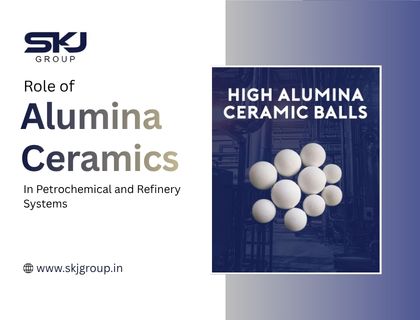
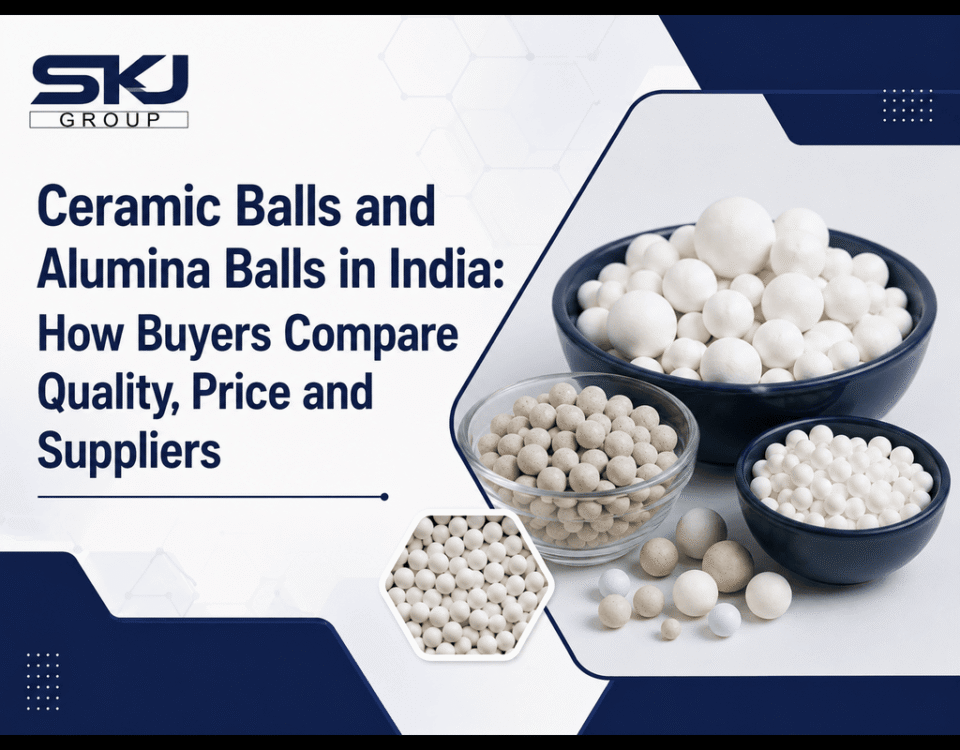
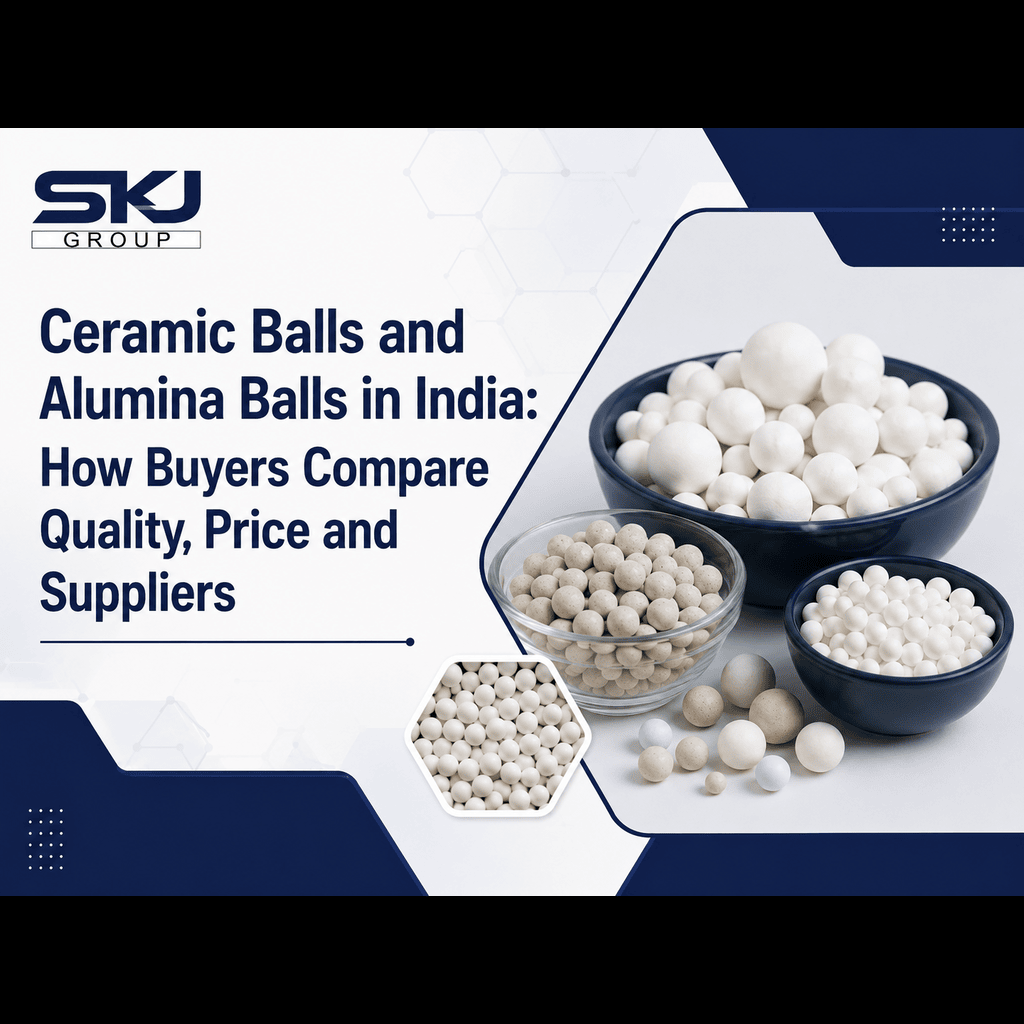
Alumina balls are round ceramic components made primarily from aluminum oxide (Al₂O₃). They are produced by high alumina ceramic balls manufacturers in various alumina content grades, typically ranging from 70% to 99% purity. The higher the alumina content, the better the ball’s resistance to heat, chemicals, and mechanical stress.
Fact: According to the International Energy Agency (IEA), global refinery throughput exceeded 80 million barrels per day in 2023. Every major refinery in the world uses ceramic support media including alumina balls in its reactor and column systems. India alone operates over 23 refineries with a combined processing capacity of more than 250 million metric tonnes per year, creating significant and consistent demand for Alumina Balls in India.
Petrochemical plants and refineries operate under extreme conditions. Temperatures inside reactors can exceed 800°C. Process streams carry corrosive acids, sulfur compounds, and hydrocarbon mixtures. Standard metal or plastic components fail rapidly in these environments. High alumina ceramic balls remain stable and functional where other materials cannot.
Key Properties That Make Alumina Balls Essential in Refinery Systems
Understanding why high alumina ceramic balls perform so well in refineries starts with their core material properties. These are not ordinary ceramic products. They are engineered materials with precisely controlled composition and physical characteristics.
1. High Temperature Resistance
Thermal stability in refinery systems is a fundamental requirement. High temperature resistant alumina components can continuously operate at temperatures from 1000°C to over 1700°C depending on the alumina grade. This makes them suitable for the most demanding reactor environments in refineries.
2. Corrosion Resistance
Refinery process streams contain sulfur compounds, organic acids, hydrogen sulfide, and other aggressive chemicals. Corrosion resistant ceramic materials like alumina balls do not react with these substances. They maintain their structure and composition throughout long operating cycles without degrading.
3. Wear Resistance
Inside packed beds and reactors, ceramic balls are subject to constant contact with fluid streams and neighboring particles. Wear resistant ceramic linings and balls made from high alumina resist surface erosion far better than lower-grade ceramics or metal alternatives. This extends service life significantly.
4. Chemical Inertness
Alumina does not react with hydrocarbons, catalyst materials, or most chemical reagents used in refinery operations. This inertness ensures that the alumina ball does not interfere with catalytic reactions or contaminate the product stream.
5. Mechanical Strength
High alumina balls have high compressive strength, allowing them to withstand the weight of packed beds above them and the pressure of fluid streams flowing through the reactor without cracking or deforming.
Applications of High Alumina Ceramic Balls in Petrochemical and Refinery Systems
Alumina ceramics in the petrochemical industry serve multiple critical functions. Here is a breakdown of the most important applications.
1 .Catalyst Support Beds
The most widespread use of catalyst support ceramic balls is in fixed-bed reactors. In these reactors, a catalyst material sits in a packed bed. Alumina balls of different sizes are placed at the bottom and top of the catalyst bed to support and protect the catalyst.
The alumina balls prevent the catalyst from migrating, distribute the incoming feed stream evenly across the catalyst bed, and protect the catalyst from physical damage. Without proper catalyst support ceramic balls, catalyst performance degrades quickly and reactor efficiency drops.
2 .Heat Exchange Media
In regenerative heat exchangers and thermal oxidizers, alumina balls act as heat storage and transfer media. They absorb heat from outgoing process streams and release it to incoming streams, improving overall thermal efficiency. Their thermal stability in refinery systems makes them ideal for this repeated heating and cooling cycle.
3. Tower Bed Packing
In distillation and absorption towers within refineries, inert alumina balls are used as bed supports at the bottom of packed sections. They hold the packing material in place and prevent it from settling into the column internals below.
4. Reactor Feed Distribution
Alumina balls placed at the reactor inlet help distribute the incoming feed stream evenly before it reaches the catalyst bed. Uneven distribution causes hot spots in the reactor, reduces catalyst life, and lowers conversion efficiency. Properly sized alumina balls solve this problem effectively.
5. Guard Beds
In some refinery processes, a guard bed of alumina balls is placed upstream of the main catalyst bed to capture poisons, particulates, and contaminants in the feed before they reach and damage the primary catalyst. This extends the life of expensive catalyst materials significantly.
Comparing Alumina Ball Grades Used in Refinery Applications
High alumina ceramic balls manufacturers produce products in several grades. Here is a comparison of the most common grades used in refinery and petrochemical applications:
| Alumina Content | Key Properties | Typical Application |
| 70% Alumina | Good chemical resistance, moderate temperature use | General bed support, lower-temperature towers |
| 92% Alumina | High hardness, strong acid resistance | Catalyst support in moderate reactors |
| 95% Alumina | Very high temperature stability, excellent wear resistance | High-temperature reactor beds |
| 99% Alumina | Maximum purity, inert in all refinery environments | Critical catalyst support, high-purity processes |
Selecting the correct grade is essential. Using a lower alumina content ball in a high-temperature application leads to premature failure. A qualified high alumina ceramic balls supplier will help you identify the correct grade based on your operating temperature, chemical environment, and mechanical load requirements.
High Alumina Ceramic Balls in Mandsaur and the Indian Manufacturing Landscape
High alumina ceramic balls in Mandsaur represent a well-established manufacturing capability within India’s ceramics sector. Mandsaur, located in Madhya Pradesh, has developed as a center for industrial ceramic production, with manufacturers supplying alumina balls to refineries, chemical plants, and petrochemical facilities across India and internationally.
Alumina balls manufacturers India benefit from access to domestic alumina raw materials, experienced production teams, and competitive operating costs. These advantages allow Indian manufacturers to offer quality products at prices that compare favorably with imports from Europe or East Asia.
For Indian refineries and petrochemical plants, sourcing from domestic alumina balls manufacturers India reduces lead times and logistics complexity. For international buyers, a high alumina ceramic balls supplier based in India offers competitive export pricing with full documentation and quality certification support.
When evaluating a high alumina ceramic balls manufacturer, confirm the following:
- Alumina content certification for each grade supplied
- Dimensional tolerance data for the sizes you require
- Compressive strength and hardness test reports
- Chemical resistance confirmation for your specific process chemicals
- ISO certification and quality management documentation
- Production capacity and delivery timeline for your order volume
Case Study
Background: A petroleum refinery in Rajasthan was operating a hydrodesulfurization (HDS) reactor used to remove sulfur from diesel fuel. The reactor used a cobalt-molybdenum catalyst supported on alumina balls at the base and top of the catalyst bed.
Challenge: After 18 months of operation, the plant observed rising pressure drop across the reactor and declining desulfurization efficiency. A shutdown inspection revealed that the support balls at the reactor inlet had partially broken down. The broken fragments had migrated into the catalyst bed, causing uneven flow distribution and localized hot spots. The balls used were 70% alumina grade, which was insufficient for the operating temperature of 380°C and the high hydrogen sulfide content of the process stream.
Solution: The refinery technical team consulted with a certified high alumina ceramic balls manufacturer and switched to 95% alumina grade balls for the inlet and outlet support layers. The new balls had confirmed compressive strength of over 2500 N per ball and verified resistance to hydrogen sulfide at the operating temperature.
Installation: The new alumina balls were installed during a planned catalyst change-out. Inlet support layers used 25mm balls, mid-layers used 19mm balls, and the layer directly below the catalyst used 13mm balls to provide a graded support structure that distributes flow evenly.
Results after 30 months of operation:
- No ball breakage or fragmentation observed during the entire monitoring period
- Reactor pressure drop remained stable and within design limits throughout the period
- Desulfurization efficiency maintained at target specification without degradation
- Catalyst service life extended because hot spots were eliminated through better flow distribution
- Maintenance cost for reactor internals reduced by over 55% compared to the previous operating cycle
Lesson: Selecting the correct alumina grade from a knowledgeable high alumina ceramic balls supplier is not a minor procurement detail. It is a decision that directly affects reactor safety, catalyst life, product quality, and maintenance cost. Upgrading from 70% to 95% alumina resolved persistent operational problems and delivered measurable savings within the first operating cycle.
Frequently Asked Questions About Alumina Ceramics
Q1. What is alumina ceramic used for in refineries?
Alumina ceramics are used in refineries as catalyst support media, heat exchange balls, tower bed supports, reactor feed distributors, and guard bed materials. Their heat resistance, corrosion resistance, and chemical inertness make them essential for safe and efficient refinery operations.
Q2. What alumina content is best for petrochemical applications?
For most petrochemical and refinery applications, 92% to 95% alumina content is recommended. For the most demanding high-temperature or high-purity applications, 99% alumina balls provide maximum performance. A qualified high alumina ceramic balls supplier can confirm the correct grade for your specific operating conditions.
Q3. How long do alumina balls last in a reactor bed?
With correct grade selection and proper installation, alumina balls typically last through multiple catalyst change-out cycles, often 5 to 10 years or longer. Service life depends on operating temperature, chemical exposure, and mechanical stress in the specific application.
Q4. Are alumina balls inert to all refinery chemicals?
Alumina balls are inert to most refinery chemicals including hydrocarbons, sulfur compounds, hydrogen, and organic acids. Concentrated strong alkalis at high temperatures can attack alumina over extended periods. Confirm chemical compatibility with your alumina balls manufacturer for specific process conditions.
Q5. What sizes of alumina balls are available from manufacturers in India?
Alumina balls manufacturers India typically supply sizes from 3mm to 75mm in diameter. Common sizes for refinery catalyst support applications include 6mm, 10mm, 13mm, 19mm, 25mm, and 38mm. Custom sizes can often be produced for specific project requirements.
Q6. What is the difference between alumina balls and silica balls?
Alumina balls have higher temperature resistance, greater hardness, and better chemical resistance compared to silica-based ceramic balls. Alumina balls are preferred for high-temperature refinery reactor applications, while silica balls may be used in lower-temperature, less demanding environments.
Q7. Can I source high alumina ceramic balls from Mandsaur for export?
Yes. Several high alumina ceramic balls manufacturers in Mandsaur supply to international markets. They provide export documentation, material certificates, and appropriate packaging for international shipments to markets including the Middle East, Southeast Asia, and Africa.
Q8. How do I verify the quality of alumina balls before purchasing?
Request material certificates confirming alumina content percentage, compressive strength test reports, dimensional inspection data, and chemical resistance confirmation from the supplier. ISO 9001 certification from the high alumina ceramic balls manufacturer provides additional quality assurance.
Conclusion
Alumina balls are a foundational material in petrochemical and refinery systems worldwide. Their combination of high temperature resistance, corrosion resistance, wear resistance, and chemical inertness makes them the reliable choice for catalyst support, heat exchange, bed protection, and flow distribution in demanding reactor environments. As India’s refining and petrochemical capacity continues to grow, the demand for quality Alumina Balls in India will only increase. Working with a certified high alumina ceramic balls manufacturer who provides documented quality data, the correct alumina grades, and reliable technical support is essential for any refinery or chemical plant that depends on consistent reactor performance. Domestic manufacturing hubs including Mandsaur provide Indian and international buyers with access to competitive, quality-certified alumina ceramic solutions backed by experienced production and export capabilities.