How Ceramic Rings Improve Mass Transfer, Heat Transfer, and Tower Efficiency

Activated Alumina vs Molecular Sieve vs Activated Carbon: Complete Industrial Adsorbent Selection Guide
July 7, 2026
Which Activated Carbon Is Best for Industrial Water Treatment and VOC Removal?
July 13, 2026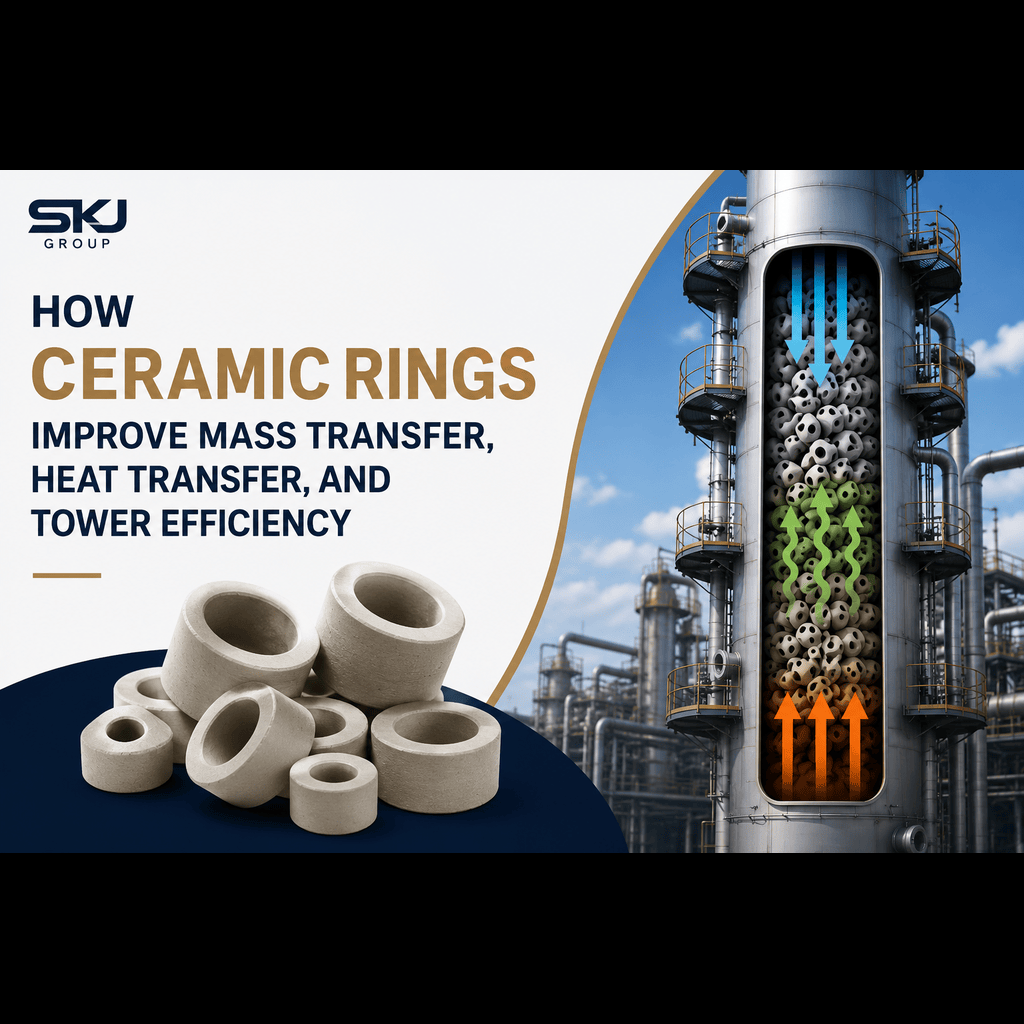
Setting up or repacking an industrial tower sounds simple until you actually start comparing packing options. Do you go with a standard ring size, or does your process actually need something more specific? Get it wrong, and you either end up with poor separation efficiency, or a bed that settles and needs replacing far sooner than it should.
At SKJ Group, this is one of the most common questions we get from plant engineers, whether they’re setting up a new column or troubleshooting an underperforming one. So here’s a straightforward way to understand how ceramic rings actually work, and what to look for before you commit to a supplier.
Start With What Your Tower Actually Needs
Before comparing ring types or suppliers, be clear on what your column is trying to achieve. A lot of plants overpay or underperform simply because the packing wasn’t matched to the actual process.
- Running a gas absorption or scrubbing column? Ring shape and open area matter more than raw strength
- Handling high temperatures or reactive gases? Heat stability becomes the priority
- Working with corrosive acids or alkalis? Chemical resistance decides how long the packing actually lasts
Once you’re clear on what your process demands, comparing packing options gets a lot easier.
How Ceramic Rings Improve Mass Transfer
Mass transfer efficiency depends on how much liquid surface area is exposed to gas at any given moment. Ceramic rings create this exposure through their hollow, ribbed structure.
This works well when you need:
- Thin liquid films spreading evenly across both inner and outer ring surfaces
- Repeated liquid splitting and redistribution to reduce channeling
- Open void space that keeps pressure drop within a manageable range
The trade-off is that ring quality varies a lot between suppliers. Inconsistent wall thickness or firing quality can quietly reduce this mass transfer benefit even when the rings look fine on the surface, which is exactly why the reputation of your ceramic ring manufacturers matters as much as the specification sheet.
How Ceramic Rings Handle Heat Transfer
Ceramic material itself handles heat well, staying stable at high temperatures where plastic packing would soften or degrade. But the ring shape adds another layer of benefit on top of that.
Ceramic rings tend to work best when you:
- Operate a column with frequent temperature fluctuations
- Need consistent heat distribution across the packing bed to avoid hot spots
- Want resistance to thermal shock without the added cost of specialty alloys
If your process runs at moderate to high temperatures with standard chemical exposure, ceramic rings are usually a dependable, cost-effective choice over metal or plastic alternatives.
What to Check Beyond the Ring Size
The size and shape printed on a spec sheet isn’t the only thing that separates good packing from average packing. Before deciding, check:
- Wall thickness consistency — uneven walls create weak points that lead to cracking or bed settling over time
- Firing quality — affects crushing strength and how well the rings hold up under load
- Chemical resistance data — confirm it’s suited to your specific acids, alkalis, or solvents, not just a general claim
- Batch consistency — ask for quality certificates so you know every batch performs the same way
A dependable ceramic ring supplier should be able to walk you through this data directly rather than leaving you to interpret a generic catalog sheet. A slightly higher price with verified consistency usually works out cheaper than the lowest quote with hidden performance gaps.
Why Sourcing Location Matters Too
Beyond quality checks, where you source from affects lead times, costs, and how easily you can get support if something needs adjusting mid-order.
- Overseas sourcing often means longer wait times and higher freight costs
- Local production allows for faster turnaround on repeat or urgent orders
- Established ceramic ring manufacturers in India can usually match international quality standards while keeping logistics simple
This is worth factoring in early, especially if your plant runs on tight maintenance schedules where delays aren’t an option.
A Simple Way to Decide
If you’re still unsure, ask yourself one question: how demanding is your process really?
- If it’s standard duty with moderate temperature, a reliable manufacturer offering consistent standard sizing works fine
- If you’re dealing with aggressive chemicals or fluctuating heat, look for a supplier who can guide you on wall thickness and material grade
- If your column has a non-standard diameter or unusual flow rate, work with a manufacturer who can support custom sizing without long lead times
Frequently Asked Questions
1. What are ceramic rings used for in industrial towers?
Ceramic rings are used as random packing in distillation, absorption, and scrubbing towers to improve gas-liquid contact, support mass transfer, and manage heat distribution across the packing bed.
2. Why does ring quality matter if all ceramic rings look similar?
Wall thickness, firing consistency, and raw material quality affect crushing strength and long-term performance, even when rings appear identical on the surface.
3. Are ceramic rings better than metal or plastic rings for high-temperature processes?
Generally yes. Ceramic rings handle high temperatures and resist thermal shock better than plastic packing, and they don’t carry the corrosion risk some metal packing faces in aggressive chemical environments.
4. How do I know what size ceramic ring my tower needs?
Ring size depends on your column diameter, flow rate, and desired pressure drop. A good supplier will help you match ring size to your specific process rather than defaulting to a standard size.
5. Can ceramic rings be customized for specific chemical processes?
Many manufacturers offer custom wall thickness, size, and material grades to suit specific chemical resistance or thermal requirements, so it’s worth asking before finalizing your order.
Find the Right Fit for Your Tower
Whether you’re setting up a new column or replacing an underperforming bed, choosing the right ceramic ring comes down to matching it with your actual process conditions, not just the lowest number on a quote. As one of the trusted ceramic ring manufacturers in the country, SKJ Group works directly with plant engineers to get this match right.
If you’re comparing options, it’s worth exploring ceramic ring selection and performance to learn how these packings enhance mass transfer efficiency and what factors should influence your final specification.
Get in touch with the SKJ Group team and we’ll help you find the ring size, grade, and quantity that fits your tower.