Which Activated Carbon Is Best for Industrial Water Treatment and VOC Removal?

How Ceramic Rings Improve Mass Transfer, Heat Transfer, and Tower Efficiency
July 10, 2026
How to Select Ceramic Tower Packing for Acid Recovery and Corrosive Chemical Processes
July 16, 2026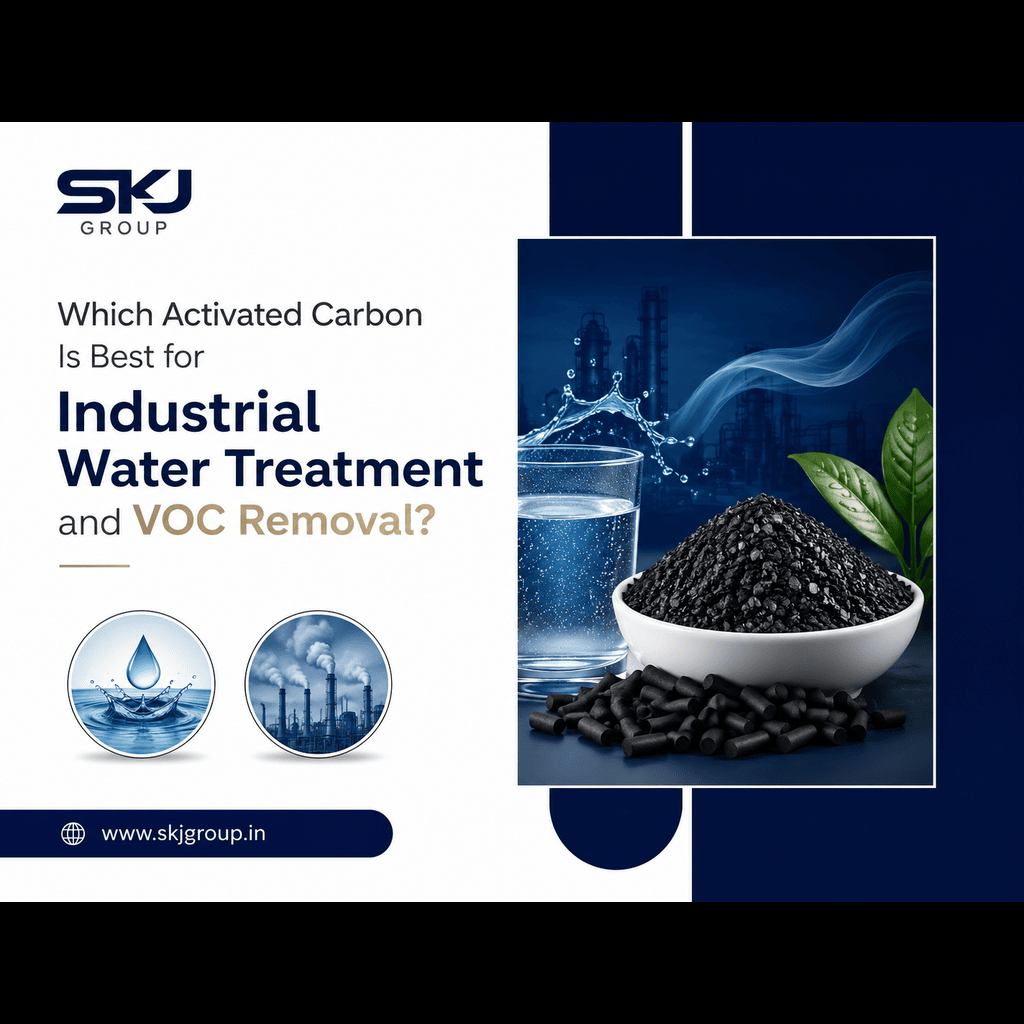
If you run a treatment plant or manage emissions at a manufacturing unit, you already know that not every activated carbon behaves the same way. One grade might pull heavy organics out of wastewater beautifully but do a poor job with solvent vapors. Another might be great at odor control but wear out fast in a high flow water system. Picking the wrong one usually shows up later, as rising TOC levels, complaints about smell, or a carbon bed that needs replacing far sooner than budgeted.
This guide breaks down the main types of activated carbon used for water treatment and VOC removal, so you can match the right material to the right job instead of guessing. As a manufacturer, SKJ Group works with plants across water treatment and emission control every day, and we have seen firsthand how much this one decision affects long term running costs.
Why Activated Carbon Selection Actually Matters
Activated carbon works through adsorption. Contaminants stick to the surface of the carbon as water or air passes through it. But carbons are not identical. They differ in pore size, hardness, ash content, and raw material, and each of these affects how well a specific carbon performs for a specific contaminant.
Choosing based on price alone is a common mistake. A cheaper carbon that needs replacing twice as often ends up costing more in downtime and labour than a slightly pricier one that lasts.
Coconut Shell Based Granular Activated Carbon
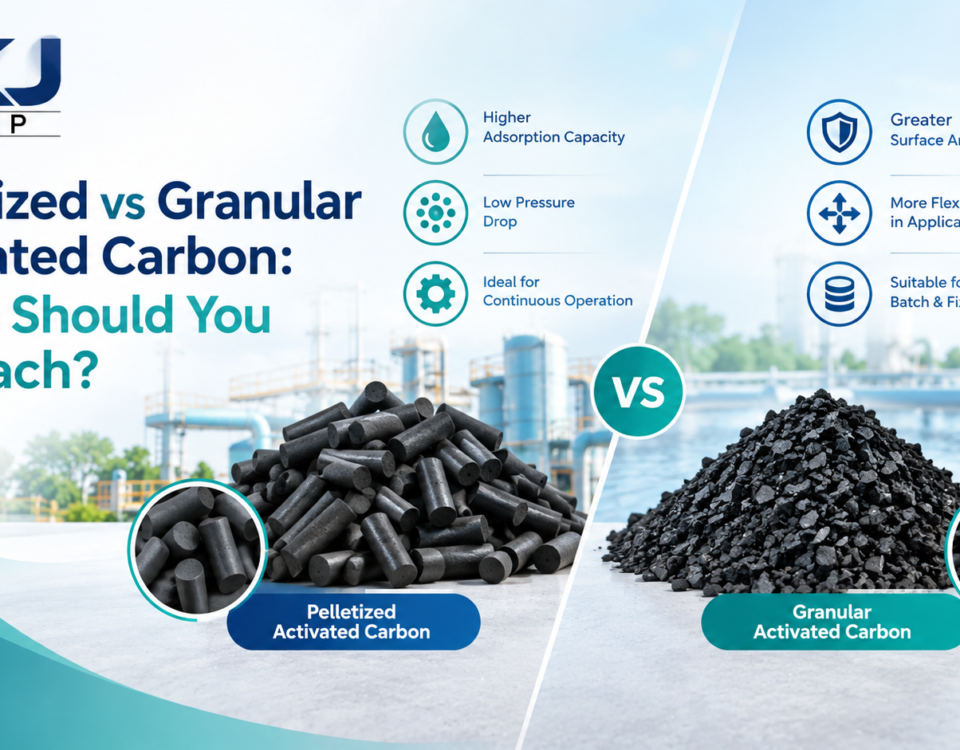
For most industrial water treatment jobs, Coconut Shell Based Granular Activated Carbon Manufacturer grade carbon is the first choice engineers reach for, and for good reason.
- It has a naturally high micropore volume, which makes it excellent at removing dissolved organics, chlorine, and taste and odor compounds from water.
- It is harder and more abrasion resistant than most other carbon types, so it holds up well in backwashing conditions.
- It has a lower ash content, which means less residue leaching back into treated water.
- It is a renewable raw material, which appeals to plants working toward sustainability targets.
This carbon type is widely used in drinking water polishing, effluent treatment plants, and food and beverage processing where purity standards are strict.
Coal Based Granular and Powder Activated Carbon
When the job shifts toward VOC removal and air or gas phase treatment, Coal Based Granular & Powder Activated Carbon usually performs better.
- It has a larger mesopore structure, which is more suited to adsorbing bigger organic molecules and volatile compounds.
- It offers strong performance in solvent recovery, air pollution control, and industrial off gas treatment.
- The powdered form is often used for quick dosing in wastewater treatment where fast contact time is needed.
- It handles higher temperatures and harsher chemical environments more reliably than softer carbon types.
Many refineries, chemical plants, and pharmaceutical units rely on this grade specifically because VOC molecules need larger pore access to be captured effectively. We have covered this pore level behaviour in more detail in our earlier piece on how coal based activated carbon benefits industrial filtration systems, if you want to understand the mechanism before making a purchase decision.
Wood Based Activated Carbon: A Third Option Worth Knowing
Wood based carbon does not get as much attention, but it has its own place, particularly where a broad pore size distribution is needed, such as in decolorization or large molecule removal. Our team often recommends this grade for color removal and pharmaceutical intermediate processes where the other two carbon types fall short.
How to Choose the Right Carbon for Your Application
Here is a simple way to think about it:
- Removing organics, chlorine, or odor from water → Coconut shell based carbon is usually the better fit.
- Treating VOCs, solvent vapors, or gas phase emissions → Coal based carbon typically performs better.
- Handling color bodies or larger organic molecules in liquids → Wood based carbon is worth evaluating.
- Working with high temperature or corrosive gas streams → Coal based grades tend to hold up better structurally.
- Running a drinking water or food grade process → Coconut shell carbon’s lower ash content is an advantage.
If your plant handles both water treatment and air emission control, it is common to use two different carbon grades rather than forcing one material to do both jobs.
What to Check Before You Buy
A few practical points that often get overlooked during procurement:
- Ask for the iodine number and CTC value, since these indicate adsorption capacity.
- Check the hardness number, especially if the carbon will be backwashed regularly.
- Confirm ash content if the application is sensitive to residue.
- Request batch consistency data, since performance can vary between production lots.
- Always ask for a certificate of analysis with every shipment.
Working with an experienced Activated Carbon Supplier who understands your specific process, rather than one who simply sells by the kilogram, makes this evaluation far easier.
FAQs
1. Which activated carbon is best for industrial water treatment and VOC removal?
The best activated carbon depends on the application. Coconut shell activated carbon is typically preferred for water treatment due to its high microporosity and low ash content, while coal-based activated carbon is often better suited for VOC removal because its pore structure can adsorb larger organic molecules more effectively.
2. What is the difference between coconut shell and coal-based activated carbon?
Coconut shell activated carbon contains a higher proportion of micropores, making it highly effective for removing chlorine, odors, and dissolved organic compounds from water. Coal-based activated carbon has a broader pore size distribution, which makes it suitable for VOC adsorption and industrial air treatment applications.
3. Is coconut shell activated carbon better for water purification?
Yes. Coconut shell activated carbon is widely used in industrial and municipal water treatment systems because it offers high adsorption efficiency, low dust generation, and excellent removal of taste, odor, chlorine, and organic contaminants.
4. Why is coal-based activated carbon commonly used for VOC removal?
Coal-based activated carbon is often chosen for VOC control because its mesoporous structure provides greater capacity for adsorbing larger volatile organic compounds found in industrial exhaust streams, solvent recovery systems, and air pollution control equipment.
5. Can the same activated carbon be used for both water treatment and air purification?
While some activated carbons can be used in both applications, selecting a carbon specifically designed for either water treatment or VOC removal generally delivers higher adsorption efficiency, longer service life, and lower operating costs.
6. What factors should be considered when selecting activated carbon?
Key considerations include contaminant type, adsorption capacity, pore size distribution, surface area, moisture content, flow rate, operating temperature, and whether the application involves liquid-phase or gas-phase treatment.
Final Thoughts
There is no single activated carbon that is universally best. It depends entirely on what you are removing, from where, and under what conditions. For water treatment, coconut shell based carbon is usually the stronger performer. For VOC and gas phase applications, coal based carbon tends to take the lead. Getting this match right from the start saves money, reduces downtime, and keeps your plant compliant.
If you are unsure which grade fits your process, our team at SKJ Group can help you review your water or air treatment requirements and recommend the right carbon type for your operation. Get in touch with us today to discuss your requirements and get a sample suited to your application.