Why 13X Molecular Sieve Is the Preferred Choice for PSA Oxygen Generation Systems

What Is the Best Tower Packing Material for Industrial Scrubbers?
July 23, 2026
Ceramic Structured Packing for Carbon Capture (CCUS) Columns: What Plant Engineers Need to Know
August 11, 2026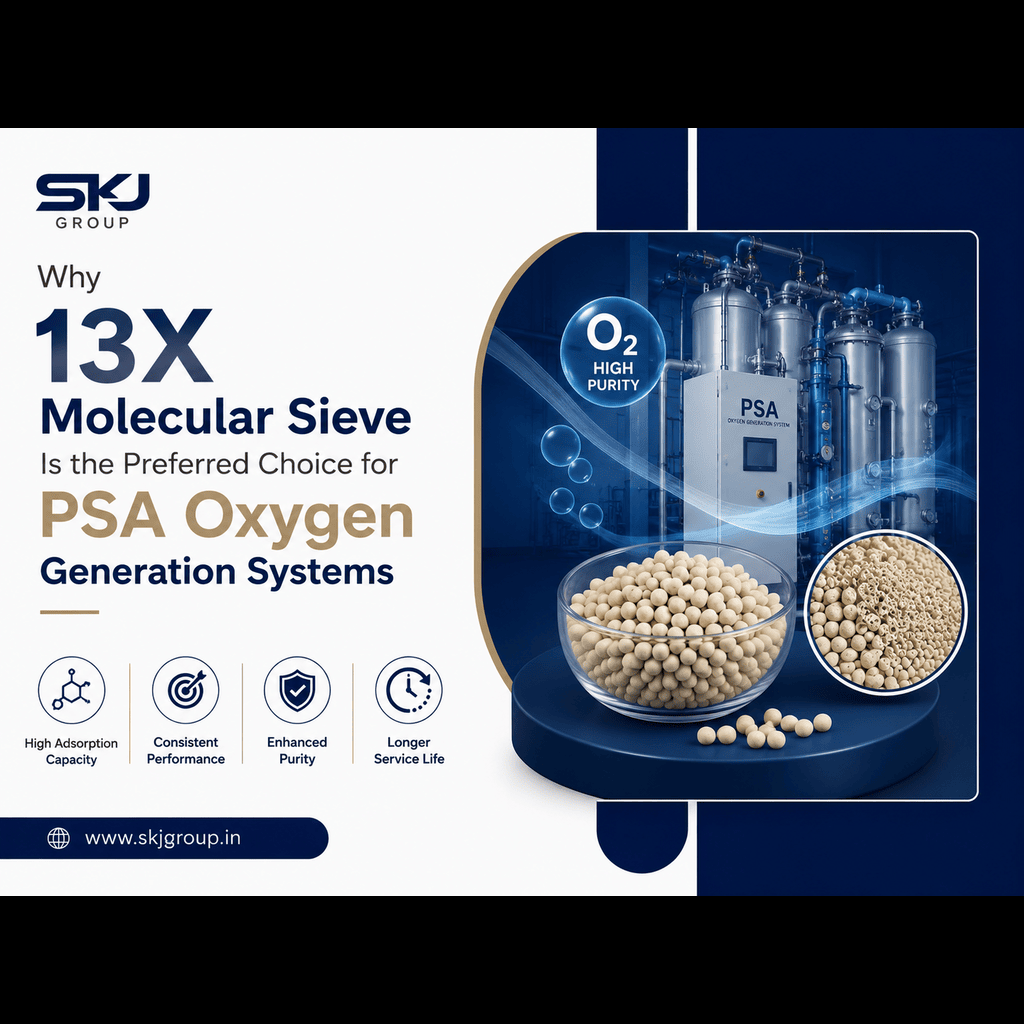
Pressure Swing Adsorption (PSA) is the technology most modern oxygen generators use to separate oxygen from ambient air without combustion or cryogenic cooling. The entire process depends on one material performing its job cycle after cycle, thousands of times each day, without losing efficiency. That material is almost always 13X molecular sieve, and once you understand how PSA works, it becomes clear why this specific zeolite has become the industry standard.
This article explains what makes 13X suited to oxygen generation, how it performs inside a PSA system, and what to check before sourcing it for a new or existing plant.
How PSA Oxygen Generation Actually Works
A PSA system pulls in compressed air and pushes it through a bed of adsorbent material. As the air passes through, nitrogen molecules get trapped inside the pores of the sieve while oxygen molecules pass through relatively freely. Once the bed is saturated with nitrogen, the pressure is released, the nitrogen desorbs, and the cycle repeats in a second bed while the first one continues producing oxygen.
- Two beds work in alternating cycles to maintain continuous oxygen output
- Nitrogen is selectively trapped due to its stronger interaction with the sieve’s polar surface
- Oxygen passes through with minimal adsorption, giving high purity output
- The cycle typically repeats every few seconds to keep production steady
The efficiency of this entire process hinges on how well the adsorbent captures nitrogen and how quickly it releases it during the pressure swing.
Why 13X Outperforms Other Zeolites for This Application
Several molecular sieve types exist, but 13X has a pore structure and surface chemistry that suits nitrogen adsorption particularly well.
- Larger pore openings: 13X has roughly 10 angstrom pore openings, wider than 4A or 5A sieves, allowing faster nitrogen uptake and quicker cycling
- High nitrogen selectivity: Its polar crystal surface favours nitrogen over oxygen, which is exactly the separation PSA systems need
- Fast adsorption and desorption: Quick uptake and release means shorter cycle times and more consistent oxygen purity
- Strong mechanical durability: Repeated pressure cycling puts real stress on the beads, and 13X holds up well over years of continuous operation
- Consistent regeneration: The sieve releases trapped nitrogen cleanly during depressurization, avoiding gradual performance drop over time
This combination is why 13X has become the standard choice across medical oxygen concentrators, industrial oxygen plants, and smaller onsite generation units.
Applications Where This Matters Most
- Hospitals and healthcare facilities using onsite oxygen generation for patient care
- Steel and metal industries requiring oxygen enrichment for combustion processes
- Glass manufacturing where oxygen enriched air improves furnace efficiency
- Water treatment plants using oxygen for aeration and biological treatment
- Chemical and petrochemical units needing a steady onsite oxygen supply without relying on cylinder deliveries
In each of these settings, the reliability of the molecular sieve directly affects uptime, since a bed that loses capacity too early means more frequent maintenance and inconsistent oxygen purity.
What Actually Affects Performance in the Field
Not all 13X sieves are manufactured to the same standard, and small differences show up quickly in a PSA system.
- Crush strength: Beads need to survive thousands of pressure cycles without breaking down into dust, which would clog the system
- Attrition resistance: Repeated movement inside the bed causes wear, and lower quality material sheds particles faster
- Moisture content on arrival: Sieve that absorbs moisture during storage or transport starts with reduced capacity before it is even installed
- Bead size consistency: Uneven bead sizes create channeling inside the bed, reducing contact efficiency
Working with reliable 13X molecular sieve manufacturers that maintain strict control over raw materials, crystal structure, and activation conditions can make a measurable difference in PSA system performance and service life. If you’d like to explore how this adsorbent performs beyond oxygen generation, our earlier article on 13X molecular sieve for gas drying and air separation explains the adsorption mechanisms and application benefits in greater detail.
Choosing the Right Supplier
Sourcing decisions matter as much as the material itself. Established 13x molecular sieve suppliers typically provide batch testing data, moisture packaging that protects the sieve during transit, and technical support to help size the bed correctly for your specific PSA unit. Skipping this step and buying purely on price often leads to shorter bed life and inconsistent oxygen purity down the line.
Frequently Asked Question’s
1. Why is 13X molecular sieve used instead of 4A or 5A in oxygen generators?
13X has larger pore openings and stronger nitrogen selectivity than 4A or 5A sieves, which allows faster adsorption cycles and more consistent oxygen output in PSA systems.
2. How long does 13X molecular sieve last in a PSA oxygen generator?
With proper handling and correct sizing, 13X molecular sieve typically lasts three to five years in continuous PSA operation, though this depends on cycle frequency, moisture exposure, and bead quality.
3. Can 13X molecular sieve lose effectiveness over time?
Yes. Exposure to excess moisture, oil contamination, or physical breakdown from repeated pressure cycling gradually reduces adsorption capacity, which is why sourcing from a quality controlled manufacturer matters.
4. Is 13X molecular sieve safe for medical oxygen concentrators?
Yes, 13X is the standard adsorbent used in medical oxygen concentrators worldwide, valued for its consistent purity output and stable long term performance.
5. What is the difference between standard 13X and 13X-HP grades?
13X-HP is engineered with enhanced crush strength and attrition resistance for high pressure gas applications, while standard 13X is suited to typical atmospheric to moderate pressure PSA systems.
Final Thoughts
PSA oxygen generation depends entirely on how well the adsorbent bed performs cycle after cycle, and 13X has earned its place as the preferred material because it balances adsorption speed, selectivity, and mechanical durability better than the alternatives. Getting the grade and sourcing right at the start makes the difference between a system that runs reliably for years and one that needs constant attention.
If you are setting up a new PSA oxygen system or reviewing your current adsorbent supply, our team at SKJ Group can help you choose the right 13X grade for your application. Get in touch with us for technical guidance suited to your plant’s requirements.