What Is the Best Tower Packing Material for Industrial Scrubbers?

10 Common Mistakes to Avoid When Selecting Tower Packing for Chemical Processing Plants
July 21, 2026
Why 13X Molecular Sieve Is the Preferred Choice for PSA Oxygen Generation Systems
July 25, 2026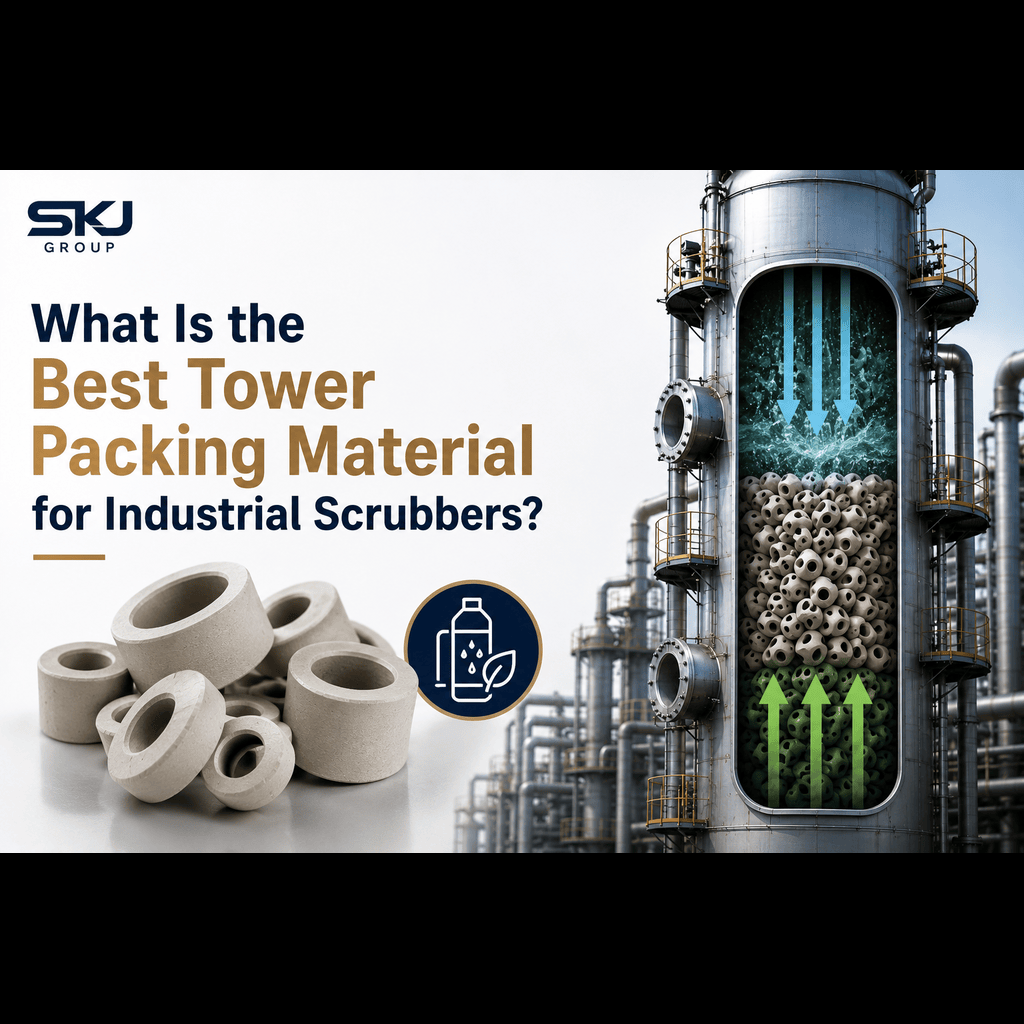
Choosing packing for a scrubber isn’t like picking packing for a standard absorption column. Scrubbers deal with dirty gas streams, fluctuating flow rates, and often a mix of acidic and particulate contaminants all at once. Pick the wrong material, and you’re looking at clogging, uneven gas distribution, or packing that breaks down faster than expected.
At SKJ Group, we work with plants across chemical, fertilizer, and water treatment industries facing this exact decision, and the right answer almost always comes down to what’s actually passing through the scrubber. This guide looks at the main packing options for industrial scrubbers and how to match them to your specific gas cleaning application.
Why Scrubber Packing Needs a Different Approach
Scrubbers exist to remove pollutants, whether that’s acid gases, particulates, or odorous compounds, before air is released into the atmosphere. That job puts packing under more stress than a typical distillation column.
A few things scrubber packing has to handle well:
- Continuous exposure to acidic or alkaline gas streams
- Fluctuating flow rates during peak production hours
- Resistance to fouling from particulates in the gas stream
- Consistent liquid distribution even as the bed ages
With that in mind, let’s look at where each packing type actually fits.
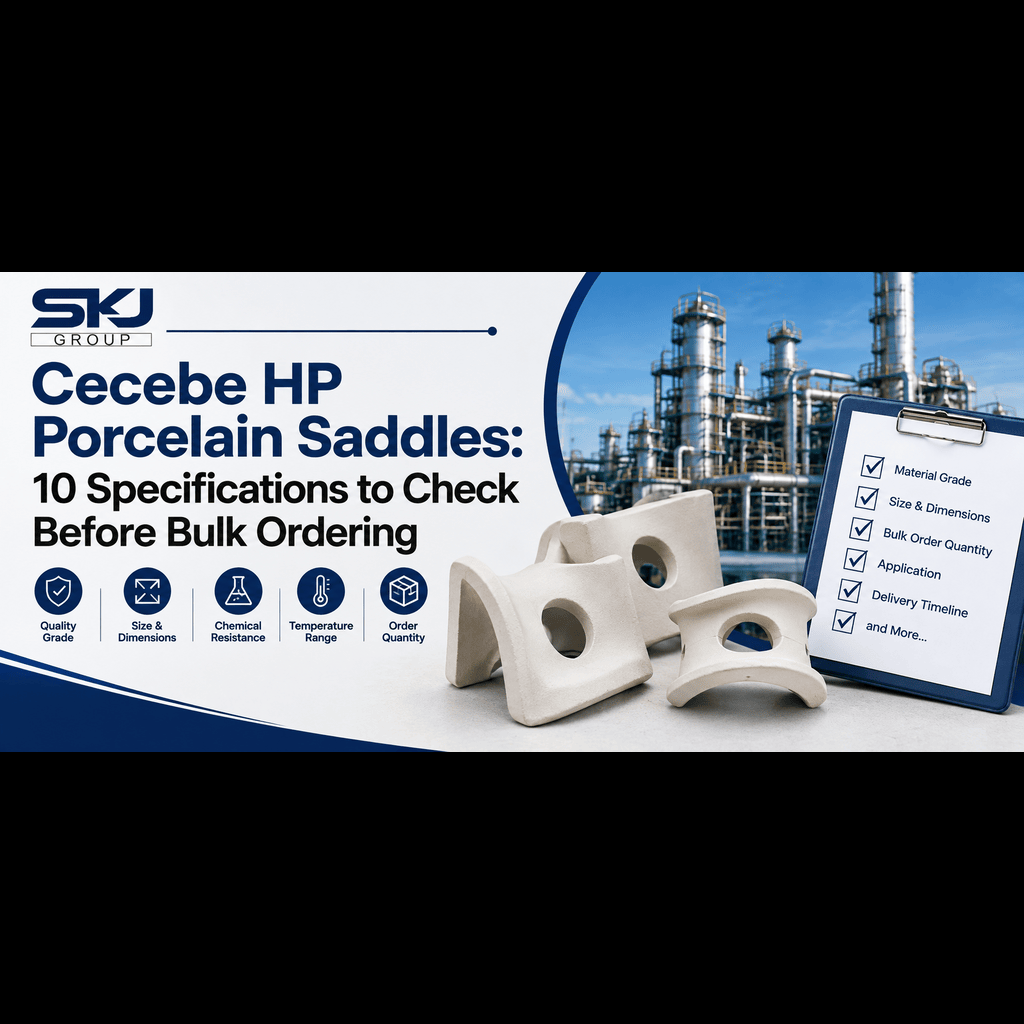
Ceramic Tower Packing: The Standard for Acid Gas Scrubbing
Ceramic tower packing remains one of the most trusted choices for scrubbers handling aggressive acid gases. Its chemical resistance holds up against sulfuric acid, hydrochloric acid, and most other corrosive streams commonly found in industrial exhaust.
Where ceramic packing performs well in scrubbers:
- Acid gas scrubbing in chemical and fertilizer plants
- High-temperature exhaust streams where plastic packing would soften
- Long-term installations where replacement downtime is costly
If you’re setting up an acid gas scrubber, it’s worth reading our breakdown on why ceramic saddles are preferred in refinery scrubber installations, which covers this exact scenario in more depth. The main consideration with ceramic is weight. It adds more structural load to the scrubber tower compared to plastic alternatives, so it’s worth checking your tower’s support design before committing to a full ceramic bed.
PP Pall Rings: A Lighter Option for Moderate Conditions
For scrubbers that don’t face extreme heat but still need solid chemical resistance, PP pall rings are a common choice. Their window-like design improves liquid spread and keeps pressure drop manageable, which matters a lot in scrubbers running continuously at high gas volumes.
Reasons plants go with polypropylene pall rings for scrubbing duty:
- Much lighter than ceramic, reducing load on tower supports
- Good resistance to a wide range of acids, alkalis, and salts
- Lower cost, useful for large-diameter scrubbers needing high packing volumes
- Easy to install without special lifting equipment
Working with an experienced PP Pall Ring Supplier matters here, since ring quality and consistency directly affect how evenly gas and liquid distribute across a large packed bed. The tradeoff is temperature. Polypropylene generally isn’t suited for streams above 100 to 120°C, so it’s best kept to moderate-temperature scrubbing applications.
PP Saddles: Reliable Performance in Water-Based Scrubbing
PP saddles bring the curved saddle shape into a lightweight plastic format, and they’re widely used in wet scrubbing systems, particularly where water or caustic solutions are the primary scrubbing liquid.
Why plants choose PP saddles for scrubber duty:
- Good liquid film formation across the curved surface
- Corrosion resistance suited to caustic and mild acid scrubbing
- Lightweight construction that simplifies installation and maintenance
- Cost-effective for large-volume wet scrubbing systems
A dependable PP Saddles Supplier should be able to advise on saddle size based on your scrubber diameter and expected liquid loading, rather than defaulting to a single standard size for every project. Like pall rings, PP saddles share the same temperature limitation, so they’re better suited to cooler gas streams than high-heat exhaust.
Matching Packing to Your Scrubber Type
Different scrubber designs favor different packing choices, and it helps to think about this before finalizing a material.
- Acid gas scrubbers in hot exhaust streams: ceramic packing is usually the safer long-term choice
- General purpose gas scrubbing at moderate temperature: PP pall rings offer a good balance of cost and performance
- Wet scrubbing with water or caustic solutions: PP saddles tend to perform reliably at a lower cost
What to Check Before Finalizing Your Packing Choice
Beyond material type, a few practical factors often decide how well a scrubber performs over time.
- Gas stream temperature confirms whether plastic packing is even viable
- Contaminant load affects how prone the packing is to fouling or blockage
- Tower structural capacity determines whether heavier ceramic packing is workable
- Liquid-to-gas ratio influences which packing shape distributes liquid most evenly
Getting these details right upfront avoids costly repacking down the line, especially in scrubbers that run continuously with little room for downtime.
A Simple Way to Decide
If you’re still weighing your options, ask yourself one question: what’s actually passing through your scrubber?
- If it’s hot, aggressive acid gas, ceramic tower packing is usually worth the extra weight
- If conditions are moderate and cost matters, PP pall rings are a solid middle ground
- If you’re running a wet or caustic scrubbing system, PP saddles are often the simplest fit
Frequently Asked Questions
1. What is the best packing material for acid gas scrubbers?
Ceramic tower packing is generally preferred for acid gas scrubbing due to its strong chemical resistance and ability to handle high-temperature exhaust streams without degrading.
2. Can PP pall rings be used in scrubbers with high temperatures?
Not usually. Polypropylene pall rings typically aren’t suited for streams above 100 to 120°C, so ceramic or metal packing is a better choice for hotter applications.
3. Are PP saddles suitable for acid gas scrubbing?
PP saddles work well for mild acid or caustic wet scrubbing, but for aggressive acid gases at higher temperatures, ceramic packing is usually the more reliable option.
4. How do I choose between pall rings and saddles for a scrubber?
It often comes down to liquid loading and gas flow pattern. Pall rings tend to offer lower pressure drop at high flow, while saddles distribute liquid well in wet scrubbing setups.
5. Does packing material affect scrubber maintenance frequency?
Yes. Packing that resists fouling and chemical degradation typically needs less frequent replacement, which reduces overall maintenance and downtime costs.
Final Thoughts
There’s no single packing material that works best for every scrubber. The right choice depends on your gas stream temperature, contaminant type, and structural setup. As a manufacturer working closely with ceramic and polypropylene packing requirements across different industries, SKJ Group can help you match the right material to your specific scrubbing application.
Get in touch with the SKJ Group team today to find the right packing solution for your scrubber system.