3A, 4A, 5A or 13X: Which Molecular Sieve Do You Need?

How to Size and Layer Inert Ceramic Balls in Reactors
October 8, 2026
Packed Column Flooding: Causes, Warning Signs and Fixes
October 16, 2026
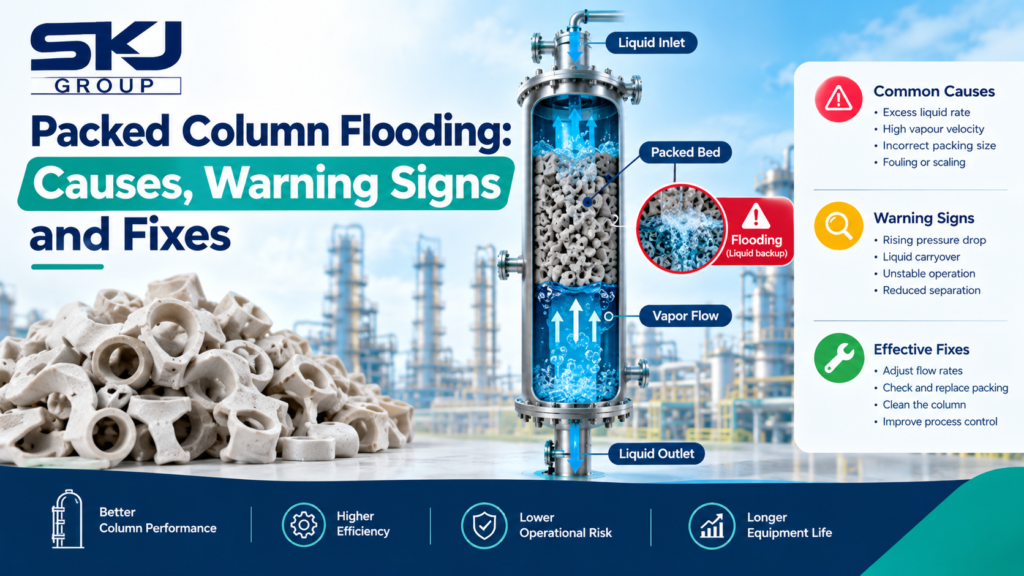
Match the molecular sieve to the molecule you need to remove. Use 3A to dry ethanol and other polar liquids, 4A for general gas and liquid drying, 5A to separate straight-chain hydrocarbons, and 13X to remove water and CO2 together, as in air prepurification. The number is the pore opening in angstroms, and only molecules smaller than the opening get in.
3A, 4A, 5A and 13X at a Glance
A molecular sieve works like a gate. Its pores are all one size, so it admits small molecules and blocks bigger ones. One rule explains most of the table below: each type also adsorbs what the smaller types adsorb, so 4A takes everything 3A takes plus a few more, and 13X takes the widest range of all.
| Type | Pore size | What it adsorbs | What it keeps out | Typical use |
| 3A | About 3 Å | Water, ammonia | Nearly everything else, including ethanol | Ethanol dehydration, cracked gas and olefin drying |
| 4A | About 4 Å | Water, CO2, ethanol, methanol | Larger molecules | Natural gas and general gas and liquid drying |
| 5A | About 5 Å | Straight-chain (normal) paraffins, plus what 4A takes | Branched and ring compounds | Normal and iso separation, PSA gas purification |
| 13X | About 10 Å | Water and CO2 together, mercaptans, larger molecules | Very large molecules | Air prepurification, natural gas sweetening |
These are typical uses, not guarantees. Your stream and operating conditions decide the final grade.
Which Molecular Sieve Should You Choose?
Choose 3A to dry ethanol and other polar liquids
3A lets water in and keeps larger molecules out, so it dries a liquid without soaking up the product. If you are comparing 3A Molecular Sieve suppliers, ask for a grade made for your service, and check adsorption capacity, crush strength and regeneration limits.
Choose 4A for general gas and liquid drying
4A is the general-purpose workhorse for air, natural gas and many solvents. It is not a universal fix, though. Other adsorbable compounds in the stream and the outlet dryness you need can change the result. See our 4A molecular sieve range and our guide to 4A molecular sieve in gas dehydration plants.
Choose 5A for straight-chain hydrocarbons and some PSA duties
5A adsorbs normal paraffins and keeps branched and ring compounds out. It is also used in some oxygen concentrators and PSA gas systems, where the right grade depends on the gas mixture and cycle design. Do not pick it just because its pores are larger than 4A. See our 5A molecular sieve range and our guide to 5A in gas and liquid separation.
Choose 13X to remove water and CO2 together
13X is the standard choice before cryogenic air separation, where water and CO2 must both come out. It is also used for natural gas sweetening. Wider pores do not make it better for every job, because it can take in molecules you want to keep. For PSA oxygen devices, ask for 13X APG zeolite molecular sieve, because standard 13X is not interchangeable with it. See our 13X molecular sieve range and our guide to 13X for gas drying and air separation.
➜ Not sure which grade fits your stream? Tell us what you are treating and get a grade recommendation
Why Ethanol Plants Specify 3A, Not 4A
Ordinary distillation stops near 95.6 percent ethanol by weight, because ethanol and water form an azeotrope. A sieve bed removes the water that is left, and pore size decides whether it works.
- Water is about 2.8 Å wide, so it fits inside a 3A pore.
- Ethanol is about 4.4 Å wide, so 3A keeps it out.
- 4A can take in ethanol as well as water, which wastes capacity on the product you want to keep.
The lesson applies well beyond ethanol: the largest pore is not the best pore. Selectivity matters as much as capacity. Our guide to 3A molecular sieve in ethanol dehydration plants covers the process side.
Beads, Pellets and Sizes
Once you know the type, choose the shape and size. Molecular sieve sizes change how fast the bed adsorbs and how much pressure it costs you.
- Beads are round and pack evenly. Common sizes are about 1.6 to 2.5 mm and 3 to 5 mm.
- Pellets are short cylinders. Common sizes are 1.6 mm and 3.2 mm.
| Smaller particles | Larger particles |
| Shorter diffusion path, faster adsorption | Longer path, slower adsorption |
| Higher pressure drop across the bed | Lower pressure drop |
| Suit short cycles and compact beds | Suit deep beds and low pressure budgets |
These are general trends. Bed geometry, flow rate and cycle time all affect the outcome, so pick the size from your vessel design and allowable pressure drop, then confirm what your supplier holds.
Five Mix-Ups That Waste Money
- Choosing by pore size alone: A wider opening does not guarantee better performance. Match the grade to what you need to remove and what you need to keep.
- Using 4A to dry ethanol: It adsorbs the ethanol too, which cuts the capacity you paid for.
- Ignoring what else is in the stream: Oil, liquid water and heavy hydrocarbons can foul a bed, whatever the grade.
- Overlooking size and strength; The wrong particle size or low crush strength shows up as pressure drop, dust and a shorter bed life.
- Buying on price per kilogram: Ask 3A Molecular Sieve manufacturers for static water capacity, crush strength and a batch certificate, not just a rate.
What to Ask Before You Order
- What gas or liquid am I treating, and what outlet purity or dew point do I need?
- What pressure, temperature and flow rate will the bed see?
- Which bead or pellet size suits my vessel and cycle?
- What are the static water capacity, crush strength and attrition limits?
- How is the sieve regenerated, and what limits apply to that grade?
- Is this 13X or 13X APG?
- Can you supply a technical data sheet and a batch certificate of analysis?
Good 4a molecular sieve suppliers will ask about your stream before they name a grade. If a quote arrives with only a product name and a quantity, ask for more technical detail before you decide.
Where SKJ Group Fits In
SKJ Group manufactures 3A, 4A, 5A, 13X, 13X-HP and 13X APG molecular sieves from Mandsaur, so you can compare grades with one supplier and get a view on the right fit before you order. If you are comparing 13X APG Zeolite Molecular Sieve suppliers for a PSA device, our team can talk through bed size, grade and delivery with you.
Frequently Asked Questions
1. What is the difference between 3A, 4A, 5A and 13X molecular sieves?
They differ in pore size and selectivity. 3A is used for selective water removal, 4A for general drying, 5A for normal-paraffin separation and some PSA duties, and 13X for broader adsorption such as air prepurification.
2. Which molecular sieve is used to dry ethanol?
3A. Its pores admit water and keep ethanol out, so it dries ethanol without adsorbing the product.
3. Which molecular sieve removes CO2?
13X is the standard choice where CO2 and water must be removed together, such as air prepurification. 4A and 5A also adsorb CO2 under suitable conditions, but 3A does not.
4. Are 13X and 13X APG the same?
They belong to the same family but are not interchangeable. APG is the grade made for PSA devices, so confirm the specification against your equipment.
5. How do I choose the right molecular sieve size?
Match it to your vessel design, flow rate, cycle time and allowable pressure drop. Smaller particles adsorb faster but raise pressure drop, and larger ones do the opposite.
6. What documents should I request from a supplier?
Ask for a technical data sheet and a batch-specific certificate of analysis. Check the stated adsorption capacity, particle size, crush strength and regeneration limits.
Get the Right Sieve the First Time
The wrong molecular sieve rarely fails loudly. It simply wastes capacity, cuts product recovery or lets moisture through. If you are choosing a grade for a new unit or replacing a bed, SKJ Group can help you match type, size and quantity to your process.
➜ Request a Quote and Grade Recommendation and our team will walk you through options for your plant.