Ceramic Balls and Alumina Balls in India: How Buyers Compare Quality, Price and Suppliers

What Determines Molecular Sieve 13X Price? A Buyer’s Guide to Cost Factors and Supplier Comparison
August 15, 2026
Commercial Plywood Suppliers in India: How to Compare Quality, Price & Bulk Supply
August 22, 2026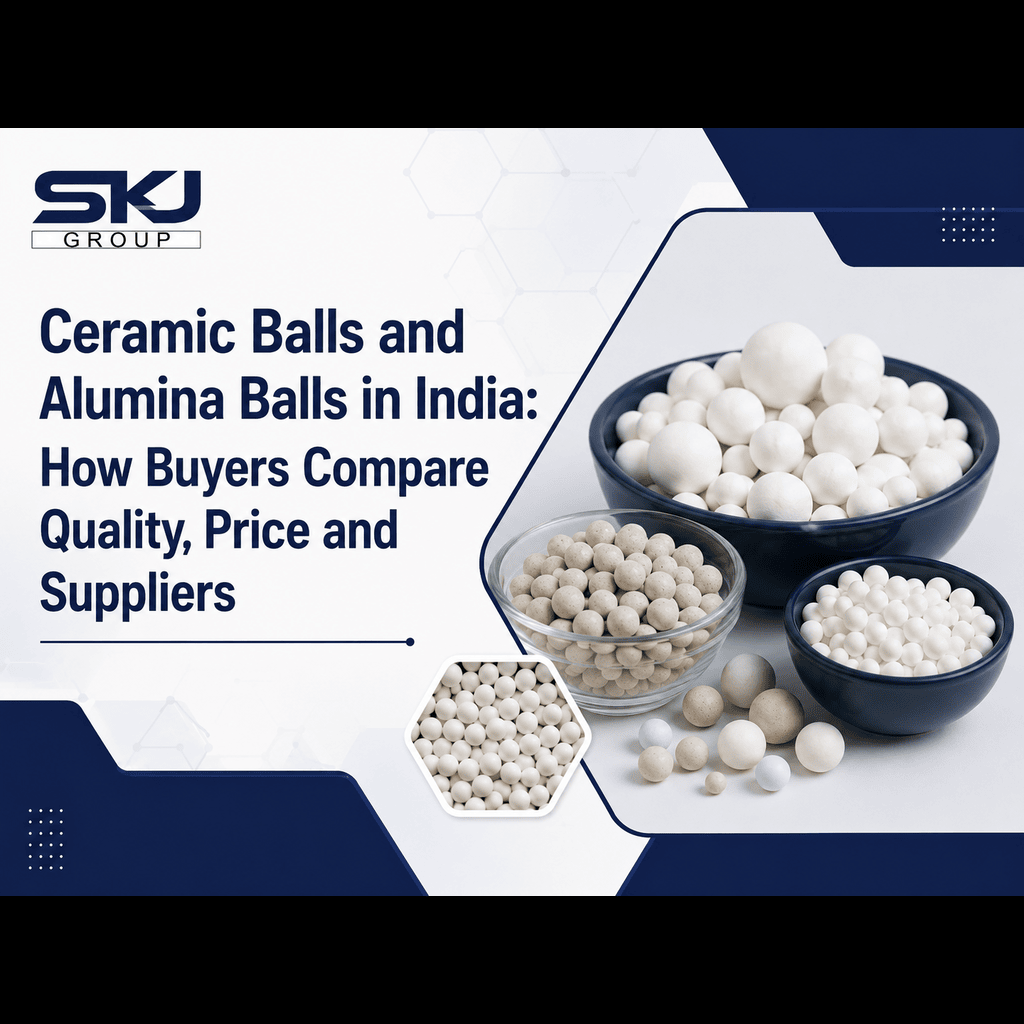
Buyers comparing ceramic ball manufacturers in India should look at three things together: material purity and crush strength, consistent batch quality, and total delivered cost, not just the quoted price per kilogram. A low price with inconsistent bead size or weak thermal shock resistance ends up costing more once you factor in replacement cycles and downtime. The right supplier is the one whose product performs the same way in month twelve as it did in month one.
That single point trips up a lot of first-time buyers. Ceramic balls and alumina balls look nearly identical on a spec sheet, yet two batches from two different factories can behave very differently inside a reactor or drying vessel. This guide walks through what actually separates a reliable supplier from a risky one, so your next purchase decision is based on facts rather than the lowest number on a quotation.
What Are Ceramic Balls and Alumina Balls Used For?
Ceramic balls and alumina balls are inert, round packing materials used inside reactors, columns, and vessels across chemical, petrochemical, fertilizer, and gas processing industries. They are not catalysts themselves. Instead, they support catalyst beds, improve gas or liquid distribution, and protect the reactor floor from mechanical stress and thermal shock.
Common uses include:
- Catalyst bed support in reactors and towers
- Void space filling to improve flow distribution
- Heat resistance in high-temperature furnace and kiln applications
- Protection against attrition and abrasion in packed columns
- Desiccant and drying media support in adsorption systems
Because these applications run continuously for months at a time, even a small quality gap between suppliers compounds into a real operational risk.
Why Quality Varies So Much Between Suppliers
Not all ceramic and alumina balls are manufactured to the same standard, even when the datasheet numbers look similar. Here is what actually drives the difference:
- Alumina content – higher alumina percentage generally means better thermal and chemical resistance, but also higher cost
- Firing temperature and process control – inconsistent firing creates micro-cracks that weaken crush strength over time
- Bead uniformity – uneven sizing affects packing density and can create channeling inside the vessel
- Bulk density and porosity – impacts how much material you need and how well it performs under load
- Batch-to-batch consistency – arguably the most overlooked factor, since one good sample does not guarantee the next truckload matches it
A supplier who controls these variables tightly will usually cost a little more upfront, and that difference is almost always smaller than the cost of an unplanned shutdown caused by bead breakdown.
How to Compare Ceramic Balls Manufacturers in India
If you are evaluating ceramic balls manufacturers in India, price comparisons alone will not tell you much. A more useful approach is to look at how each supplier answers these questions:
- Do they manufacture in-house, or repackage material sourced from elsewhere?
- Can they share crush strength and thermal shock test data from recent batches?
- What is their typical lead time, and does it hold up during peak demand periods?
- Do they offer consistent sizing across bulk orders, or does tolerance drift with volume?
- Is their production facility equipped to handle both standard and custom specifications?
Manufacturers who control the entire process, from raw material sourcing to firing and quality testing, tend to deliver more predictable performance than traders reselling third-party stock. This is where working directly with a factory rather than a middleman pays off, both in consistency and in pricing transparency.
At SKJ Group, this is exactly how our production is structured. Every batch of ceramic and alumina balls goes through the same firing and testing process, so the material you receive on your fifth order performs the same as your first.
Price Factors: What You’re Actually Paying For
Price differences between suppliers rarely come down to margin alone. These are the real cost drivers behind a quotation:
- Raw material grade – higher purity alumina raises material cost but extends service life
- Manufacturing precision – tighter tolerances mean more rejected material during production, which factors into pricing
- Order volume – bulk orders typically bring per-unit costs down meaningfully compared to small trial batches
- Packaging – moisture-sensitive applications may need sealed packaging, which adds a small cost but protects performance
- Freight and location – sourcing from a domestic manufacturer often reduces landed cost and lead time compared to imports
A cheaper quote is not automatically a bad one, but it is worth asking why the price is lower before assuming it is a good deal. Sometimes it reflects genuine efficiency. Other times it reflects a shortcut somewhere in the manufacturing process.
Buyer’s Checklist Before You Place an Order
- Confirm the alumina content matches your temperature and chemical exposure needs
- Ask for crush strength and bulk density figures, not just a generic product name
- Request a sample batch before committing to a full container order
- Clarify whether pricing is ex-factory or delivered to your site
- Check the supplier’s typical order-to-delivery timeline
- Ask how they handle quality complaints or batch inconsistencies
If a supplier hesitates to answer any of these clearly, that hesitation is usually more telling than the quote itself.
Where SKJ Group Fits In
As a growing name among ceramic ball manufacturer options in India, SKJ Group focuses on consistent, quality-controlled production rather than competing purely on the lowest price. Our High Alumina Ceramic Balls and Inert Ceramic Balls are manufactured in-house, tested batch by batch, and supplied directly to industries across chemical processing, petrochemicals, and gas treatment.
If you want to understand more about how these materials perform in demanding environments, our earlier post on high alumina ceramic balls in extreme conditions covers the technical side of thermal and chemical resistance in more depth.
Frequently Asked Question
1. What is the difference between ceramic balls and alumina balls?
Ceramic balls is a broader term covering various inert ceramic materials, while alumina balls specifically refer to those made primarily from aluminium oxide. Alumina balls generally offer higher thermal and chemical resistance, which makes them suited for more demanding reactor and furnace conditions.
2. How do I know if a ceramic ball manufacturer in India is reliable?
Look for in-house manufacturing, available batch test data, consistent lead times, and a willingness to share crush strength and bulk density figures. A manufacturer confident in their process will not hesitate to provide documentation.
3. Are cheaper ceramic balls a false economy?
Not always, but a significantly lower price often means a lower alumina grade, weaker crush strength, or inconsistent sizing. In continuous industrial use, these gaps usually show up as more frequent replacement, which can outweigh the initial savings.
4. What alumina content should I choose for high-temperature applications?
Higher alumina content, typically above 90 percent, is generally recommended for high-temperature and high-abrasion environments. Lower grades can still work well in less demanding applications where cost efficiency matters more than extreme resistance.
5. Can I order a sample before placing a bulk order?
Most established manufacturers, including SKJ Group, are open to providing sample batches so you can test performance in your specific application before committing to a larger order.
Final Thoughts
Choosing between ceramic ball manufacturers in India comes down to looking past the price line on a quotation and understanding what is actually driving that number. Consistent alumina content, tested crush strength, and reliable batch-to-batch quality matter far more over a year of continuous operation than a small difference in upfront cost.
If you are sourcing ceramic or alumina balls for a new installation or replacing an existing charge, get in touch with the SKJ Group team with your application details. We will help you choose the right grade and give you a transparent quotation built around real performance, not just a price list.