What Determines Molecular Sieve 13X Price? A Buyer’s Guide to Cost Factors and Supplier Comparison

Role of Molecular Sieves in Biogas Upgrading to Bio-CNG (SATAT Scheme Guide)
August 11, 2026
Ceramic Balls and Alumina Balls in India: How Buyers Compare Quality, Price and Suppliers
August 19, 2026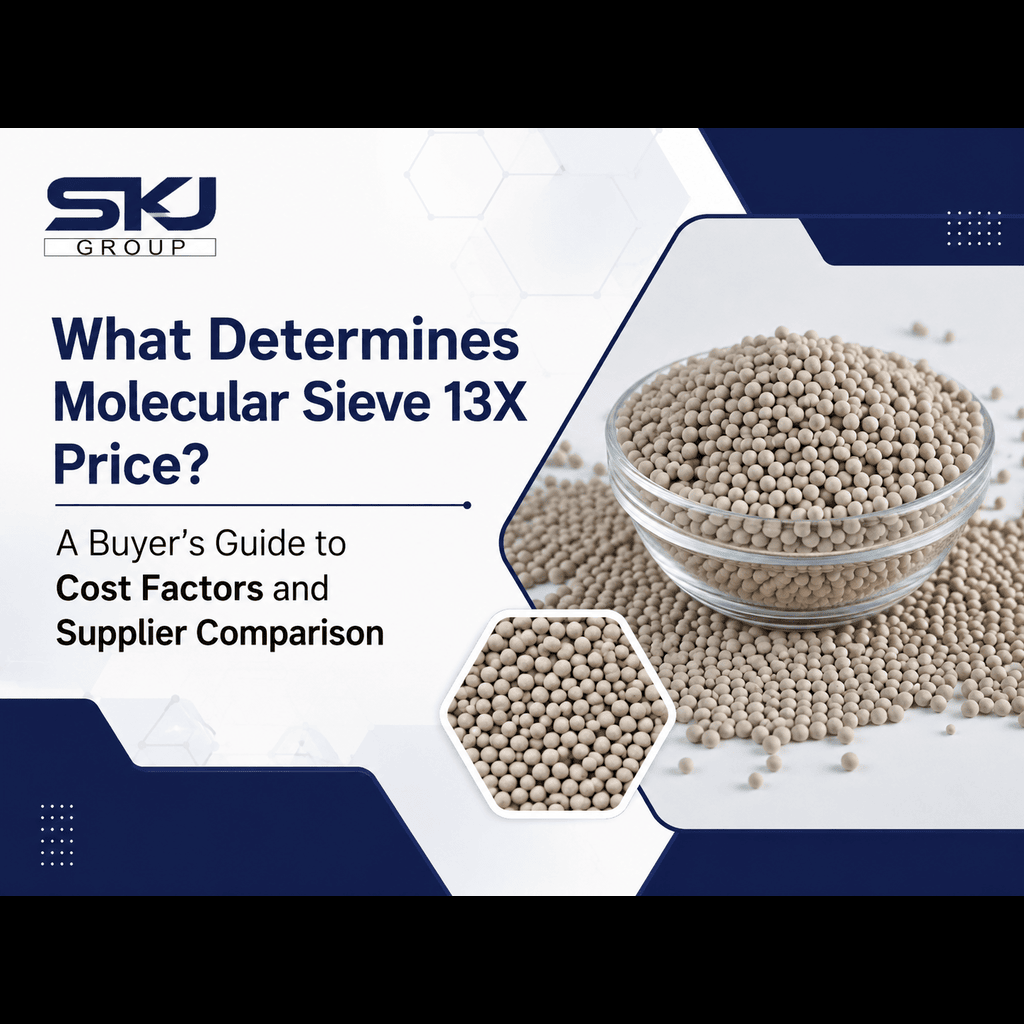
Molecular sieve 13x price is mainly driven by five things: adsorption purity, raw material grade, bead or pellet form, order volume, and freight from the manufacturing location. On average, buyers can expect the rate to shift by 15 to 30 percent between suppliers offering the same nominal specification, simply because of these hidden variables. If you are comparing quotes right now, the number on the invoice tells you far less than what sits behind it.
That is the part most first-time buyers miss. Two suppliers can quote the “same” adsorbent and land at very different numbers, and the gap usually comes down to quality control, not markup. This guide breaks down exactly what goes into the cost, so you can read a quotation the way a plant engineer would.
What Is Molecular Sieve Type 13X, and Why Does Cost Vary So Much?
Molecular sieve type 13x is a synthetic zeolite with a pore size of about 10 angstroms, wide enough to adsorb larger molecules like CO2, moisture, and hydrocarbons. It is one of the most versatile adsorbents used across gas drying, PSA oxygen generation, biogas upgrading, and air separation plants.
Because it serves so many applications, the “correct” specification is never one-size-fits-all. A sieve built for oxygen concentrators does not need the same crush strength as one used in a high-pressure natural gas plant. That difference in engineering directly affects cost.
Here is what typically pushes the price up or down:
- Adsorption capacity and static water/CO2 capacity – higher-rated sieves cost more to produce and test
- Crush strength and attrition resistance – critical for PSA cycles with frequent pressure swings
- Bead uniformity – tighter size tolerance (like 1.6mm, 2-3mm, or 3-5mm) means stricter screening and more material loss during manufacturing
- Binder type – low-binder or binderless variants adsorb more but cost more to produce
- Regeneration life – sieves rated for longer service life before replacement carry a higher upfront price but lower long-term cost
The Real Cost Drivers Behind Every Quotation
1. Raw Material and Manufacturing Grade
Zeolite synthesis depends on the quality of the sodium aluminate and sodium silicate used, along with the precision of the crystallization process. Cutting corners here produces a cheaper sieve, but one that loses adsorption capacity faster and needs replacement sooner. This is usually the single biggest factor behind price differences.
2. Packaging and Form
Loose bulk bags cost less than moisture-sealed drums or nitrogen-purged packaging. If your application is sensitive to pre-adsorbed moisture (which most are), packaging is not a place to cut costs, even though it does add to the invoice.
3. Order Quantity
Like most industrial materials, per-kilogram cost drops as order size increases. Buyers placing container-load orders typically pay noticeably less per unit than those ordering small trial batches, though trial quantities are often worth the premium before committing to a full production run.
4. Logistics and Origin
Freight, import duty, and distance from the manufacturing unit all sit inside the final delivered price. A domestically sourced sieve can often work out cheaper on landed cost even if the base rate looks similar to an imported one, once you account for shipping time and customs.
5. Testing and Certification
COA (Certificate of Analysis) documentation, batch testing, and consistency across lots add cost but protect you from performance variability, which matters far more in continuous process plants than a small per-kg saving.
How to Compare 13X Molecular Sieve Suppliers Properly
Getting a fair price starts with asking the right questions, not just collecting the lowest quote. A few pointers that separate a reliable purchase from a costly mistake:
- Ask for the static water capacity and CO2 capacity figures, not just “13X” as a label
- Request a recent batch COA, not a generic datasheet
- Confirm bead size tolerance matches your vessel design
- Check whether the price includes packaging suited to your storage conditions
- Compare delivered cost, not just ex-factory cost, especially for import orders
- Ask about minimum order quantity and lead time consistency
Working with established 13x molecular sieve suppliers who manufacture in-house, rather than trading repackaged stock, usually gives you more consistent quality from batch to batch. This matters because inconsistent adsorbents show up as unpredictable dew points or CO2 breakthrough months after installation, which is a far more expensive problem than a slightly higher purchase price.
At SKJ Group, pricing is built around this same principle: quality-controlled manufacturing first, competitive cost second. Our 13X Molecular Sieve range is produced to consistent adsorption specifications, so the quote you receive reflects the sieve you actually get in your vessel, not a best-case lab sample.
Typical Price Range: What to Expect
Exact numbers shift with raw material costs and currency movement, so treat any fixed figure with caution. That said, buyers generally see pricing structured across these tiers:
- Standard industrial grade – suited for general drying and moisture removal
- High-purity grade – suited for PSA oxygen and nitrogen generation systems where cycle life matters
- Specialty grades (13X-HP, APG) – engineered for high-pressure or specific gas separation duties, priced higher due to tighter manufacturing tolerances
Rather than anchoring to a single number found online, the more useful approach is requesting a quotation against your exact application, gas composition, and vessel size. Pricing that is not tied to your operating conditions rarely holds up once the sieve is actually in service.
If you are also evaluating how this adsorbent performs in real plant settings, our earlier post on 13X molecular sieve for gas drying and air separation walks through the application side in more depth.
A Quick Buyer’s Checklist Before You Order
- Define your gas composition and target dew point or purity level
- Match bead size to your vessel’s internal design
- Request COA and third-party test data if the order is large
- Compare delivered price, not just quoted ex-works rate
- Ask about repeat-order pricing if this is a recurring purchase
- Confirm packaging is suited for your storage duration and climate
Frequently Asked Questions
1. What is the average molecular sieve 13x price per kg?
Pricing depends on purity grade, bead size, packaging, and order volume, so there is no single fixed rate. Standard industrial grades are generally more affordable than high-purity or specialty grades like 13X-HP. The most accurate way to know your cost is to request a quotation based on your specific application and quantity.
2. Why do prices differ so much between suppliers for the same product?
Two suppliers can label a product “13X” while differing significantly in adsorption capacity, crush strength, and manufacturing consistency. The cheaper option is often cheaper because it uses lower raw material grades or skips certain quality checks, which shows up later as shorter service life.
3. Is molecular sieve type 13x more expensive than 4A or 5A sieves?
13X typically carries a slightly higher price than 4A or 5A because of its larger pore structure and broader adsorption range, which requires more precise manufacturing. The right choice still depends on your specific gas separation or drying need, not price alone.
4. Does buying in bulk actually reduce the price significantly?
Yes, per-unit cost usually drops noticeably with container-load or bulk orders compared to small trial quantities. For recurring industrial use, discussing annual volume with your supplier often unlocks better long-term pricing.
5. How do I know if a lower quote means lower quality?
Ask for the static water capacity, CO2 capacity, and a recent batch COA. If a supplier cannot provide this data or the numbers are vague, the lower price likely reflects reduced adsorption performance rather than genuine cost efficiency.
Final Thoughts
Chasing the lowest number on a quotation sheet is an easy trap, and one that usually costs more once you factor in early replacement, inconsistent moisture control, or unplanned downtime. A fair molecular sieve 13x price reflects the raw material quality, testing, and manufacturing precision that goes into the product, and that is worth understanding before you sign off on an order.
If you are sourcing for a new plant or replacing an existing charge, reach out to the SKJ Group team with your gas composition and vessel details. We will walk you through the right grade for your application and give you a quotation that is built around your actual operating conditions, not a generic price list.