Ceramic Rings vs Metal Rings: Which is Best for Your Industry?

Top Ceramic Saddles Manufacturer: Benefits, Applications & How to Choose the Best Supplier
December 13, 2025
What Are the Benefits of Using Ceramic Ultra in High-Temperature Applications?
December 17, 2025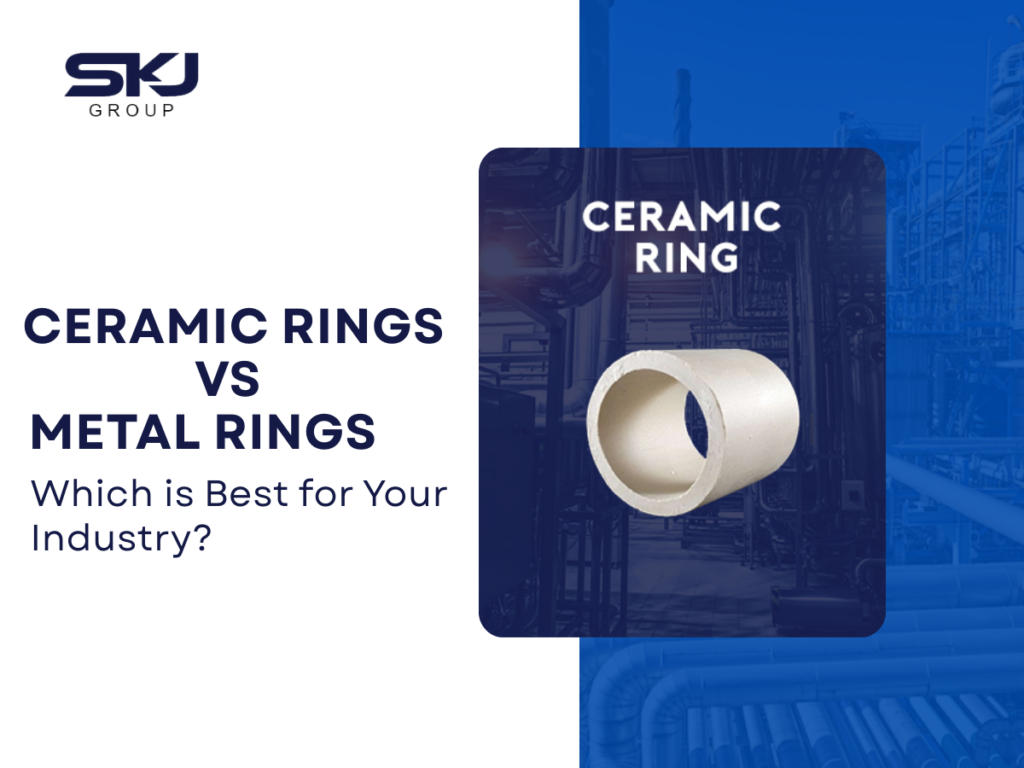
Choosing the right packing material for industrial columns can be challenging, especially when deciding between ceramic and metal options. Understanding Ceramic Rings vs Metal Rings is essential for maximizing efficiency, reducing operational costs, and improving overall process performance.
At SKJ Group, we are a leading Ceramic & Tower Packing Manufacturer providing high-quality ceramic rings and other structured packing solutions.
What Are Ceramic Rings and Metal Rings?
Ceramic Rings are structured packing made from high-quality ceramics, designed to withstand corrosive chemicals and high temperatures. They are widely used in chemical, petrochemical, and water treatment industries.
Metal Rings, on the other hand, are made from stainless steel or other metals, offering mechanical strength and thermal conductivity. They are commonly used in distillation, absorption, and industrial gas processes.
By understanding the unique properties of both materials, industries can make informed decisions that align with their operational requirements.
Ceramic Rings vs Metal Rings: Key Differences
When evaluating Ceramic Rings vs Metal Rings, it is essential to consider several factors:
1. Chemical Resistance
- Ceramic Rings: Excellent resistance to corrosion and chemical attack. Ideal for highly acidic or basic environments.
- Metal Rings: Susceptible to corrosion in harsh chemical conditions unless coated or made from high-grade alloys.
2. Thermal Stability
- Ceramic Rings: Can withstand extremely high temperatures without degradation.
- Metal Rings: Good thermal conductivity but may deform or corrode at very high temperatures.
3. Mechanical Strength
- Ceramic Rings: Highly durable, though brittle under extreme mechanical shock.
- Metal Rings: Superior mechanical strength, resistant to crushing and heavy column loads.
4. Cost and Maintenance
- Ceramic Rings: Often cost-effective over time due to durability and chemical resistance. Minimal maintenance required.
- Metal Rings: May require coatings or replacements over time in corrosive environments, increasing long-term costs.
5. Efficiency and Performance
- Ceramic Rings: Provide high surface area for mass transfer, improving separation efficiency.
- Metal Rings: Offer similar performance but may be less effective in corrosive or high-temperature applications.
Understanding these differences helps industries choose the most suitable packing material for their processes.
Benefits of Ceramic Rings in Industrial Applications
Choosing ceramic rings from a trusted ceramic ring manufacturer offers several advantages:
1. Superior Chemical Resistance
Ceramic rings resist acids, alkalis, and other corrosive chemicals, making them ideal for challenging industrial processes.
2. High Thermal Stability
They maintain structural integrity under high temperatures, ensuring consistent performance in demanding environments.
3. Enhanced Mass Transfer
The unique shape of ceramic rings increases surface area for liquid-gas contact, improving separation efficiency and process throughput.
4. Low Maintenance and Longevity
Ceramic rings are durable and require minimal replacement, reducing operational downtime and maintenance costs.
5. Versatile Applications
They are suitable for:
- Chemical and petrochemical processing
- Water treatment and purification
- Gas absorption and distillation
- Environmental and pharmaceutical industries
By sourcing ceramic rings from reputable Ceramic & Tower Packing Suppliers like SKJ Group, industries gain high-quality packing solutions designed for efficiency and longevity.
Advantages of Metal Rings in Industrial Columns
While ceramic rings offer several benefits, metal rings also have their advantages in specific scenarios:
1. Exceptional Mechanical Strength
Metal rings can withstand heavy loads and column pressures, making them ideal for tall, large-diameter columns.
2. Good Thermal Conductivity
Their metal composition allows efficient heat transfer, which is beneficial in heat-sensitive chemical processes.
3. Customizable Designs
Metal rings can be fabricated in various shapes and sizes to meet unique column requirements.
4. Recyclable and Sustainable
Metal rings can often be recycled, contributing to sustainable industrial practices.
Applications: When to Use Ceramic Rings vs Metal Rings
1. Chemical and Petrochemical Industry
- Ceramic Rings: Preferred for corrosive chemical processes and high-temperature distillation.
- Metal Rings: Suitable for non-corrosive or high-pressure chemical applications.
2. Water Treatment
- Ceramic Rings: Ideal for filtration, adsorption, and removal of impurities due to chemical resistance.
- Metal Rings: Used in less corrosive environments or where mechanical strength is critical.
3. Gas Absorption and Scrubbing
- Ceramic Rings: Perform efficiently in acidic or highly reactive gas streams.
- Metal Rings: Useful in general gas absorption where corrosion is minimal.
4. Environmental Applications
Both ceramic and metal rings are used in environmental control systems, but ceramic rings are often preferred for long-term durability and chemical resistance.
How to Choose the Right Ceramic Ring Supplier
Selecting the right supplier ensures product quality and reliable performance. Here’s what to consider when choosing a ceramic ring manufacturer:
1. Quality and Material Standards
Ensure the supplier provides high-quality ceramic rings with consistent size, shape, and chemical composition.
2. Technical Expertise
The supplier should offer guidance on installation, column optimization, and maintenance best practices.
3. Customization and Scalability
A reliable supplier like SKJ Group offers customized ceramic ring solutions for different column sizes and industrial requirements.
4. Global Delivery and Support
Choose suppliers that provide timely delivery, technical assistance, and after-sales support to prevent operational delays.
Maintenance Tips for Ceramic and Metal Rings
Proper maintenance ensures longevity and efficiency of packing materials:
- Regular Inspection: Check for cracks, corrosion, or deformation.
- Cleaning: Remove accumulated residues using appropriate cleaning methods.
- Proper Handling: Avoid rough handling during installation to prevent damage.
- Monitoring Performance: Regularly monitor column efficiency to detect packing issues early.
Following these tips helps maximize performance for both ceramic and metal rings.
FAQ: Ceramic Rings vs Metal Rings
Q1: Which is better for corrosive environments?
A: Ceramic rings are preferred due to their superior chemical resistance.
Q2: Can metal rings be used in high-temperature processes?
A: Yes, but ceramics usually perform better in extremely high temperatures.
Q3: How do I choose the best ceramic ring supplier?
A: Look for quality assurance, customization options, technical support, and reputation. SKJ Group is a trusted ceramic ring manufacturer and supplier.
Q4: Are ceramic rings more cost-effective than metal rings?
A: Over time, ceramic rings are often more cost-effective due to durability, low maintenance, and chemical resistance.
Conclusion
Deciding between Ceramic Rings vs Metal Rings depends on your industrial requirements, including chemical resistance, temperature, mechanical load, and budget. Ceramic rings excel in corrosive, high-temperature, and filtration processes, while metal rings are suitable for high-strength and non-corrosive applications.
Partnering with a trusted Ceramic & Tower Packing Manufacturer like SKJ Group ensures access to premium-quality ceramic rings, expert technical support, and reliable service. Investing in the right packing solution can improve column efficiency, reduce operational costs, and enhance overall industrial performance.
Contact SKJ Group today to explore our range of ceramic rings and other high-performance packing solutions tailored to your industry.
Contact us on Whatsapp.