What Is the Difference Between Ceramic Saddles, Pall Rings, and Intalox Saddles?

Ceramic vs Plastic vs Metal Tower Packing: Which Is Best for Chemical Absorption Columns?
July 1, 2026
Activated Alumina vs Molecular Sieve vs Activated Carbon: Complete Industrial Adsorbent Selection Guide
July 7, 2026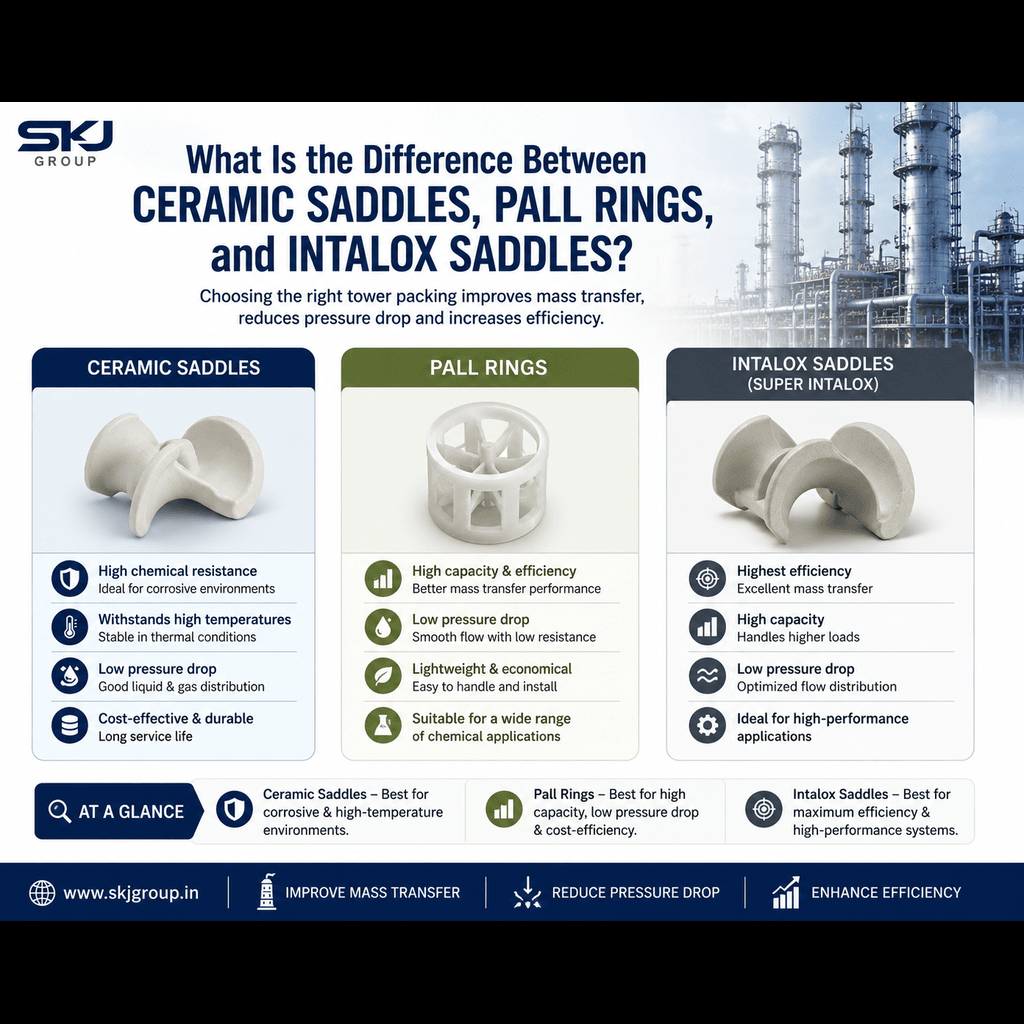
If you’ve spent any time researching tower packing, you’ve probably run into these three names again and again: saddles, pall rings, and Intalox saddles. They all do the same basic job inside a column, but they don’t perform the same way, and picking the wrong one can quietly hurt your column’s efficiency for years. At SKJ Group, we work with these packing types daily, and one thing we’ve learned is that most performance issues trace back to this exact confusion.
This guide breaks down what actually separates these packing types, so you can pick the right one without guessing.
Why Packing Shape Matters More Than You’d Think
Random packing works by giving gas and liquid a large surface area to interact across. The shape of that packing decides how liquid spreads, how much resistance the gas meets, and how much void space is left for flow.
A few things shape and design affect directly:
- Surface area available for mass transfer
- Pressure drop across the column
- Liquid distribution and film formation
- Resistance to channeling (liquid running down one side instead of spreading evenly)
Because of this, even packing made from the exact same material can behave very differently depending on its shape. That’s exactly why saddles, pall rings, and Intalox saddles aren’t interchangeable, even though they often get lumped together.
Ceramic Saddles: Simple Shape, Reliable Performance
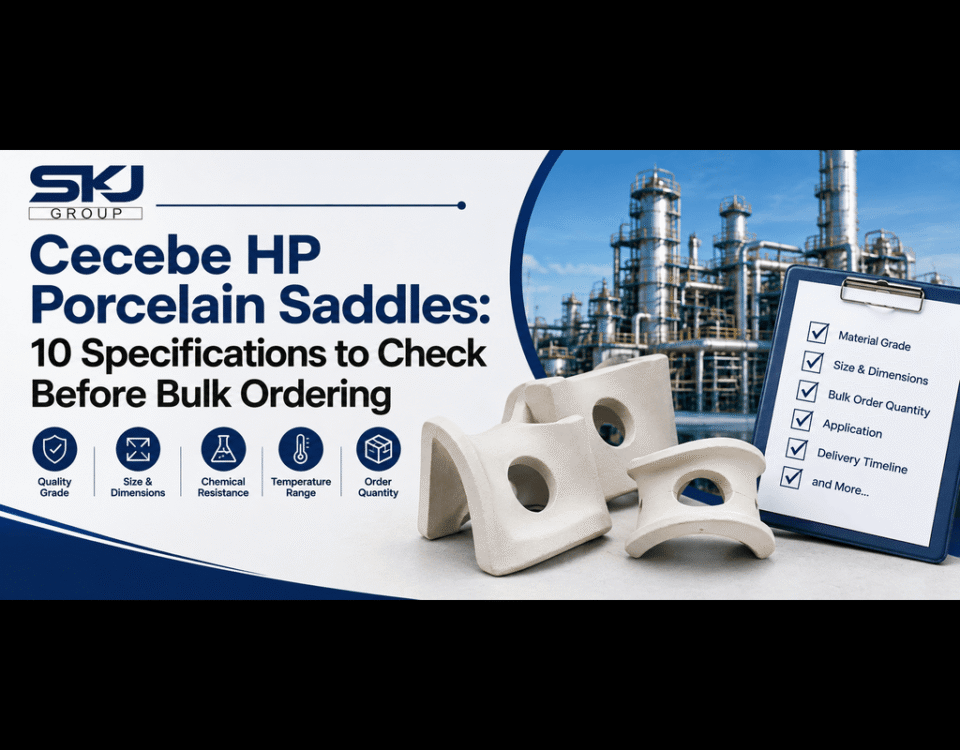
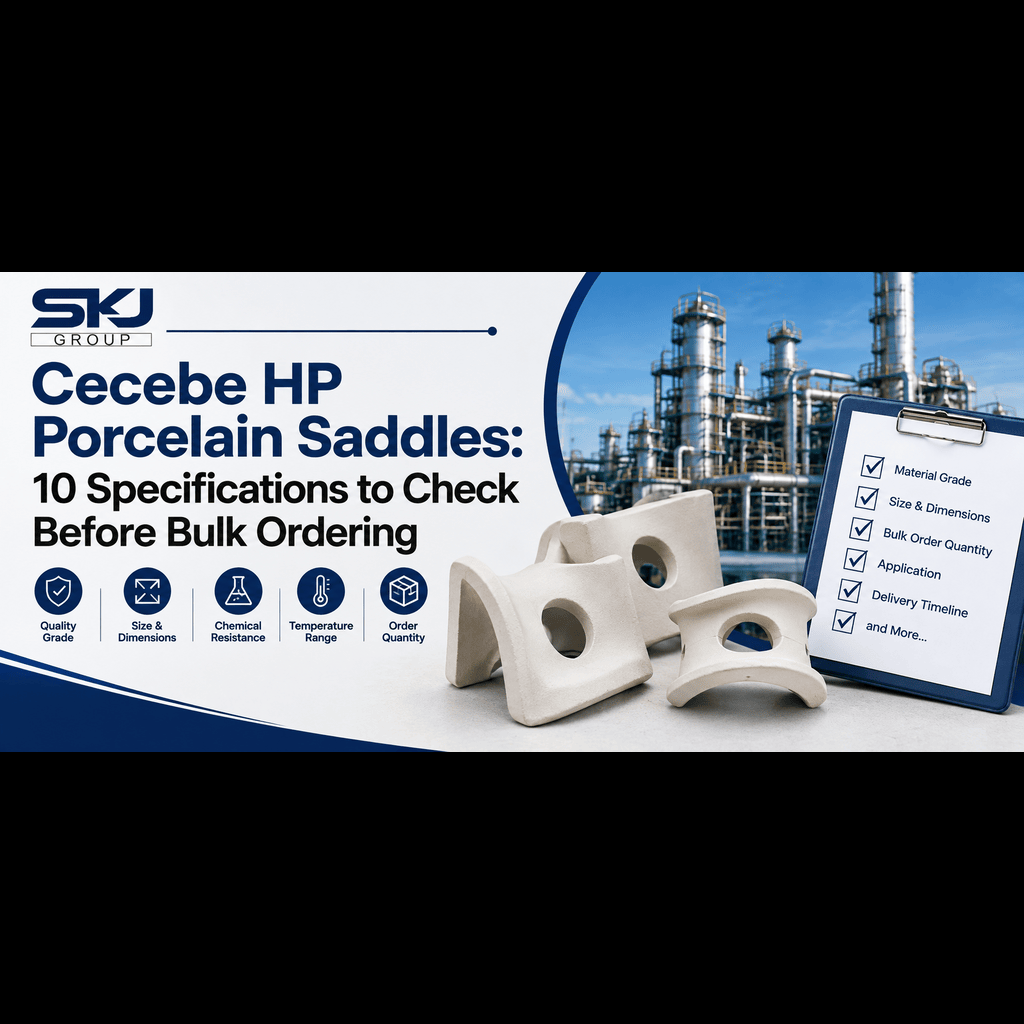
Ceramic saddles are one of the oldest random packing designs still in wide use today. Shaped like a curved saddle (similar to the original Berl saddle), they sit randomly inside the column and create a network of overlapping surfaces for liquid to flow across.
Key features of ceramic saddles:
- Good liquid spreading due to the curved surface
- Reasonable pressure drop for general absorption duties
- Strong resistance to acids, alkalis, and high temperatures
- Widely used in gas scrubbing, drying towers, and general chemical processing
Working with an experienced ceramic saddles manufacturer matters here, because saddle geometry needs to be consistent. Uneven curvature or wall thickness can create weak points that lead to cracking or uneven packing beds over time.
The main limitation of standard saddles is that their open area is a bit lower than more modern designs like Intalox saddles, so they’re not always the top pick where maximum efficiency is the priority.
Pall Rings: Improved Airflow Through Smart Openings
Pall rings started as an improvement on the older Raschig ring. Instead of a plain hollow cylinder, pall rings have window-like cutouts along the sides that fold inward. This small design change made a big difference in performance.
Why pall rings are widely preferred:
- Better liquid distribution than plain rings
- Lower pressure drop for the same packing height
- Higher capacity, meaning more flow can pass through without flooding
- Available in metal, ceramic, and plastic depending on the application
Plastic versions, especially polypropylene, are common in lighter chemical duty where temperatures stay moderate. For more corrosive or hotter conditions, working with a trusted PP pall ring supplier who understands your process chemistry helps avoid early degradation.
Pall rings tend to outperform basic saddles in high-flow columns, but they can be more expensive depending on material choice, so the decision often comes down to your flow rate and budget.
Intalox Saddles: Designed for Higher Efficiency
Intalox saddles took the basic saddle shape and refined it further. The design removes flat surfaces that could trap liquid and instead uses a smoother, more rounded geometry that improves flow and reduces dead zones inside the packing bed.
What makes Intalox saddles stand out:
- Higher open area compared to standard saddles
- Better liquid film formation, which improves mass transfer
- Lower pressure drop than older saddle designs
- Strong performance in both absorption and distillation columns
Super Intalox saddles take this a step further with an even more optimized shape for higher efficiency in demanding applications. Sourcing from a reliable ceramic Super Intalox saddle supplier ensures the packing meets tight tolerances, since small shape inconsistencies can affect how evenly liquid spreads across the bed.
Quick Comparison
| Factor | Ceramic Saddles | Pall Rings | Intalox Saddles |
| Open area | Moderate | High | Higher |
| Pressure drop | Moderate | Lower | Lower |
| Liquid distribution | Good | Very good | Excellent |
| Common material | Ceramic | Metal, plastic, ceramic | Ceramic, plastic |
| Best suited for | General scrubbing, drying | High-flow columns | High-efficiency absorption |
How to Choose Between the Three
Ask yourself these questions before deciding:
- What’s the flow rate and pressure drop limit for your column?
- Does your process need maximum efficiency, or is general performance enough?
- What chemical and temperature conditions will the packing face?
- Is budget or long-term efficiency the bigger priority?
If your process runs at moderate flow with standard chemical exposure, ceramic saddles remain a dependable and affordable choice. If you’re dealing with high flow rates or need better capacity, pall rings usually perform better. And where efficiency is critical, Intalox saddles, especially the Super Intalox design, tend to deliver the best results.
Still unsure which packing will deliver the best long-term performance? Take a look at why ceramic saddles remain a preferred choice for refinery scrubber applications, where reliability, corrosion resistance, and operational efficiency are essential.
Frequently Asked Questions
1. What is the main difference between ceramic saddles and Intalox saddles?
Intalox saddles have a more refined shape with higher open area and better liquid distribution, which generally gives them an edge in efficiency over standard ceramic saddles.
2. Are pall rings better than saddles for absorption columns?
It depends on flow rate. Pall rings usually handle higher flow with lower pressure drop, while saddles work well for general-purpose absorption at moderate flow.
3. Can ceramic saddles handle high temperatures?
Yes, ceramic saddles perform well at high temperatures and resist most acids and alkalis, making them suitable for demanding chemical environments.
4. What is a Super Intalox saddle?
It’s an improved version of the standard Intalox saddle, designed with an optimized shape for even higher efficiency in absorption and distillation applications.
5. Which packing type has the lowest pressure drop?
Generally, Intalox saddles and pall rings offer lower pressure drop than traditional ceramic saddles, though the exact figure depends on size and material.
Final Thoughts
Choosing between ceramic saddles, pall rings, and Intalox saddles isn’t about finding one universal winner. It comes down to your flow conditions, chemical exposure, and efficiency needs. As a trusted ceramic saddles manufacturer and PP pall ring supplier, SKJ Group can help you compare these options against your actual process requirements before you commit to a packing type.
Reach out to the SKJ Group team today to find the right packing solution for your absorption or distillation column.