Cordierite DPF Honeycomb Ceramic for Emission Control

What Are the Benefits of Using Ceramic Ultra in High-Temperature Applications?
December 17, 2025
13X Molecular Sieve for Gas Drying and Air Separation: Complete Industrial Guide
January 14, 2026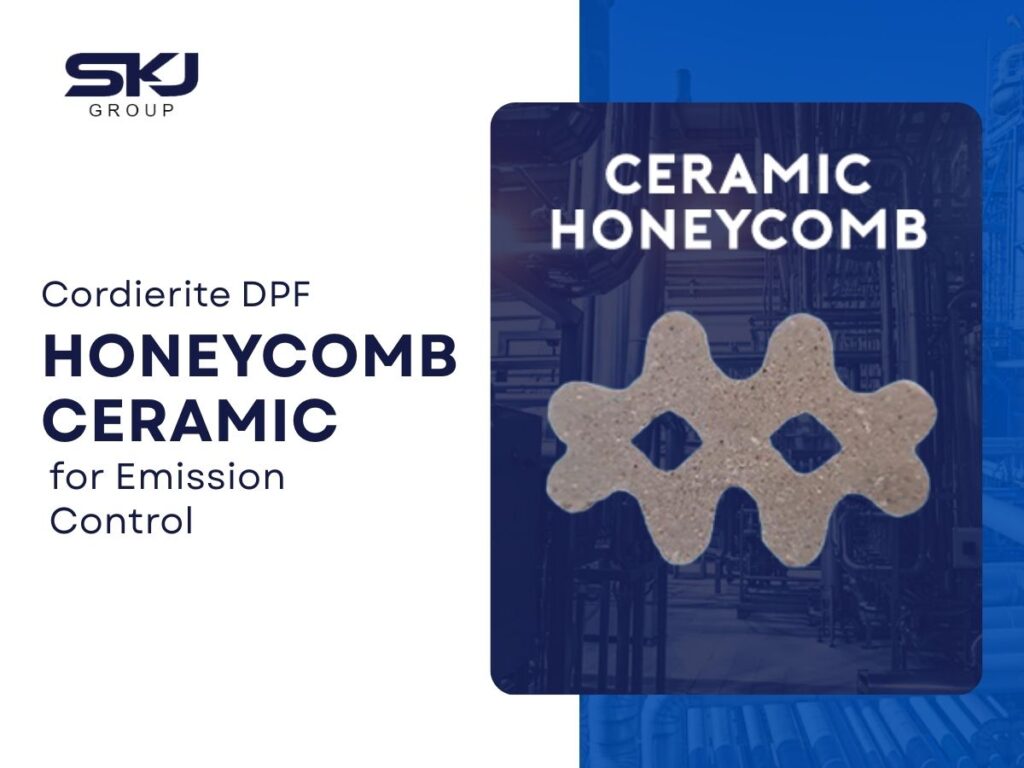
In 2023, a leading automotive manufacturing facility in Pune reduced its particulate emissions by 94% after implementing cordierite DPF honeycomb ceramic filters in their diesel engine production line. This case study demonstrates the transformative power of advanced ceramic honeycomb structure technology in meeting stringent emission standards.
The global push toward cleaner air has positioned honeycomb ceramic substrate technology at the forefront of industrial emission control solutions. Understanding the capabilities of cordierite DPF honeycomb ceramic has become essential for environmental compliance and operational excellence.
This comprehensive guide explores how honeycomb ceramic technology delivers superior emission control while meeting the demands of high-temperature industrial applications.
What is Cordierite DPF Honeycomb Ceramic?
Cordierite DPF (Diesel Particulate Filter) represents a specialized form of porous ceramic honeycomb engineered specifically for capturing particulate matter from diesel exhaust streams. The material combines cordierite’s exceptional thermal properties with a precisely engineered ceramic honeycomb monolith structure.
The ceramic honeycomb structure features thousands of parallel channels that maximize surface area while minimizing pressure drop. This unique architecture enables efficient particle capture without restricting exhaust flow.
Cordierite, a magnesium aluminosilicate ceramic, offers remarkable thermal shock resistance and low thermal expansion coefficients. These properties make it ideally suited for extreme temperature fluctuations in industrial ceramic honeycomb structure for emission control applications.
Key Properties of High Temperature Ceramic Honeycomb
1. Thermal Stability and Resistance
High temperature ceramic honeycomb structures manufactured from cordierite can withstand operating temperatures exceeding 1200°C. This thermal resilience ensures consistent performance even during regeneration cycles when accumulated particulates are burned off.
The material’s low coefficient of thermal expansion prevents cracking during rapid temperature changes. This characteristic proves critical in automotive and industrial applications with frequent thermal cycling.
2. Mechanical Strength and Durability
Despite its porous nature, structured ceramic honeycomb maintains impressive mechanical integrity. Key structural features include:
- Channel walls typically 0.3 to 0.5mm thick providing sufficient strength
- Interconnected cell structure distributing mechanical loads evenly
- Resistance to installation stresses and operational vibrations
- Optimized geometry preventing localized stress concentrations
3. Filtration Efficiency
Porous ceramic honeycomb structures achieve particulate filtration efficiencies exceeding 95% for particles larger than 0.1 microns. The porous walls trap particulates while allowing exhaust gases to pass through effectively.
The carefully controlled porosity, ranging from 45% to 55%, balances filtration efficiency with acceptable backpressure levels. This optimization ensures maximum particle capture without compromising system performance.
Applications of Industrial Honeycomb Ceramics
1. Automotive Emission Control Systems
The automotive industry represents the largest application segment for honeycomb ceramic substrate for catalytic converters and diesel particulate filters. Modern vehicles rely on these components to meet Euro 6, BS6, and EPA emission standards.
Ceramic honeycomb filter technology enables manufacturers to reduce nitrogen oxides, carbon monoxide, and particulate matter to compliant levels. The substrates support catalytic coatings that facilitate chemical conversion of harmful pollutants.
2. Industrial Gas Treatment
Ceramic honeycomb for industrial filtration systems addresses emission challenges in power generation, chemical processing, and manufacturing facilities. These applications involve higher gas volumes and more aggressive operating conditions than automotive systems.
Industrial honeycomb ceramics handle corrosive gases, elevated temperatures, and continuous operation cycles. Their chemical inertness and thermal stability make them indispensable in demanding industrial environments.
3. Catalyst Support Systems
Ceramic honeycomb catalyst support structures provide the foundation for various catalytic processes. The high surface area-to-volume ratio maximizes catalyst loading while maintaining low pressure drop characteristics.
Applications range from selective catalytic reduction systems for NOx control to volatile organic compound oxidation in industrial exhaust streams.
Manufacturing Excellence: The SJK India Advantage
As a leading ceramic honeycomb manufacturer, SJK India employs advanced extrusion and firing techniques to produce honeycomb ceramic blocks with precise dimensional tolerances and consistent quality.
Our role as a trusted ceramic honeycomb supplier extends beyond product delivery to include technical consultation and application-specific customization. We optimize porous ceramic honeycomb for gas treatment applications based on unique operational requirements.
Operating as a global ceramic honeycomb exporter, we maintain rigorous quality control protocols ensuring every ceramic honeycomb monolith meets international standards for thermal stability, mechanical strength, and filtration performance.
Technical Specifications and Selection Criteria
1. Cell Density and Channel Configuration
Honeycomb ceramic structures are available in various cell densities, typically ranging from 100 to 900 cells per square inch. Selection factors include:
- Higher cell densities provide greater surface area for particle capture
- Increased backpressure with higher density configurations
- Square channels offer easier manufacturing and consistent performance
- Application-specific optimization balancing efficiency and pressure drop
2. Wall Thickness and Porosity
Wall thickness directly impacts both filtration efficiency and structural integrity. Thinner walls maximize filtration area, while thicker walls provide enhanced durability for demanding applications.
Porosity control determines the balance between particle capture and gas flow resistance. High temperature resistant ceramic honeycomb blocks feature porosity levels optimized for specific particle size distributions.
3. Dimensional Considerations
Ceramic honeycomb blocks are manufactured in various sizes to accommodate different application requirements. Standard dimensions range from 100mm to 300mm in diameter, with lengths extending up to 500mm.
Custom dimensions and geometries are available for specialized applications. Proper sizing ensures optimal filtration performance while maintaining acceptable backpressure levels.
Installation and Maintenance Best Practices
1. Proper Handling Procedures
Honeycomb ceramic substrate materials require careful handling to prevent mechanical damage. Use appropriate mounting systems with compliant gaskets that accommodate thermal expansion without transmitting excessive stress.
2. Regeneration and Cleaning
Regular regeneration removes accumulated particulate matter and restores filtration efficiency. Controlled combustion of trapped particles typically occurs at temperatures between 550°C and 650°C.
Active regeneration systems inject fuel into the exhaust stream to raise temperatures, while passive systems rely on catalytic coatings. Both approaches effectively maintain ceramic honeycomb filter performance over extended service intervals.
3. Performance Monitoring
Monitor backpressure differential across the porous ceramic honeycomb to identify when regeneration or replacement becomes necessary. Temperature monitoring ensures regeneration processes remain within safe operating parameters.
Environmental and Economic Benefits
1. Emission Reduction Performance
Industrial ceramic honeycomb structure for emission control technology delivers measurable environmental benefits by capturing 95% or more of particulate emissions. This performance directly translates to improved air quality and reduced health risks.
The combination of particulate filtration and catalytic conversion reduces multiple pollutant categories simultaneously. Honeycomb ceramic substrate for catalytic converters enables single-system solutions for comprehensive emission control.
2. Operational Cost Savings
Despite higher initial investment, ceramic honeycomb systems deliver superior lifecycle economics. Extended service intervals, minimal maintenance requirements, and exceptional durability reduce total cost of ownership.
Fuel efficiency improvements resulting from optimized backpressure characteristics offset operating costs. Modern structured ceramic honeycomb designs minimize flow restriction while maximizing filtration performance.
3. Regulatory Compliance
Meeting increasingly stringent emission regulations requires proven, reliable technology. Cordierite DPF honeycomb ceramic filters demonstrate compliance with global emission standards across diverse applications.
Investing in certified ceramic honeycomb filter technology eliminates regulatory compliance risks and potential penalties associated with emission violations.
FAQ’s About Honeycomb Ceramic
1. What makes cordierite ideal for DPF honeycomb ceramic applications?
Cordierite offers low thermal expansion, high thermal shock resistance, and chemical stability against corrosive exhaust components.
2. How long does a ceramic honeycomb filter last in industrial use?
With proper maintenance, ceramic honeycomb filter systems operate effectively for 5 to 10 years in industrial applications.
3. Can ceramic honeycomb structures be customized for specific needs?
Yes, ceramic honeycomb manufacturer facilities customize cell density, wall thickness, dimensions, and geometry for specific applications.
4. How does cell density affect ceramic honeycomb filter performance?
Higher cell density provides greater surface area but increases backpressure; selection balances filtration efficiency against pressure drop.
5. What maintenance is required for ceramic honeycomb filtration systems?
Systems require periodic regeneration, backpressure monitoring, and inspection intervals typically ranging from 6 to 12 months.
6. What are key performance indicators for ceramic honeycomb systems?
Critical metrics include filtration efficiency (95%+ target), pressure drop, regeneration frequency, temperature distribution, and service life.
Conclusion: Partner with SJK India for Superior Emission Control Solutions
Cordierite DPF honeycomb ceramic technology represents the gold standard for modern emission control across automotive and industrial applications. The unique combination of thermal stability, mechanical durability, and exceptional filtration performance makes honeycomb ceramic the preferred solution.
As environmental standards continue tightening globally, investing in proven ceramic honeycomb structure technology ensures compliance today while preparing for tomorrow’s requirements.