Fine Chemical Separation Using Metal Gauze Structured Packing

Industrial Burner Efficiency with Infrared Honeycomb Ceramic Plates
February 5, 2026
Metal Wire Gauze Structured Packing in Pharmaceutical Distillation Units
February 12, 2026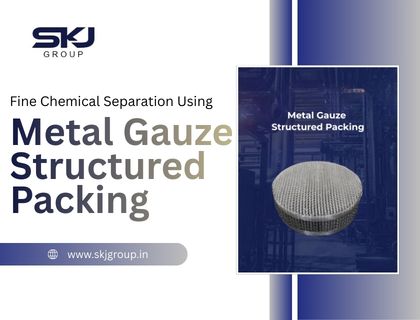
The fine chemicals industry demands exceptional precision in separation processes to achieve the ultra-high purity levels required for specialty applications. Metal gauze structured packing has become the technology of choice for manufacturers seeking to optimize their fine chemical manufacturing process while maintaining strict quality standards. As a leading metal gauze structured packing manufacturer, SJK India understands the critical performance requirements that differentiate fine chemical production from commodity chemical operations.
Specialty chemical separation presents unique challenges including close-boiling point compounds, heat-sensitive molecules, and stringent purity specifications often exceeding 99.9%. Metal gauze structured packing for fine chemical separation addresses these demanding requirements through superior mass transfer efficiency, minimal holdup volumes, and exceptional hydraulic performance across varying operational conditions.
Understanding Metal Gauze Structured Packing Technology
Metal gauze structured packing consists of corrugated woven wire mesh sheets assembled into modular elements that provide organized vapor-liquid flow paths within distillation and fractionation columns. The three-dimensional structure creates an extensive interfacial area while maintaining open channels that minimize pressure drop and prevent flooding.
The manufacturing process for quality metal gauze structured packing suppliers involves precision weaving of stainless steel wires into mesh screens with controlled aperture sizes, typically ranging from 40 to 200 mesh count. These screens undergo corrugation at specific angles, usually 45 or 60 degrees, before assembly into packing elements with heights ranging from 200mm to 600mm.
High efficiency structured packing for vacuum distillation columns utilizes the unique properties of metal gauze to create thin liquid films that spread uniformly across the wire surfaces. This film formation maximizes the interfacial area available for mass transfer, enabling efficient separation even when dealing with compounds having boiling points within just a few degrees of each other.
The thermal conductivity of metal construction provides additional benefits in chemical purification technology by facilitating uniform temperature distribution throughout the packed bed. This characteristic prevents localized temperature gradients that could compromise separation efficiency or cause product degradation.
Fine Chemical Applications Requiring Advanced Separation
1. Pharmaceutical Intermediates Production
The production of pharmaceutical intermediates represents one of the most demanding applications for stainless steel gauze packing for specialty chemical purification. Reaction mixtures often contain multiple isomers, unreacted starting materials, and byproducts that must be separated to achieve pharmaceutical-grade purity.
Chiral compound separation, essential for producing optically pure pharmaceutical ingredients, benefits tremendously from the high theoretical stage count delivered by best structured packing for high purity chemical separation. The ability to operate at precise reflux ratios enables resolution of enantiomers that would be impractical with less efficient separation technology.
Multi-step synthesis pathways in fine chemical production require repeated distillation operations where metal gauze structured packing in India installations deliver consistent performance across varying feed compositions and throughput rates.
2. Agrochemical Manufacturing
Modern agrochemical production involves complex organic synthesis generating mixtures requiring careful fractionation. Metal gauze structured packing for fine chemical separation enables manufacturers to achieve the purity levels necessary for product registration and regulatory compliance.
Insecticide and herbicide active ingredients often require purities exceeding 95% technical grade, with some formulations demanding 98%+ purity. The separation efficiency of high efficiency structured packing for vacuum distillation columns makes these specifications achievable while maintaining reasonable production costs.
Solvent recovery in agrochemical facilities represents another critical application where high-purity solvent recovery directly impacts operating economics. The ability to recycle solvents at purity levels enabling direct reuse eliminates costly fresh solvent purchases and hazardous waste disposal.
3. Electronic Chemicals and Specialty Solvents
Semiconductor manufacturing consumes ultra-high purity solvents and specialty chemicals where contamination at parts-per-million levels can cause device failures. Chemical purification technology employing metal gauze structured packing achieves the exceptional purity required for electronic-grade chemicals.
Photoresist solvents, etching chemicals, and cleaning agents used in microelectronics manufacturing undergo multiple distillation stages to remove trace impurities. The low holdup characteristics of low pressure drop metal structured packing for fractionation minimize product loss while delivering the theoretical stages needed for trace contaminant removal.
High-purity dimethylformamide (DMF), tetrahydrofuran (THF), and acetonitrile production for analytical chemistry applications requires specialty chemical separation technology capable of removing trace water, peroxides, and stabilizer residues to achieve HPLC-grade specifications.
4. Flavor and Fragrance Compounds
The flavor and fragrance industry produces thousands of specialized compounds where subtle impurities can dramatically affect sensory properties. Metal gauze structured packing suppliers provide solutions enabling manufacturers to achieve the complex purity profiles demanded by perfumers and flavorists.
Natural extract fractionation requires gentle processing conditions to prevent thermal degradation of delicate aromatic molecules. Stainless steel gauze packing for specialty chemical purification operating under vacuum enables low-temperature distillation that preserves the sensory characteristics of natural materials.
Aroma chemical synthesis generates isomeric mixtures where specific isomers provide desired fragrance notes while others contribute off-odors. The separation efficiency of best structured packing for high purity chemical separation enables isolation of target isomers at the purity levels required for premium fragrance applications.
Case Study: Specialty Solvent Producer Achieves 99.9% Purity
A specialty chemical manufacturer in Maharashtra producing high-purity solvents for pharmaceutical and electronic applications partnered with SJK India to upgrade their fractionation systems with metal gauze structured packing. The facility operated continuous distillation columns processing various solvent grades requiring exceptional purity.
Existing System Challenges:
- Inability to consistently achieve 99.9%+ purity specifications
- High energy consumption from excessive reflux requirements
- Product discoloration from thermal degradation during extended processing
- Frequent batch rejections failing customer specifications
- Limited production capacity constraining sales growth
Solution Implementation:
SJK India supplied customized high efficiency structured packing for vacuum distillation columns featuring 400 m²/m³ specific surface area in 316L stainless steel construction. The installation replaced aging random packing in three critical columns, with comprehensive performance testing validating separation efficiency.
Performance Results After Implementation:
- Consistent product purity exceeding 99.92% versus previous 99.6% average
- Energy consumption reduced by 32% through lower reflux requirements
- Distillation throughput increased by 45% in existing column infrastructure
- Product color quality improved from 15 APHA to under 5 APHA
- Customer complaint rate decreased from 8% to zero over 12-month period
- Annual profit improvement and increased capacity and reduced rejections
The dramatic performance transformation validated the investment in premium metal gauze structured packing for fine chemical separation, with the manufacturer subsequently expanding production capacity using SJK India’s technology.
Technical Performance Characteristics
1. Mass Transfer Efficiency
Metal gauze structured packing achieves exceptionally high mass transfer efficiency through multiple mechanisms working synergistically. The woven wire texture creates surface roughness that promotes liquid spreading into thin films, dramatically increasing interfacial area compared to smooth surfaces.
Theoretical stage measurements for quality metal gauze structured packing exporters products typically range from 2.5 to 5.0 theoretical stages per meter of packed height, depending on specific surface area and operating conditions. This efficiency enables column designs requiring less height than alternative packing types.
The Height Equivalent to a Theoretical Plate (HETP) represents the standard measure of packing efficiency. Best structured packing for high purity chemical separation achieves HETP values as low as 150-250mm in vacuum service and 100-150mm at atmospheric pressure for common test systems.
2. Hydraulic Capacity
The organized flow channels in low pressure drop metal structured packing for fractionation minimize vapor-liquid interference, enabling high throughput capacity. Capacity factors typically exceed those of random packing by 20-40% in identical column diameters.
Pressure drop characteristics prove especially critical in vacuum distillation applications common in fine chemical manufacturing process operations. High efficiency structured packing for vacuum distillation columns reduces pressure drop by 40-65% compared to random packing at equivalent separation efficiency.
The open geometry allows operation across wide turndown ranges, typically 50-100% of design capacity, without significant performance degradation. This flexibility proves valuable in batch production environments where throughput varies between campaigns.
3. Material Compatibility
Stainless steel gauze packing for specialty chemical purification provides excellent resistance to most organic solvents, acids, and bases encountered in fine chemical production. Material selection depends on specific chemical compatibility requirements:
- 304 stainless steel for general organic solvent systems
- 316L stainless steel for chloride-containing environments
- Hastelloy C-276 for highly corrosive acid or oxidizing conditions
- Titanium for specific applications requiring absolute corrosion resistance
- Monel for systems containing hydrofluoric acid
The inert metal surfaces prevent contamination from packing degradation, crucial when producing ultra-high purity products for pharmaceutical or electronic applications. Metal gauze structured packing manufacturer facilities maintain strict quality controls ensuring material conformance to specifications.
Selection Criteria for Fine Chemical Applications
Choosing appropriate metal gauze structured packing requires careful analysis of separation requirements, operating conditions, and economic constraints. Key selection factors include:
1. Separation Difficulty:
Close-boiling compounds (relative volatility < 1.2) require high-surface-area packing (400-700 m²/m³) to achieve sufficient theoretical stages. Specialty chemical separation of compounds with larger boiling point differences may utilize medium surface area (200-350 m²/m³) offering better capacity.
2. Operating Pressure:
Vacuum systems benefit most from low pressure drop metal structured packing for fractionation to minimize pressure loss and enable operation at lower absolute pressures. Atmospheric or elevated pressure applications can utilize packing optimized for capacity rather than minimum pressure drop.
3. Chemical Compatibility:
Corrosive environments require appropriate metallurgy selection from qualified metal gauze structured packing suppliers. Material certificates and corrosion testing data should verify compatibility with process chemicals across expected temperature and concentration ranges.
4. Purity Requirements:
Ultra-high purity applications (>99.9%) demand maximum efficiency packing with minimal holdup to reduce product losses. High-purity solvent recovery often justifies premium packing investments through improved yield of valuable products.
Installation and Operational Best Practices
Successful implementation of metal gauze structured packing for fine chemical separation requires attention to installation details that significantly impact performance. Critical considerations include:
1. Liquid Distribution:
Uniform liquid distribution across the packing surface proves essential for achieving designed efficiency. Distributor devices should provide distribution points spaced every 50-75mm across the column cross-section, with turndown capability matching expected operating ranges.
2. Support Systems:
Packing support grids must provide adequate load-bearing capacity without restricting vapor flow. Perforated plate supports typically offer 35-45% open area with structural strength sufficient to prevent deflection under packing weight and operating loads.
3. Column Levelness:
Packing beds must be installed level within ±3mm across the column diameter to prevent channeling and maldistribution. Support grid installation should use precision leveling equipment with verification before packing installation begins.
4. Handling Procedures:
The delicate wire gauze construction requires careful handling during installation. Metal gauze structured packing in India suppliers provide handling guidelines specifying lifting points, support methods, and installation sequences that prevent damage to packing elements.
Economic Considerations and Return on Investment
While high efficiency structured packing for vacuum distillation columns requires higher capital investment than random packing alternatives, comprehensive economic analysis typically favors structured technology for fine chemical applications. Financial benefits include:
- Increased product yield from improved separation efficiency
- Reduced energy costs through lower reflux and reboiler duty requirements
- Enhanced production capacity in existing column infrastructure
- Improved product quality reducing rejections and customer complaints
- Extended service life minimizing replacement frequency
- Lower maintenance requirements reducing downtime
Payback periods for upgrading to stainless steel gauze packing for specialty chemical purification typically range from 8-24 months depending on production values and separation challenges. High-value fine chemicals often justify payback periods under 12 months.
The American Institute of Chemical Engineers publishes extensive technical literature documenting structured packing performance in fine chemical applications. Their research validates the economic advantages of structured packing technology across diverse separation scenarios.
Emerging Trends in Fine Chemical Separation
Innovation continues advancing chemical purification technology capabilities. Current development areas include:
- Hybrid packing designs combining multiple surface textures
- Enhanced wetting treatments improving liquid distribution
- Computational modeling optimizing geometric parameters
- Advanced alloys providing superior corrosion resistance
- Modular designs simplifying installation and replacement
The International Society for Advancement of Materials and Process Engineering promotes technology development through technical conferences and publications. Industry collaboration accelerates adoption of improved separation technologies.
Regulatory and Quality Considerations
Fine chemical manufacturing process operations must satisfy comprehensive quality and safety requirements. Best structured packing for high purity chemical separation from qualified manufacturers includes:
- ISO 9001:2015 quality management certification
- Material traceability documentation with heat lot numbers
- Dimensional inspection reports verifying conformance
- Surface finish specifications ensuring cleanability
- Installation and maintenance guidance supporting validation
The Occupational Safety and Health Administration provides guidelines for chemical process equipment that responsible metal gauze structured packing exporters reference during product development. Compliance with safety standards protects facility personnel and reduces liability exposure.
FAQ’s About Metal Gauze Structured Packing
1. What is metal gauze used for?
Metal gauze is used in industrial separation processes, laboratory applications, heat distribution, filtration systems, and catalyst support providing high surface area contact.
2. What is structured packing used for?
Structured packing is used for distillation, absorption, stripping, and extraction processes requiring efficient vapor-liquid or liquid-liquid contact with low pressure drop.
3. What is gauze in metal?
Metal gauze consists of woven wire mesh forming a flexible screen material with controlled aperture sizes, used for filtration, separation, and heat transfer.
4. What is metallic packing?
Metallic packing refers to separation media constructed from metal materials including wire gauze, sheet metal, or expanded metal in various geometric configurations.
5. What is the structure of wire gauze?
Wire gauze structure comprises interwoven metal wires creating a mesh pattern with specific wire diameters and aperture spacings determining filtration or contact properties.
6. Why is gauze so commonly used?
Gauze is commonly used because it provides high surface area, flexibility, durability, cleanability, chemical resistance, and consistent performance across diverse applications.
7. Is gauze used in surgery?
Yes, surgical gauze made from cotton or synthetic fibers is used extensively for wound dressing, bleeding control, and protection during medical procedures.
8. How does a wire gauze work?
Wire gauze works by providing extensive surface area for heat distribution, liquid spreading, or gas-liquid contact while allowing fluid flow through the mesh openings.
9. What is the purpose of a gauze dressing?
Gauze dressing protects wounds, absorbs exudate, prevents contamination, promotes healing, and provides a sterile barrier against infection during wound recovery.
10. Is gauze a good material?
Yes, gauze is an excellent material offering versatility, biocompatibility (medical), chemical resistance (industrial), high surface area, and cost-effectiveness across diverse applications.
11. What are the two types of gauze?
The two main gauze types are woven gauze (interlaced fibers creating stable structure) and non-woven gauze (bonded fibers providing absorbency).
12.What are the advantages of gauze?
Gauze advantages include high surface area, breathability, flexibility, absorbency, sterilizability, chemical resistance, durability, and adaptability to various applications and configurations.
Conclusion
Metal gauze structured packing represents the optimal technology for fine chemical separation applications demanding exceptional purity, efficiency, and reliability. The combination of superior mass transfer, minimal pressure drop, and excellent material compatibility makes this technology essential for competitive fine chemical manufacturing process operations. As metal gauze structured packing manufacturer capabilities advance and purity requirements intensify, adoption of structured packing will expand across specialty chemical facilities. Companies implementing high efficiency structured packing for vacuum distillation columns gain competitive advantages through improved product quality, increased capacity, and reduced operating costs that enhance profitability.
Partner with SJK India for Advanced Separation Solutions
Transform your fine chemical separation processes with premium metal gauze structured packing from SJK India. As a trusted metal gauze structured packing manufacturer, we deliver engineered solutions meeting the exacting requirements of specialty chemical production.
Our comprehensive product range includes stainless steel gauze packing for specialty chemical purification, custom configurations for unique applications, and complete technical support from process analysis through commissioning. Whether you need best structured packing for high purity chemical separation or low pressure drop metal structured packing for fractionation, our engineering team provides expert guidance.