Metal Wire Gauze Structured Packing in Pharmaceutical Distillation Units

Fine Chemical Separation Using Metal Gauze Structured Packing
February 9, 2026
Using 5A Molecular Sieve in Hydrocarbon Separation Systems
February 14, 2026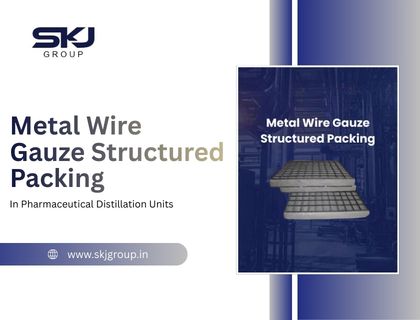
Metal wire gauze structured packing is used in pharmaceutical distillation columns to separate heat-sensitive compounds at low pressure while meeting strict purity requirements. It works by spreading liquid into thin films across corrugated wire mesh sheets, maximizing vapor-liquid contact without the pressure drop that random packing creates. For API manufacturers and solvent recovery plants running under vacuum, this is usually the deciding factor between hitting a purity spec and falling short of it.
Why Pharma Distillation Can’t Use Just Any Packing
- Heat-sensitive APIs degrade if held at high temperature for too long, so columns run under vacuum to lower the boiling point.
- Contamination control rules out packing with rough or porous surfaces that trap residue between batches.
- Regulatory audits require full material traceability, not just a certificate of conformance.
- Tight purity specs, often above 99.5 percent, leave very little room for inefficient separation.
Structured distillation packing addresses all four at once through its open geometry, smooth cleanable surface and predictable hydraulic behavior. This predictability matters more in pharma than almost anywhere else, since a column that behaves differently batch to batch makes validation and regulatory sign-off much harder to secure.
How Wire Gauze Packing Is Actually Built
Fine wire mesh, typically 316L or 304 stainless steel, is woven into screens and corrugated at 30, 45 or 60 degree angles. These corrugated sheets stack into modules that sit inside the column shell. The mesh texture creates thousands of tiny contact points where liquid spreads into a thin film, which is what gives this packing its high mass transfer efficiency compared to older ring-type packing.
Where This Packing Shows Up in Pharma Plants
API Production and Purification: Solvent is separated from the product stream at yields and purity levels that random packing struggles to match consistently, batch after batch.
Solvent Recovery Systems: Ethanol, methanol, acetone and dichloromethane are recovered and recycled back into the process, cutting both raw material spend and waste disposal costs.
Chiral and Specialty Compound Separation: Low holdup and precise reflux control make this packing suitable for resolving optical isomers, a task that is difficult with less efficient packing types.
Case Study: Antibiotic Manufacturer Improves Yield and Purity
A leading antibiotic producer in Gujarat partnered with SJK India to upgrade their solvent recovery and product purification systems with metal wire gauze structured packing. The facility operated multiple batch distillation columns processing heat-sensitive intermediates under vacuum conditions.
1. Existing System Challenges:
- Product degradation during extended distillation cycles
- Inconsistent batch-to-batch purity requiring reprocessing
- High solvent losses to waste streams
- Difficulty maintaining vacuum levels due to pressure drop
- Frequent packing replacement increasing maintenance costs
2. Solution Implementation:
SJK India supplied custom-designed pharmaceutical distillation equipment featuring stainless steel wire gauze packing with 250 m²/m³ specific surface area. The installation replaced ceramic saddle packing in three critical columns, with comprehensive material certifications and validation documentation.
3. Measured Performance Improvements:
- Product purity increased from 96.8% to 99.2% average
- Distillation cycle time reduced by 28%
- Solvent recovery rate improved from 82% to 94%
- Operating vacuum improved from 45 mbar to 15 mbar
- Packing service life extended beyond 5 years versus 18-month ceramic replacement cycle
- Annual cost savings and improved yield and reduced solvent purchase
The dramatic performance improvement validated the decision to invest in premium metal wire gauze structured packing for pharmaceutical distillation columns, with the facility subsequently upgrading additional columns across their manufacturing complex.
Matching Surface Area to the Job
| Specific Surface Area | Typical Use Case |
| 125-150 m²/m³ | General vacuum distillation |
| 200-250 m²/m³ | Moderate efficiency separations |
| 300-500 m²/m³ | High-purity API separations |
| 500-700 m²/m³ | Maximum theoretical stages, toughest separations |
Higher surface area buys more separation stages but adds pressure drop, so the right number depends on your specific column and product rather than a one-size-fits-all figure. Getting this wrong in either direction either under-delivers on purity or wastes capital on more packing than the separation actually needs.
Choosing a Manufacturer or Supplier
Not every metal wire gauze structured packing manufacturer builds to pharma-grade standards. Before signing off on a vendor, confirm the following.
- Material grade documentation, including heat lot numbers for full traceability.
- ISO 9001:2015 certification at minimum.
- Cleaning validation support, since your quality team will need this for audits.
- Custom sizing capability, as column diameters in pharma plants range from 150mm to 4000mm.
- Delivery timelines, particularly if sourcing from metal wire gauze structured packing suppliers in India rather than importing.
A serious metal wire gauze structured packing exporter will have this documentation ready without delay. It is also worth asking how the supplier handles module replacement down the line, since a manufacturer who can supply matched modules years later saves you from re-validating an entire column just to swap one section.
What This Looks Like in Practice
One antibiotic manufacturer in Gujarat replaced ceramic saddle packing with wire gauze structured packing across three vacuum columns. Product purity moved from 96.8 percent to 99.2 percent, solvent recovery improved from 82 percent to 94 percent, and the packing lasted well beyond the 18-month replacement cycle they were used to with ceramic saddles. The key step most plants skip is re-checking liquid distributor design before installation, since a distributor sized for old packing rarely spreads liquid evenly enough for new mesh geometry to perform at its rated efficiency.
Why SKJ Group
SKJ Group supplies metal wire gauze structured packing in India with full material certification, custom module sizing, and technical support from column design through commissioning. For plants standardizing across multiple lines, our metal wire gauze structured packing range covers 304, 316L and specialty alloy configurations. If your separation challenge sits closer to fine chemicals than pharma, our piece on metal gauze structured packing for fine chemical separation covers that use case in more depth.
Frequently Asked Questions
1. What is metal wire gauze structured packing used for?
It is used in distillation and solvent recovery columns, especially in pharmaceutical and fine chemical plants, where high separation efficiency and low pressure drop are required under vacuum conditions.
2. How is wire gauze packing different from random packing?
Wire gauze packing delivers 25 to 50 percent more theoretical stages per meter of column height than modern random packing, with lower pressure drop and higher throughput capacity.
3. What stainless steel grade is used for pharma applications?
304 stainless steel covers general pharmaceutical use, while 316L is used for chloride-containing systems where extra corrosion resistance is needed.
4. How long does this packing typically last?
Properly installed and maintained, wire gauze structured packing commonly delivers 8 to 12 years of continuous service in pharmaceutical operations.
5. Is structured packing worth the higher upfront cost?
Most pharma facilities see payback within 12 to 36 months through improved yield, lower energy use and reduced solvent makeup, with high-value API lines often recovering the cost in under 18 months.
Talk to Our Engineering Team
If you are scaling up a vacuum distillation line or replacing packing that isn’t holding purity anymore, our team can help size the right configuration for your column. Contact SKJ Group for technical specifications, material certificates, or a project quote.