Loading Ceramic Tower Packing: Wet vs Dry Fill Guide

Cecebe HP Porcelain Saddles: 10 Specifications to Check Before Bulk Ordering
September 24, 2026
How to Size and Layer Inert Ceramic Balls in Reactors
October 8, 2026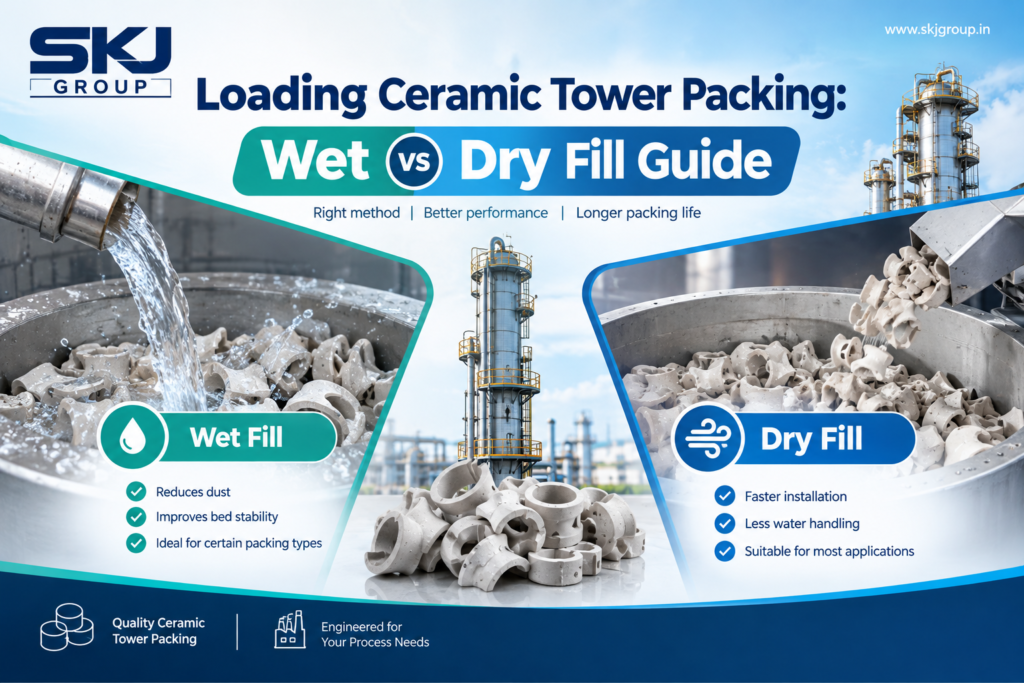
Wet loading is the safer way to fill a column with ceramic tower packing. You flood the vessel with water first, so each piece lands softly and settles in a random pattern, which means less breakage and a lower pressure drop at start-up. Dry loading is mainly for smaller columns or processes that cannot tolerate water, and it only works well with a chute or sock, never a free drop from the top flange.
Where Most Packing Damage Actually Happens
Ceramic is hard but brittle. It handles acids, heat and years of service, yet one hard knock during loading can crack a piece, and that crack stays invisible until pressure drop starts creeping up. Even well-made ceramic saddle ring packing cannot absorb a long free drop onto a bed of other ceramic.
- Broken pieces and fines settle into the gaps between whole pieces and cut the open space.
- Less open space means higher pressure drop and a column that runs closer to flooding at the same flow.
- Damage from loading cannot be seen on the day, and fixing it means a shutdown and a repack.
- How the pieces land matters too. Curved shapes were designed to resist stacking inside each other, as we explain in how saddle shapes were designed to resist nesting, but a careless pour can still create dense pockets and empty channels.
Wet Fill vs Dry Fill at a Glance
| Factor | Wet fill | Dry fill (chute or sock) |
| Breakage risk | Lowest, water cushions the fall | Higher, depends on drop height and care |
| Bed arrangement | More random, usually lower pressure drop | Can pack unevenly if poured fast |
| Extra time | Fill, then drain and dry fully before start-up | Faster, no drying step |
| Water needed | Yes, plus a place to drain it | None |
| Best for | Tall columns, large beds, fragile or large pieces | Smaller columns, moisture-sensitive processes |
| Main risk | Starting up with a bed that is still wet | Free dropping from the top flange |
Start With the Support Layer
The first layer on the support grid is usually larger ceramic rings or balls. They stop smaller packing from slipping through the grid and protect it from point loads. Load this layer gently, because every layer above it rests on it.
Ask your ceramic support rings manufacturer which sizes match your grid openings and your packing size, and confirm them before loading day, not during it.
How to Wet Load, Step by Step
- Prepare the vessel. Clean it out, check the support grid and distributor supports, and make sure the support layer is in place.
- Fill with water. Keep a water cushion above the point where packing enters. Ask your supplier for the water depth they recommend for your piece size.
- Load in small batches. Ceramic saddle packing should enter the water gently, whether you use buckets, a sock or a controlled chute. Do not tip a whole drum at once.
- Protect the bed. Do not step directly on the packing. Most loading procedures use boards to spread weight.
- Raise the water as the bed rises. Keep the cushion in place and level the surface as you go.
- Drain and dry. Drain the water and let the bed dry thoroughly before start-up. Starting up with a wet bed is an avoidable mistake.
➜ Loading a new bed soon? Ask our team for loading guidance and a quote
When Dry Loading Is the Right Call
Wet loading is not always possible. Some processes cannot tolerate residual moisture, and some shutdowns cannot spare the time to drain and dry a bed. In those cases, dry loading can work if you control the drop.
- Use it mainly on shorter columns where the fall is small.
- Use a chute, sock or rope and bucket so pieces are lowered, not dropped.
- Load in thin layers and level the surface often.
- Never dry-dump from the top flange of a tall tower.
- Expect more breakage than wet loading, and remove visible broken pieces and fines before you close up.
Mistakes That Break Packing Before It Ever Runs
- Free dropping pieces from the manway or top flange.
- Treating the support layer as an afterthought.
- Walking directly on the bed instead of using boards.
- Filling too fast, so pieces pile up instead of settling.
- Skipping the drying step after a wet load.
- Leaving the surface uneven, which feeds liquid maldistribution later.
- Not recording the bed height and a starting pressure drop.
What to Do Right After Loading
- Check the bed height against the height your design calls for. Packing settles, so plan for a top-up.
- Ask whether your design needs a hold-down plate on top of the bed, and fit it if so.
- Record the start-up pressure drop at a known flow rate. This one reading is your baseline. If pressure drop creeps up months later, you will know whether the packing or the process changed.
How to Choose in Two Minutes
- Can your process tolerate residual water? If not, plan a controlled dry load.
- Is the column tall or the bed large? If yes, wet loading is usually the safer choice.
- Can you afford the time to drain and dry? If not, a careful dry load with a chute or sock is the fallback.
- Is the packing ceramic or plastic? These steps are for ceramic. Plastic floats, so it needs a different approach.
Load With Confidence Using SKJ Group Packing
SKJ Group makes ceramic saddles and rings for chemical and refinery columns, and we would rather talk through your loading method before a shipment arrives than hear about breakage afterwards. If you are sourcing ceramic saddles in Mandsaur or shipping from here to your plant, our team can walk through your loading approach and what to check on delivery. Our ceramic saddles range covers the common shapes used in absorption, scrubbing and distillation columns.
Frequently Asked Questions
1. Should ceramic packing be dumped dry or wet loaded?
Wet loading is generally preferred for ceramic. Water cushions each piece, which reduces breakage and helps the bed settle randomly. Dry loading is possible for smaller columns, but use a chute or sock and avoid free drops.
2. How do you install random packing in a tower?
Prepare the vessel, set the support layer, then load the packing in small batches, by bucket, sock or chute. Level the surface as you go and fit a hold-down plate if your design needs one.
3. How do you stop ceramic packing from breaking?
Keep the drop short or cushion it with water, load in small batches, avoid stepping on the bed, and handle the support layer gently. Most breakage comes from free drops and foot traffic.
4. Do you need to dry ceramic packing after wet loading?
Yes. Drain the water and let the bed dry thoroughly before start-up, so the column does not go into service with a wet bed.
5. How can I tell if packing broke during loading?
Look for visible fragments and fines at the top and bottom of the bed, and watch start-up pressure drop against your design value. Fines that settle into gaps raise pressure drop.
6. Can plastic packing be wet loaded the same way?
Not exactly. Plastic packing floats, so the top layer rises while the rest is held down by the weight above. Follow your supplier’s instructions for plastic media.
Get Your Next Packing Load Right
A careful load of ceramic tower packing costs a few extra hours. A careless one can cost a shutdown and a repack. If you are planning a new bed or replacing tired packing, SKJ Group can help you match the right packing and loading method to your column.
➜ Request a Quote and Loading Guidance and our team will walk you through options suited to your tower.