3A Molecular Sieve in Ethanol Dehydration Plants

Industrial Flooring Applications of Premium Ceramic Tiles
February 17, 2026
Advanced Gas Processing Applications of 13X APG Zeolite Molecular Sieve
February 21, 2026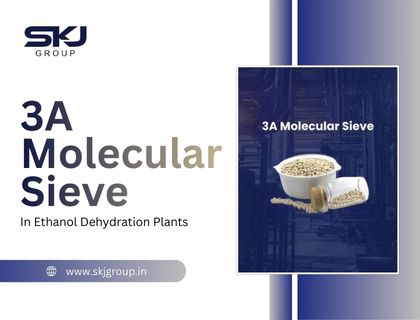
The global demand for fuel grade ethanol production continues expanding as nations seek renewable alternatives to petroleum-based fuels. 3A molecular sieve has become the industry standard for achieving the ultra-low water content required in fuel ethanol, enabling producers to meet stringent quality specifications economically and reliably. As a leading 3A molecular sieve manufacturer, SJK India recognizes the critical role this specialized adsorbent plays in modern ethanol dehydration process operations.
3A molecular sieve for ethanol dehydration plants delivers unmatched selectivity for water removal while excluding ethanol molecules from the pore structure. This unique capability enables production of anhydrous ethanol exceeding 99.5% purity from azeotropic mixtures that conventional distillation cannot separate.
Understanding 3A Molecular Sieve Technology
3A zeolite molecular sieve belongs to the synthetic zeolite family with the Linde Type A (LTA) crystal structure. The designation “3A” refers to the effective pore opening of approximately 3 angstroms (0.3 nanometers), created through potassium cation exchange that reduces the aperture size compared to larger-pore variants.
The crystalline framework consists of precisely arranged silicon, aluminum, and oxygen atoms forming a three-dimensional network of uniform cavities interconnected by 3-angstrom channels. This ordered structure enables 3A molecular sieve to adsorb small molecules like water (kinetic diameter 2.8Å) while excluding larger molecules including ethanol (kinetic diameter 4.4Å).
How 3A molecular sieve improves ethanol purity becomes clear when understanding molecular size discrimination. Water molecules easily enter the pore structure and become trapped through physical adsorption, while ethanol molecules remain too large to penetrate the pores and pass through the adsorbent bed unchanged.
The Ethanol Dehydration Process
Traditional distillation of fermentation broth concentrates ethanol to approximately 95-96% by weight, forming an azeotropic mixture where further distillation cannot increase concentration. 3A molecular sieve for ethanol dehydration plants enables cost-effective removal of remaining water to achieve fuel-grade specifications.
Pressure swing adsorption (PSA) represents the dominant technology for molecular sieve-based ethanol dehydration. The process cycles multiple adsorbent beds through adsorption, depressurization, regeneration, and repressurization steps maintaining continuous product flow.
During the adsorption phase, azeotropic ethanol flows through beds of 3A zeolite molecular sieve at elevated pressure (typically 2-4 bar) and moderate temperature (100-130°C). Water molecules selectively adsorb onto the zeolite while purified ethanol exits the bed at 99.5-99.9% purity meeting fuel specifications.
Industrial application of 3A molecular sieve in bioethanol plants involves sophisticated process control systems managing bed switching, regeneration timing, and product quality monitoring. Modern plants employ 8-12 adsorbent beds enabling high capacity utilization while maintaining product specifications.
Critical Applications in Ethanol Production
1. Fuel Ethanol Manufacturing
Fuel grade ethanol production represents the largest application for 3A molecular sieve. Automotive fuel specifications in most countries require minimum 99.5% ethanol content with maximum 0.5% water to prevent phase separation when blended with gasoline.
The ethanol dehydration process using 3A zeolite molecular sieve typically reduces water content from 4-5% in azeotropic feed to under 0.3% in finished product. This deep dehydration proves impossible through distillation alone, making molecular sieve technology essential for fuel ethanol production.
Large-scale bioethanol facilities process 200,000-1,000,000 liters daily, requiring robust dehydration systems handling high throughput reliably. Quality 3A molecular sieve suppliers provide products engineered for the demanding cyclic service in continuous ethanol plants.
2. Industrial and Chemical Grade Ethanol
Pharmaceutical, chemical synthesis, and specialty solvent applications demand even higher purity than fuel specifications. Best molecular sieve for removing water from ethanol enables production of absolute ethanol exceeding 99.9% purity with water content below 0.1%.
Laboratory and analytical grade ethanol requires rigorous water control preventing interference in sensitive applications. 3A zeolite molecular sieve delivers the consistent ultra-low water levels these demanding applications require.
Case Study: Bioethanol Plant Increases Capacity
A major bioethanol producer in Maharashtra operating a 300,000 liter per day facility partnered with 3A molecular sieve in Mandsaur supplier SJK India to upgrade their dehydration system. The existing molecular sieve bed showed declining performance after four years of continuous operation.
Previous System Challenges:
- Inconsistent product purity with frequent below-specification batches
- Reduced throughput capacity from 300,000 to 240,000 liters daily
- High regeneration energy consumption
- Shorter adsorption cycles requiring frequent bed switching
Solution Implementation:
SJK India supplied premium 3A zeolite molecular sieve with enhanced attrition resistance and optimized pore structure. The installation included 85 metric tons of fresh adsorbent across eight dehydration beds with upgraded regeneration controls.
Performance Results:
- Consistent product purity achievement of 99.7% ethanol (exceeding 99.5% specification)
- Production capacity restored to 320,000 liters daily (6.7% above original design)
- Regeneration energy reduced by 22% through improved thermal efficiency
- Adsorption cycle time extended from 4 hours to 6.5 hours
- Annual cost savings exceeding and increased throughput and reduced energy
The transformation validated the decision to invest in premium 3A molecular sieve from established 3A molecular sieve manufacturers, with projected adsorbent life exceeding 6 years before replacement.
Technical Specifications and Performance
Quality 3A molecular sieve for ethanol dehydration plants meets rigorous performance specifications:
1. Physical Properties:
Bead size affects pressure drop and mass transfer efficiency. Standard sizes from 3A molecular sieve exporters include 1.6-2.5mm (8×12 mesh) for balanced performance, 2.0-3.0mm for lower pressure drop applications, and 1.0-1.6mm for maximum mass transfer in specialty applications.
Crush strength exceeding 70N for individual beads ensures mechanical integrity during cyclic pressure operations and prevents attrition generating fines.
2. Adsorption Capacity:
Static water capacity of premium 3A zeolite molecular sieve exceeds 20 wt% at 25°C and 4.6 torr water partial pressure. Dynamic working capacity in ethanol service typically ranges from 3-5 wt% depending on feed concentration and cycle design.
Regeneration and Operational Considerations
Proper regeneration proves essential for maintaining 3A molecular sieve performance over extended service life. Temperature swing regeneration heats beds to 200-250°C using vapor-phase ethanol, driving adsorbed water from the zeolite structure.
Pressure swing adsorption (PSA) systems combine pressure reduction with moderate heating (120-150°C) for faster regeneration cycles. The pressure reduction releases adsorbed water while heating accelerates desorption kinetics.
Modern ethanol dehydration process installations employ sophisticated controls monitoring product purity through online moisture analyzers, bed temperature profiles indicating adsorption front progression, pressure drop across beds revealing mechanical degradation, and regeneration efficiency from outlet moisture content.
Selection and Economic Considerations
Choosing appropriate 3A molecular sieve suppliers requires evaluating quality verification through certificates of analysis, application engineering support, and supply reliability. Established 3A molecular sieve exporters maintain inventory and logistics capabilities ensuring timely delivery for scheduled replacements.
While 3A zeolite molecular sieve represents a significant capital investment, economic benefits include higher throughput capacity from efficient dehydration, reduced energy consumption versus alternative dehydration methods, consistent product quality minimizing off-specification production, extended service life (5-7 years) reducing replacement frequency, and lower maintenance requirements.
FAQ’s About 3A molecular sieve
1. What is molecular sieve 3A?
3A molecular sieve is a synthetic zeolite with 3 angstrom pore openings that selectively adsorbs water molecules while excluding larger molecules like ethanol, ideal for dehydration applications.
2. What is the difference between 3A and 4A molecular sieves?
3A molecular sieve has 3 angstrom pores adsorbing only water and very small molecules, while 4A features 4 angstrom pores adsorbing methanol, ethanol, and larger species.
3. How to use 3A molecular sieve?
Use 3A molecular sieve by flowing liquid or gas through packed beds at controlled temperature and pressure, then regenerate by heating to 200-250°C to drive off adsorbed water.
4. How do you regenerate a 3A molecular sieve?
Regenerate 3A molecular sieve by heating to 200-250°C with dry gas flow, cooling below 100°C, then purging with dry gas before returning to adsorption service.
5. What is the difference between 3A and 13X molecular sieve?
3A molecular sieve has 3 angstrom pores for selective water removal, while 13X features 10 angstrom pores adsorbing much larger molecules including aromatics and mercaptans.
6. How much water can 3A molecular sieves absorb?
3A molecular sieves absorb over 20 wt% water under static conditions and 3-5 wt% dynamic working capacity in typical cyclic ethanol dehydration applications.
7. What temperature is needed for 3A molecular sieve regeneration?
3A molecular sieve regeneration requires temperatures of 200-250°C for complete water removal, with optimal regeneration typically achieved at 220-230°C for ethanol applications.
Conclusion
3A molecular sieve represents essential technology for modern ethanol dehydration process operations, enabling efficient production of fuel grade ethanol meeting stringent purity specifications. The selective water removal capability, combined with extended service life and operational reliability, makes 3A zeolite molecular sieve the optimal choice for bioethanol producers worldwide. Facilities implementing quality products from established 3A molecular sieve manufacturers achieve superior performance, consistent product quality, and compelling economic returns.
Partner with SJK India for Premium 3A Molecular Sieve
Optimize your ethanol dehydration operations with premium 3A molecular sieve from SJK India. As a trusted 3A molecular sieve manufacturer serving 3A molecular sieve in Mandsaur and throughout India, we deliver high-performance adsorbents engineered specifically for demanding bioethanol applications.
Contact SJK India today to discuss your dehydration requirements and discover why leading bioethanol producers choose us as their preferred 3A molecular sieve suppliers. Experience measurable improvements in product purity, throughput capacity, and operational efficiency.