How to Choose the Right Ceramic Rings for Industrial Use

Use of Inert Ceramic Balls in Refinery and Gas Processing Plants
May 5, 2026
Use of Honeycomb Ceramic Structures in Thermal Processing Systems
May 7, 2026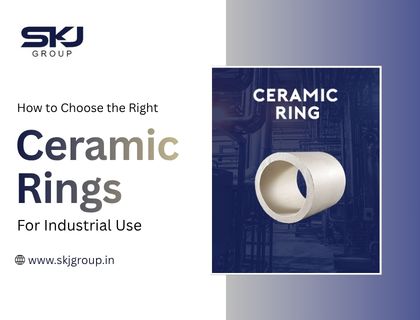
A ceramic ring in India and globally serves as random packing material inside industrial towers, columns, and scrubbers. These rings are placed loosely inside the tower to create a large surface area where gas rising upward and liquid flowing downward can make close contact. This contact is what drives processes like absorption, distillation, stripping, and gas scrubbing.
Fact: According to the American Institute of Chemical Engineers, well-selected random packing media can improve mass transfer efficiency in industrial columns by 25% to 40% compared to empty column operation. India’s chemical industry, which contributes over 7% to the national GDP according to the Indian Chemical Council, depends heavily on industrial ceramic packing materials in hundreds of processing towers operating across the country every day.
The quality of the ceramic ring in India you select directly affects how well your column performs. A correctly chosen ring delivers efficient mass transfer, low pressure drop, long service life, and minimal maintenance. A poorly chosen ring leads to process inefficiency, frequent shutdowns, and unnecessary operating costs.
Why Ceramic Rings Are Preferred for Industrial Chemical Processes
Ceramic rings for industrial use are preferred over plastic or metal alternatives in many applications because of their unique combination of properties.
1. Corrosion Resistant Ceramic Packing
Ceramics do not react with acids, alkalis, or most industrial solvents. Corrosion resistant ceramic packing remains structurally intact in towers handling sulfuric acid, hydrochloric acid, nitric acid, and caustic soda solutions. Metal rings corrode in such environments, and plastic rings may swell or soften at elevated temperatures.
2. Ceramic Ring Durability and Thermal Resistance
Ceramic ring durability and thermal resistance make them the first choice for high-temperature applications. Standard ceramic rings handle continuous temperatures from 600°C to over 1200°C depending on the alumina content. This thermal stability is essential in acid concentration towers, gas purification columns, and other high-heat processes where plastic packing would fail rapidly.
3 .Chemical Inertness
Ceramic rings do not contaminate the process stream. In pharmaceutical manufacturing and food-grade chemical production, this non-reactive nature is a regulatory requirement, not just a preference.
4. Long Service Life
With correct selection and careful installation, industrial ceramic packing materials last 5 to 10 years or longer in most chemical tower applications. This long service life reduces packing replacement costs and minimizes production shutdowns for maintenance.
Types of Ceramic Rings Available from Ceramic Ring Manufacturers in India
Ceramic ring manufacturers in India produce several types of rings. Each type has a different shape that affects how gas and liquid flow through the packed bed. Choosing the correct type is the first step in selecting the right ceramic tower packing solution for your application.
1. Ceramic Raschig Ring
The Raschig ring is the simplest type. It is a hollow cylinder with equal height and diameter. Raschig rings have been used in industrial towers for over a century. They provide reliable performance in general absorption and scrubbing applications. However, their simple shape gives a higher pressure drop compared to more modern designs.
2. Ceramic Pall Ring
The Pall ring is a modified Raschig ring with internal fingers or blades cut into the wall and bent inward. This design increases the effective surface area and improves liquid distribution through the packed bed. Ceramic ring applications in distillation columns frequently use Pall rings because they deliver better separation efficiency and lower pressure drop compared to Raschig rings.
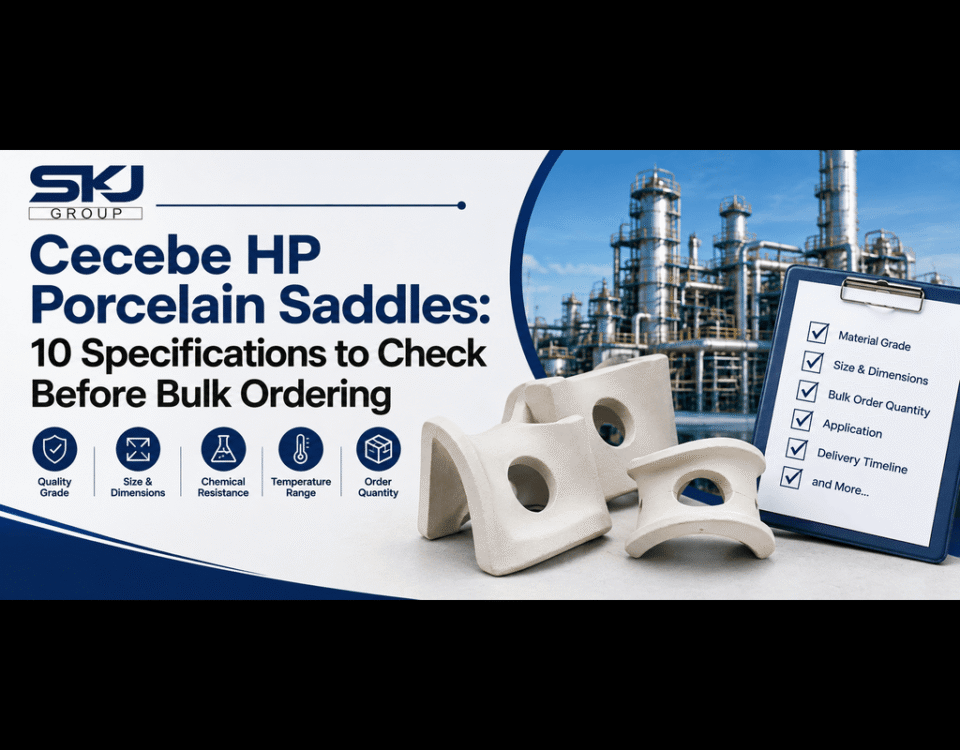
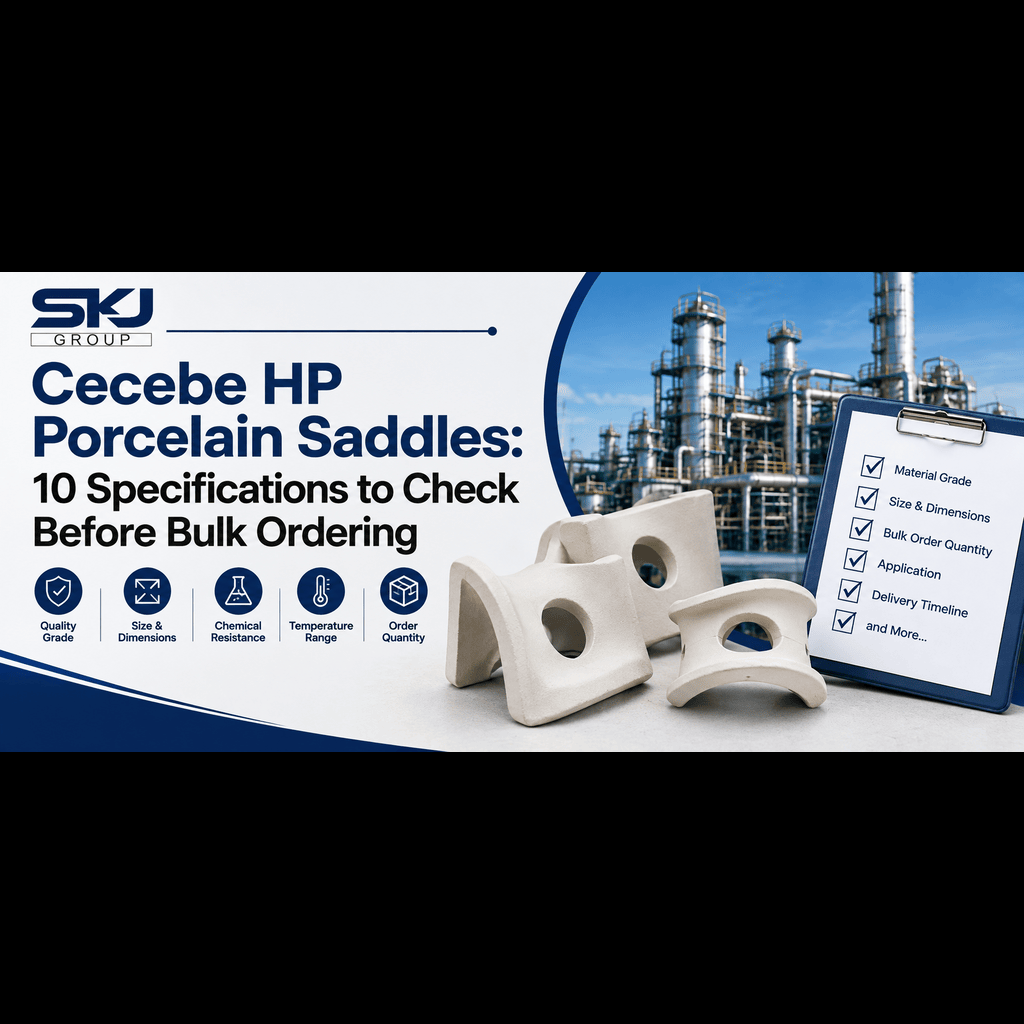
3. Ceramic Berl Saddle
The Berl saddle has a curved, saddle-like shape that promotes better liquid spreading across the packing surface. It is commonly used in acid absorption towers and scrubbing columns where good liquid distribution is critical.
4. Ceramic Intalox Saddle
The Intalox saddle is an improved saddle design with a more complex curved geometry. It offers lower pressure drop and higher throughput capacity than the Berl saddle. Many modern chemical towers use Intalox saddles where high efficiency and low energy consumption are priorities.
5. Ceramic Cascade Mini Ring
The cascade mini ring is a short cylinder with an internal cross structure. This design provides very high surface area and excellent mass transfer efficiency in a compact size. It is used in high-performance separation columns where maximum efficiency is required in a limited column height.
Comparing Ceramic Ring Types for Industrial Selection
Here is a comparison table to help engineers and procurement teams select the right type from a ceramic ring supplier:
| Ceramic Ring Type | Pressure Drop | Surface Area | Mass Transfer Efficiency | Best Application |
| Raschig Ring | High | Moderate | Moderate | General scrubbing, simple absorption |
| Pall Ring | Low | High | High | Distillation, stripping columns |
| Berl Saddle | Medium | Good | Good | Acid absorption, gas scrubbing |
| Intalox Saddle | Low | High | Very High | High-throughput chemical columns |
| Cascade Mini Ring | Very Low | Very High | Excellent | High-efficiency separation columns |
For most standard chemical absorption applications, ceramic Pall rings or Intalox saddles offer the best combination of efficiency and reasonable cost. For older columns originally packed with Raschig rings, switching to Pall rings or Intalox saddles during repacking can significantly improve column capacity and reduce energy consumption.
How to Choose the Right Ceramic Ring in India: Step-by-Step Selection Guide
Choosing ceramic packing for chemical industries requires a systematic approach. Here is a practical step-by-step guide.
Step 1: Define Your Process Conditions
Before contacting a ceramic ring manufacturer, document your operating temperature, the chemicals in your process stream, gas and liquid flow rates, and the column diameter. These parameters determine which ceramic grade and ring type will perform correctly.
Step 2: Select the Correct Ceramic Grade
High alumina ceramic rings selection is important for high-temperature or strongly acidic applications. Standard porcelain rings with 17% to 23% alumina content are suitable for general applications at moderate temperatures. For processes above 600°C or involving concentrated acids, select rings with 92% or higher alumina content.
Step 3: Choose the Right Ring Type
Based on your process requirements, select the ring type that delivers the correct balance of surface area, pressure drop, and mass transfer efficiency. For new column designs, Intalox saddles or Pall rings are generally the most efficient starting point.
Step 4: Select the Correct Ring Size
Ring size should be no larger than one-eighth of the column internal diameter. Larger rings in narrow columns cause poor liquid distribution and channeling. Smaller rings in large columns increase pressure drop unnecessarily. Standard sizes from ceramic ring manufacturers in India range from 6mm to 100mm.
Step 5: Verify Supplier Certification and Quality Data
A qualified ceramic ring supplier will provide dimensional inspection reports, material certificates confirming ceramic grade, compressive strength data, and chemical resistance confirmation. ISO 9001 certification provides additional quality assurance.
Step 6: Request Samples Before Large Orders
For new supplier relationships or new applications, request physical samples for inspection and testing before committing to a large order. Dimensional consistency and surface quality can be quickly assessed from a sample batch.
What to Look for in a Reliable Ceramic Ring Manufacturer
Selecting the right ceramic ring manufacturers in India is as important as selecting the right product. Here are the key criteria to evaluate:
- ISO certification: Confirms documented quality management processes are in place
- Material certification: Written confirmation of ceramic grade, alumina content, and key physical properties
- Technical support: Willingness to assist with size selection, packing calculations, and column design questions
- Size range: Availability of multiple sizes and types from a single supplier simplifies procurement
- Production capacity: Ability to supply your required volume within your project timeline
- Export capability: For international buyers, confirm experience with export documentation and international shipping
A ceramic ring exporter with established international supply experience will also understand the documentation requirements for import clearance in your destination country.
Case Study
Background: A chlorine and caustic soda manufacturing plant in Maharashtra was operating a hydrogen chloride absorption tower packed with 50mm ceramic Raschig rings. The tower absorbed hydrogen chloride gas from the process into water to produce hydrochloric acid.
Challenge: As plant production capacity increased, the absorption tower became a bottleneck. The packed bed pressure drop was high, limiting the gas throughput that could be processed. The plant needed to increase tower capacity without replacing the existing column shell, which would have required significant capital investment and a long shutdown.
Solution: The plant engineering team consulted with a qualified ceramic ring manufacturer and evaluated alternative packing options. The recommendation was to replace the existing Raschig rings with 50mm ceramic Intalox saddles during the next planned turnaround. The Intalox saddle geometry offered a lower packing factor, meaning lower pressure drop and higher gas throughput capacity in the same column volume.
Installation: The existing Raschig rings were removed and replaced with ceramic Intalox saddles during a 4-day planned shutdown. No modifications to the column shell, internals, or support structure were required.
Results after 24 months of operation:
- Tower pressure drop reduced by approximately 32% compared to the Raschig ring baseline
- Gas throughput capacity increased by 28% allowing the tower to meet the higher production demand
- Hydrochloric acid product concentration improved slightly due to better gas-liquid contact efficiency
- No capital investment in a new column shell was required, saving the plant a significant project cost
- Packing service life at 24 months showed no signs of degradation, confirming correct grade selection for the application
Lesson: Choosing the correct ceramic ring in India type from a knowledgeable ceramic ring supplier can resolve capacity constraints without the cost and complexity of major capital projects. The right packing type selection delivered measurable performance improvement within a single planned maintenance window.
Frequently Asked Questions About Ceramic Ring
Q1. What is the use of a ceramic ring in an industrial column?
A ceramic ring is used as random packing inside industrial towers and columns. It creates surface area for gas and liquid to interact, driving processes like gas absorption, distillation, stripping, and scrubbing. The ring’s shape and size determine how efficiently gas and liquid make contact inside the column.
Q2. How do I select the right ceramic ring size for my column?
Select a ring size no larger than one-eighth of the column internal diameter. Also consider your gas and liquid flow rates, required separation efficiency, and acceptable pressure drop. Consult the technical team of your ceramic ring manufacturer for a sizing recommendation based on your specific column design.
Q3. What is the difference between a ceramic Raschig ring and an Intalox saddle?
A ceramic Raschig ring is a simple hollow cylinder with moderate surface area and higher pressure drop. A ceramic Intalox saddle has a complex curved shape that provides higher surface area, better liquid distribution, and lower pressure drop. Intalox saddles generally deliver better mass transfer efficiency and higher column throughput capacity than Raschig rings.
Q4. How long do ceramic rings last in a chemical tower?
With correct grade selection and careful installation, ceramic rings for industrial use typically last 5 to 10 years or longer. Service life depends on operating temperature, chemical exposure, and mechanical handling during installation and maintenance shutdowns.
Q5. What alumina content should I choose for acid absorption applications?
For standard acid absorption at temperatures below 300°C, porcelain rings with 17% to 23% alumina content are generally suitable. For concentrated acid applications or temperatures above 300°C, select rings with 92% or higher alumina content. A qualified ceramic ring supplier can confirm the correct grade for your specific acid type and concentration.
Q6. Can ceramic ring exporters from India supply to international projects?
Yes. Established ceramic ring exporters in India supply to international markets including the Middle East, Southeast Asia, Africa, and Europe. They provide full export documentation including material certificates, dimensional inspection reports, and certificates of conformity required for import clearance.
Q7. What is the minimum order quantity for ceramic rings from Indian manufacturers?
Minimum order quantities vary between ceramic ring manufacturers in India. Large-scale manufacturers typically set minimums suited to bulk industrial orders. Smaller regional suppliers may accommodate smaller quantities. Confirm minimum order quantity, lead time, and pricing together when requesting a quotation.
Q8. How do I verify the quality of ceramic rings before purchasing?
Request material certificates confirming ceramic grade and alumina content, compressive strength test reports, dimensional inspection data, and chemical resistance confirmation. ISO 9001 certification from the ceramic ring manufacturer provides additional quality assurance. Request physical samples for inspection before placing large orders with a new supplier.
Conclusion
Choosing the right ceramic ring in India for industrial tower applications requires careful evaluation of process conditions, ceramic grade, ring type, and supplier quality. Ceramic rings for industrial use deliver long service life, corrosion resistance, and reliable mass transfer performance when selected and installed correctly. Whether you need a ceramic ring supplier for a standard acid absorption tower or a ceramic ring exporter for an international project, the selection process outlined in this guide provides a reliable framework for making the right decision. Ceramic ring manufacturers in India offer a strong combination of product variety, competitive pricing, and technical expertise to support industrial buyers across all sectors. Taking the time to select the correct ring type, grade, and size protects your column performance, reduces maintenance costs, and delivers consistent process results over the full service life of the packing.