Use of Honeycomb Ceramic Structures in Thermal Processing Systems

How to Choose the Right Ceramic Rings for Industrial Use
May 6, 2026
Role of 5A Molecular Sieve in Gas and Liquid Separation Systems
May 8, 2026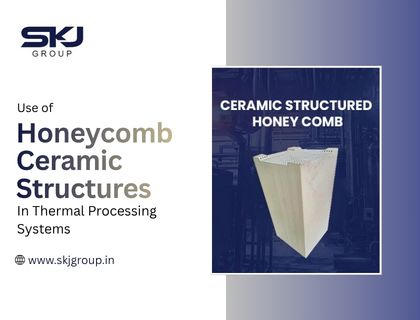
Ceramic Structured Honeycomb is an engineered ceramic block or plate with a large number of parallel channels running through its body. These channels are arranged in a regular grid pattern, similar to a natural honeycomb. The structure is made from ceramic materials like cordierite, mullite, alumina, or silicon carbide, depending on the operating temperature and application requirements.
Fact: According to the International Energy Agency, industrial thermal processes account for over 70% of total industrial energy consumption globally. Heat recovery from these processes is one of the most cost-effective ways to reduce energy bills and carbon emissions. Ceramic honeycomb heat exchangers and regenerative thermal oxidizer media made from Ceramic Structured Honeycomb in India play a direct role in capturing and reusing this heat, delivering measurable energy and cost savings to industrial operators.
The honeycomb structure works by absorbing heat from hot exhaust gases as they flow through the channels. When the flow reverses or a cooler incoming gas stream passes through, the stored heat is released back into the system. This heat exchange cycle is the foundation of regenerative thermal processing, and it is what makes Ceramic Structured Honeycomb one of the most efficient thermal management materials available to industry today.
Why Ceramic Structured Honeycomb Is Used in Thermal Processing Systems
The reasons why thermal processing industries rely on honeycomb ceramic structures come down to a set of practical performance properties that other materials cannot match at comparable cost and durability.
1. High Temperature Stability
High temperature ceramic solutions like ceramic honeycomb blocks can operate continuously at temperatures from 800°C to over 1400°C depending on the ceramic material used. Cordierite-based honeycombs are used up to around 1200°C, while mullite and alumina grades handle higher temperatures. This thermal stability is essential in combustion systems, kilns, and oxidizer units.
2. High Surface Area in a Compact Structure
The channel geometry of Ceramic Structured Honeycomb provides an extremely high surface area within a compact volume. A single honeycomb block can provide hundreds of square meters of heat transfer surface per cubic meter of material. This high surface area is what makes ceramic honeycombs so efficient at storing and releasing heat during regenerative cycles.
3. Low Pressure Drop
The straight, parallel channels of a honeycomb structure allow gases to flow through with very little resistance. This low pressure drop means fans and blowers in the thermal processing system consume less energy to move gas through the honeycomb media, improving overall system efficiency.
4. Thermal Shock Resistance
Industrial thermal systems go through repeated heating and cooling cycles. Thermal insulation ceramic blocks and honeycomb structures made from cordierite or mullite have low thermal expansion coefficients, meaning they expand and contract very little with temperature changes. This resistance to thermal shock prevents cracking during rapid temperature cycling, extending service life significantly.
5. Chemical Resistance
In emission control systems and thermal oxidizers, the honeycomb media is exposed to combustion gases, acidic vapors, and organic compounds. Ceramic Structured Honeycomb made from alumina or cordierite resists chemical attack from most of these substances, maintaining performance without degradation over long operating cycles.
Key Applications of Ceramic Structured Honeycomb in Thermal Processing
Industrial ceramic applications for honeycomb structures span several important thermal processing sectors. Here is where they deliver the most significant benefits.
1. Regenerative Thermal Oxidizers
A regenerative thermal oxidizer (RTO) is used in industrial plants to destroy volatile organic compounds and hazardous air pollutants in exhaust gases by burning them at high temperatures. The regenerative thermal oxidizer media inside an RTO consists of beds of Ceramic Structured Honeycomb that capture heat from the treated outgoing gas and transfer it to the incoming untreated gas stream.
This heat recovery process allows the RTO to sustain combustion with very little supplemental fuel once the system reaches operating temperature. Industrial burner efficiency with infrared honeycomb ceramic plates and honeycomb media in RTO systems routinely achieves thermal efficiency levels above 95%, making them one of the most energy-efficient pollution control technologies available.
2. Regenerative Burner Systems
Industrial furnaces used in steel, aluminum, glass, and ceramics manufacturing use regenerative burner systems to reduce fuel consumption. Pairs of burners alternate between firing and heat recovery modes. Ceramic substrates for heat recovery systems in regenerative burners absorb heat from outgoing flue gas and preheat incoming combustion air, reducing the fuel needed to reach the required furnace temperature.
Plants using regenerative burner systems with quality Ceramic Structured Honeycomb media report fuel savings of 30% to 50% compared to conventional burner systems. This directly reduces operating costs and carbon emissions from the furnace.
3. Catalytic Converters and Emission Control
In emission control systems for industrial boilers, engines, and process heaters, ceramic honeycomb substrates coated with catalytic materials are used to convert harmful pollutants like nitrogen oxides, carbon monoxide, and unburned hydrocarbons into harmless gases. The Ceramic Structured Honeycomb provides the structural substrate that holds the catalyst coating and allows exhaust gases to pass through with maximum contact and minimum pressure loss.
4. High Temperature Air Flow Management
In industrial drying systems, kilns, and heat treatment furnaces, high temperature airflow management ceramics in honeycomb form are used to direct and distribute hot airflow evenly across the processing chamber. Even heat distribution improves product quality and reduces energy waste from hot spots or uneven temperature profiles.
Comparing Ceramic Honeycomb Materials for Thermal Applications
A professional Ceramic Structured Honeycomb manufacturer produces honeycomb media in several ceramic materials. Here is a comparison to guide selection:
| Ceramic Material | Max Temperature | Thermal Shock Resistance | Chemical Resistance | Best Application |
| Cordierite | Up to 1200°C | Excellent | Good | RTO media, regenerative burners |
| Mullite | Up to 1350°C | Very Good | Very Good | High temperature furnaces, kilns |
| Alumina | Up to 1600°C | Moderate | Excellent | High-temperature oxidizers, chemical processes |
| Silicon Carbide | Up to 1650°C | Good | Excellent | Extreme temperature industrial systems |
| Zirconia | Above 1700°C | Moderate | Excellent | Ultra-high temperature specialty applications |
For most RTO and regenerative burner applications, cordierite and mullite are the preferred choices because of their excellent thermal shock resistance during repeated heating and cooling cycles. For processes involving aggressive chemical exposure at high temperatures, alumina or silicon carbide grades are more appropriate.
Ceramic Structured Honeycomb in India: Manufacturing and Supply Capability
Ceramic Structured Honeycomb in India is produced by manufacturers with established expertise in industrial ceramic engineering. India’s ceramic manufacturing sector benefits from domestic availability of key raw materials including alumina, cordierite-forming minerals, and silica, which supports competitive production costs.
Ceramic Structured Honeycomb suppliers in India serve thermal processing industries including steel, glass, ceramics, petrochemical, pharmaceutical, and environmental sectors. Several manufacturers also operate as Ceramic Structured Honeycomb exporters, supplying to buyers in the Middle East, Southeast Asia, Europe, and Africa.
When evaluating a Ceramic Structured Honeycomb manufacturer, confirm the following:
- Material grade and ceramic composition certificates for the product supplied
- Cell density data confirming channels per square inch and wall thickness
- Compressive strength and thermal shock resistance test reports
- Operating temperature range confirmation for your application
- ISO 9001 certification confirming quality management systems
- Production capacity and delivery timeline for your required volume
Sourcing from a domestic Ceramic Structured Honeycomb supplier in India reduces lead times and import costs for Indian industrial buyers. For international projects, Indian Ceramic Structured Honeycomb exporters provide competitive pricing with complete export documentation and quality certification.
Case Study
A steel processing plant in Gujarat was operating a continuous reheating furnace using conventional burners. Fuel consumption was high and furnace temperature uniformity was inconsistent. The plant switched to a regenerative burner system using cordierite Ceramic Structured Honeycomb media supplied by a certified Ceramic Structured Honeycomb manufacturer. After installation, fuel consumption dropped by 38% within the first three months of operation. Furnace temperature uniformity improved significantly, reducing product rejects caused by uneven heating. The payback period for the full regenerative burner and ceramic honeycomb media investment was confirmed at under 14 months. The plant maintenance team reported no honeycomb media degradation after 24 months of continuous operation.
FAQ’s About Ceramic Structured Honeycomb
Q1. What is ceramic structured honeycomb used for in thermal processing?
Ceramic Structured Honeycomb is used as heat storage and transfer media in regenerative thermal oxidizers, regenerative burner systems, catalytic converters, and industrial furnaces. Its parallel channel structure stores heat from outgoing hot gases and releases it to incoming cooler gases, improving thermal efficiency and reducing fuel consumption.
Q2. What is the best ceramic material for regenerative thermal oxidizer media?
Cordierite is the most commonly used material for regenerative thermal oxidizer media because of its excellent thermal shock resistance during the repeated heating and cooling cycles of RTO operation. For higher temperature applications, mullite or alumina grades are recommended. A qualified Ceramic Structured Honeycomb manufacturer can confirm the correct material for your specific operating conditions.
Q3. How much fuel can ceramic honeycomb regenerative burners save?
Industrial plants using regenerative burner systems with quality Ceramic Structured Honeycomb media typically achieve fuel savings of 30% to 50% compared to conventional burner systems. Actual savings depend on furnace operating temperature, cycle frequency, and the ceramic grade and cell density selected.
Q4. What cell density is best for industrial ceramic honeycomb applications?
Cell density is measured in cells per square inch (CPSI). Lower cell density (25 to 50 CPSI) provides lower pressure drop and is preferred for high gas flow applications like RTO systems. Higher cell density (100 to 400 CPSI) provides more surface area and is used in catalytic converter and emission control applications. A Ceramic Structured Honeycomb supplier can recommend the correct cell density for your system design.
Q5. How long does ceramic structured honeycomb media last in an RTO system?
With correct material selection and proper installation, Ceramic Structured Honeycomb media in RTO systems typically lasts 5 to 10 years or longer. Service life depends on operating temperature, chemical exposure in the exhaust gas stream, and the frequency and severity of thermal cycling.
Q6. Can ceramic structured honeycomb be used in outdoor industrial systems?
Yes. High temperature ceramic solutions like ceramic honeycomb media are used in both indoor and outdoor industrial systems. The ceramic material itself is unaffected by weather conditions. Proper system enclosure design protects the media from moisture ingress and mechanical damage in outdoor installations.
Q7. Are ceramic structured honeycomb exporters from India able to supply custom sizes?
Yes. Established Ceramic Structured Honeycomb exporters in India can produce custom sizes, cell densities, and shapes based on specific project requirements. Provide your system dimensions, operating temperature, and gas flow rates to the manufacturer for a custom product recommendation.
Q8. What certifications should a ceramic structured honeycomb supplier provide?
Request material composition certificates, thermal shock resistance test reports, compressive strength data, and operating temperature range confirmation. ISO 9001 certification from the Ceramic Structured Honeycomb manufacturer confirms quality management systems are in place. For export orders, also request certificates of conformity and full export documentation.
Conclusion
Ceramic Structured Honeycomb is one of the most effective thermal management materials available for industrial processing systems today. Its combination of high surface area, low pressure drop, thermal shock resistance, and chemical stability makes it the preferred choice for regenerative thermal oxidizers, industrial furnace burners, emission control systems, and high-temperature airflow management applications. Ceramic Structured Honeycomb in India is produced by experienced manufacturers with the material expertise and production capability to supply certified products for both domestic industrial use and international export. Choosing a qualified Ceramic Structured Honeycomb manufacturer with documented quality data and technical support ensures your thermal processing system performs efficiently, reliably, and cost-effectively throughout its full operating life.