Role of 5A Molecular Sieve in Gas and Liquid Separation Systems

Use of Honeycomb Ceramic Structures in Thermal Processing Systems
May 7, 2026
Importance of 13X Molecular Sieve in Industrial Adsorption Units
May 9, 2026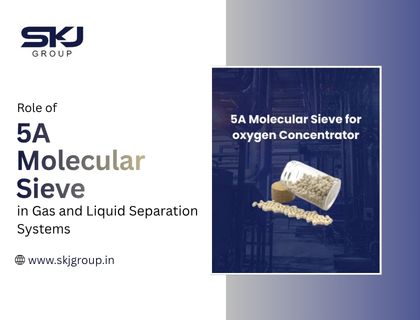
5A Molecular Sieve is a synthetic zeolite material with a uniform pore size of 5 angstroms (0.5 nanometers). This precise pore size allows molecules smaller than 5 angstroms to enter and be trapped inside the sieve structure, while larger molecules pass through without being absorbed. This selective trapping ability is what makes it one of the most effective selective gas separation materials available to industry.
Fact: According to Grand View Research, the global molecular sieve market was valued at over $3.5 billion in 2023 and is projected to grow at a compound annual growth rate of more than 5% through 2030. The Asia Pacific region, including India, is one of the fastest-growing markets for molecular sieve products driven by expanding chemical, pharmaceutical, and gas processing industries. Demand for 5A Molecular Sieve for oxygen concentrators in India has grown particularly strongly following the increased focus on medical oxygen infrastructure after 2020.
The Zeolite 5A adsorption process works through a principle called selective adsorption. When a gas or liquid mixture passes through a bed of 5A molecular sieve, certain molecules are pulled into the sieve pores and held there while the rest of the mixture continues flowing through. The trapped molecules can later be released by reducing pressure or raising temperature, allowing the sieve to be regenerated and reused many times.
Key Properties of 5A Molecular Sieve That Make It Effective
Understanding why 5A Molecular Sieve Applications are so widespread starts with the core properties of this material.
1. Precise and Uniform Pore Size
Every pore in a properly manufactured 5A molecular sieve is exactly 5 angstroms in diameter. This uniformity is what gives the material its selectivity. It can separate molecules that differ in size by fractions of a nanometer, a level of precision that no other low-cost adsorbent material can match.
2. High Adsorption Capacity
5A Molecular Sieve has a very high internal surface area, typically ranging from 700 to 800 square meters per gram of material. This enormous internal surface area allows each gram of sieve to adsorb a significant quantity of target molecules, making it highly efficient in industrial separation columns and adsorber vessels.
3. Regenerability
One of the most important practical advantages of 5A Molecular Sieve is that it can be regenerated repeatedly. After adsorption, the sieve is cleaned by heating to temperatures between 200°C and 350°C or by reducing the system pressure. This regeneration capability makes it a cost-effective long-term adsorbent for continuous industrial processes.
4. Thermal and Chemical Stability
5A Molecular Sieve remains structurally stable at temperatures used in both adsorption and regeneration cycles. It also resists chemical degradation from most process gases and liquids, giving it a long operational service life in industrial systems.
Applications of 5A Molecular Sieve in Gas and Liquid Separation
Molecular Sieve Adsorption Technology based on the 5A grade serves several critical industrial applications. Here is where it delivers the most important results.
1. Oxygen Concentrators and Medical Oxygen Generation
The most widely known application is in pressure swing adsorption (PSA) systems used to generate medical-grade oxygen. In a PSA oxygen concentrator, compressed air is passed through beds of 5A Molecular Sieve for oxygen concentrators. The sieve selectively adsorbs nitrogen from the air, allowing oxygen-enriched gas to pass through and be collected.
This process produces oxygen concentrations of 90% to 95% from atmospheric air, which is suitable for medical use, industrial welding, and water treatment applications. The demand for quality 5A Molecular Sieve for oxygen concentrators in India has grown significantly as hospitals, clinics, and industrial facilities invest in on-site oxygen generation capability.
2 .Dehydration of Gases and Liquids Using 5A Sieve
Dehydration of gases and liquids using 5A sieve is one of the most common industrial applications. Natural gas, compressed air, industrial solvents, and refrigerants all require removal of water vapor before further processing or use. Water molecules are small enough to enter the 5A pore structure and are held there effectively, producing very dry output streams with moisture levels as low as 1 part per million.
Natural gas dehydration using molecular sieves is standard practice in gas processing plants before the gas enters pipelines or liquefaction units. Adsorbents for liquid purification based on 5A molecular sieve are also used in solvent drying applications in pharmaceutical and chemical manufacturing.
3. Using 5A Molecular Sieve in Hydrocarbon Separation Systems
Using 5A Molecular Sieve in hydrocarbon separation systems is an important refinery and petrochemical application. The 5A sieve can separate normal paraffins from branched and cyclic hydrocarbons in petroleum fractions. Normal paraffins are straight-chain molecules small enough to enter the 5A pores, while branched and cyclic molecules are too large and pass through.
This separation is used to improve the octane rating of gasoline, produce high-purity normal paraffins for detergent manufacturing, and upgrade kerosene and jet fuel quality. The Zeolite 5A adsorption process in these applications operates in continuous cycles using multiple adsorber beds in a PSA or temperature swing adsorption arrangement.
4. Air Separation and Nitrogen Generation
In industrial nitrogen generation units, Gas Separation Using Molecular Sieves based on carbon molecular sieve or zeolite 5A separates nitrogen from oxygen in compressed air. The separated nitrogen is used in chemical blanketing, food packaging, electronics manufacturing, and fire suppression systems.
5. Liquid Phase Purification
In liquid phase applications, 5A Molecular Sieve is used to remove water, sulfur compounds, and other impurities from liquid hydrocarbons, solvents, and refrigerants before further processing. This is critical in processes where trace impurities cause catalyst poisoning or product quality failures downstream.
Comparing 5A Molecular Sieve with Other Common Molecular Sieve Grades
A qualified 5A Molecular Sieve for oxygen Concentrator supplier can help you understand which molecular sieve grade is best suited to your specific separation requirement:
| Molecular Sieve Grade | Pore Size | Key Separation Use | Typical Application |
| 3A | 3 Angstroms | Water removal from polar liquids | Ethanol drying, cracked gas drying |
| 4A | 4 Angstroms | Water and small molecule removal | Air drying, refrigerant drying |
| 5A | 5 Angstroms | Normal paraffin separation, oxygen concentration, gas dehydration | PSA oxygen, hydrocarbon separation, gas drying |
| 13X | 10 Angstroms | Larger molecule removal, deep drying | Air prepurification, H₂S removal |
The 5A grade is uniquely suited for applications requiring separation of normal paraffins from branched hydrocarbons and for PSA-based oxygen and nitrogen generation. For simple water removal from most gas streams, 3A or 4A grades may be sufficient and more cost-effective.
5A Molecular Sieve for Oxygen Concentrator in India: Supply and Manufacturing
5A Molecular Sieve for Oxygen Concentrator in India is produced by manufacturers with expertise in zeolite synthesis and adsorbent processing. India’s growing medical infrastructure, expanding chemical industry, and increasing gas processing capacity have all contributed to rising domestic demand for quality molecular sieve products.
Manufacturers in Mandsaur and other Indian industrial centers produce 5A Molecular Sieve in bead and pellet forms, with bead diameters typically ranging from 1.6mm to 5mm. The choice between beads and pellets depends on the pressure drop requirements and vessel design of your specific adsorber system.
When evaluating a 5A Molecular Sieve for oxygen Concentrator manufacturer, confirm:
- Adsorption capacity data for water and nitrogen under your operating conditions
- Crush strength test data confirming mechanical durability in packed adsorber beds
- Bulk density and particle size distribution data
- Attrition resistance data confirming the sieve will not generate excessive dust during operation
- ISO certification confirming quality management systems
- Availability of the required bead or pellet form and size for your system
Case Study
A private hospital in Rajasthan installed an on-site PSA oxygen generation unit to reduce dependence on cylinder oxygen supply. Initial operation with a lower-grade adsorbent produced oxygen concentrations of only 82% to 85%, below the 90% minimum required for medical use. The hospital switched to quality 5A Molecular Sieve for oxygen Concentrator supplied by a certified 5A Molecular Sieve for oxygen Concentrator manufacturer. Within one week of the sieve replacement, oxygen purity consistently reached 93% to 95%. Cylinder oxygen procurement costs dropped by over 60% within three months, and the PSA unit payback period was confirmed at under 18 months of operation.
FAQs About 5A Molecular Sieve for Oxygen Concentrator
Q1. What is 5A Molecular Sieve used for in gas separation?
5A Molecular Sieve is used to separate normal paraffins from branched hydrocarbons, generate medical oxygen through pressure swing adsorption, dry natural gas and industrial solvents, and purify liquid hydrocarbons and refrigerants. Its 5-angstrom pore size selectively traps target molecules while allowing others to pass through.
Q2. How does 5A Molecular Sieve work in an oxygen concentrator?
In a PSA oxygen concentrator, compressed air passes through beds of 5A Molecular Sieve for oxygen concentrators. The sieve selectively adsorbs nitrogen molecules from the air, allowing oxygen-enriched gas to be collected at the outlet. When the sieve bed is saturated with nitrogen, the system switches to a second bed and the first bed is regenerated by depressurization.
Q3. What is the difference between 4A and 5A Molecular Sieve?
4A Molecular Sieve has a pore size of 4 angstroms and is primarily used for water removal from gas and liquid streams. 5A Molecular Sieve has a larger 5-angstrom pore that can adsorb both water and larger molecules like normal paraffins and nitrogen. The 5A grade is preferred for oxygen generation and hydrocarbon separation applications.
Q4. How often does 5A Molecular Sieve need to be regenerated?
In PSA oxygen concentrator systems, the 5A Molecular Sieve is automatically regenerated every few seconds to minutes as the system switches between adsorption and desorption cycles. In gas drying and hydrocarbon separation systems, regeneration cycles typically occur every few hours depending on gas flow rates and inlet moisture or hydrocarbon content.
Q5. What is the service life of 5A Molecular Sieve in industrial applications?
With correct operating conditions and proper regeneration, 5A Molecular Sieve typically lasts 3 to 5 years in continuous industrial service. Service life depends on operating temperature, regeneration quality, and whether the sieve is exposed to liquid water or contaminants that can damage the zeolite structure.
Q6. Can 5A Molecular Sieve be used for liquid phase drying?
Yes. Dehydration of gases and liquids using 5A sieve in liquid phase applications includes drying of solvents, liquid hydrocarbons, refrigerants, and chemical intermediates. The sieve is packed in a vessel through which the liquid passes, and water is adsorbed from the liquid stream as it flows through the packed bed.
Q7. Are 5A Molecular Sieve exporters in India able to supply for international oxygen concentrator projects?
Yes. Established 5A Molecular Sieve for oxygen concentrator exporters in India supply to international markets including the Middle East, Southeast Asia, Africa, and Europe. They provide full export documentation, adsorption performance certificates, and appropriate packaging for international shipments.
Q8. What form of 5A Molecular Sieve is best for PSA oxygen systems?
Spherical beads of 1.6mm to 2.5mm diameter are generally preferred for PSA oxygen concentrator applications because they provide lower pressure drop and better flow distribution compared to pellets. Confirm the bead size, crush strength, and adsorption capacity data with your 5A Molecular Sieve for oxygen Concentrator supplier before specifying for your system design.
Conclusion
5A Molecular Sieve is a precise and highly effective separation material used across medical oxygen generation, gas dehydration, hydrocarbon separation, and liquid purification applications. Its uniform 5-angstrom pore structure, high adsorption capacity, and regenerability make it one of the most reliable and cost-effective adsorbent materials available to industrial and medical gas processing systems. 5A Molecular Sieve for oxygen concentrator in India is available from experienced manufacturers and exporters who supply certified, quality-tested products for both domestic and international applications. Choosing a qualified 5A Molecular Sieve for oxygen concentrator manufacturer with documented performance data and technical support ensures your separation system delivers consistent purity, reliable operation, and long adsorbent service life throughout its full operating cycle.