Importance of 13X Molecular Sieve in Industrial Adsorption Units

Role of 5A Molecular Sieve in Gas and Liquid Separation Systems
May 8, 2026
Role of PP Pall Rings in Reducing Pressure Drop in Columns
May 11, 2026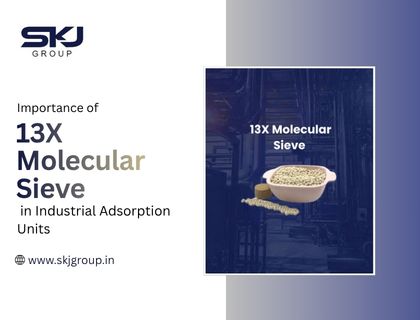
13X molecular sieve is a synthetic zeolite material belonging to the Type X crystal structure family. It has a uniform pore opening of approximately 10 angstroms, which is significantly larger than the 3A, 4A, and 5A grades. This larger pore size allows the 13X sieve to adsorb a wider range of molecules including water, carbon dioxide, hydrogen sulfide, mercaptans, and larger organic molecules that smaller pore sieves cannot capture.
Fact: According to Grand View Research, the global molecular sieve market exceeded $3.5 billion in 2023 and is projected to grow consistently through 2030. The Adsorption Process in Industry is a critical unit operation in gas processing, air separation, pharmaceutical manufacturing, and chemical production. 13X molecular sieve in India has seen growing demand driven by expanding natural gas processing infrastructure, increased industrial compressed air system installations, and rising pharmaceutical sector investment across the country.
The Zeolite 13X adsorption capacity is one of the highest among all common molecular sieve grades. Its large internal surface area, typically 700 to 800 square meters per gram, combined with its 10-angstrom pore size, makes it the most capable adsorbent for applications requiring simultaneous removal of multiple impurities from gas and liquid streams.
Key Properties That Make 13X Molecular Sieve Essential for Industrial Use
The widespread use of molecular sieve type 13X across industrial adsorption systems comes from a combination of properties that give it performance advantages over other adsorbent grades.
1. Largest Pore Size Among Common Zeolite Grades
The 10-angstrom pore opening of 13X molecular sieve allows it to capture molecules that 3A, 4A, and 5A sieves cannot. This includes carbon dioxide, hydrogen sulfide, sulfur dioxide, nitrogen dioxide, and mercaptans. In natural gas processing, capturing all of these impurities in a single adsorption unit is a significant operational advantage.
2. High Adsorption Capacity for Water and Carbon Dioxide
Zeolite 13X adsorption capacity for both water and carbon dioxide simultaneously is one of its defining characteristics. In air prepurification units used before cryogenic air separation plants, the 13X sieve removes both water vapor and carbon dioxide from compressed air in a single bed, protecting the downstream cryogenic equipment from freezing and fouling.
3. Excellent Regenerability
Like other molecular sieve grades, 13X molecular sieve can be regenerated by heating to 200°C to 350°C or by pressure reduction in PSA systems. This regenerability makes it a cost-effective long-term adsorbent for continuous industrial adsorption processes with operating lives of 3 to 5 years or longer under correct conditions.
4. Strong Mechanical Durability
Industrial adsorption vessels are filled with packed beds of molecular sieve beads or pellets. The mechanical strength of the sieve particles determines how well the bed maintains its structure over many adsorption and regeneration cycles. Quality 13X molecular sieve suppliers provide crush strength data confirming the sieve will resist breakdown under operational pressure and flow conditions.
Applications of 13X Molecular Sieve in Industrial Adsorption Systems
13X Molecular Sieve Applications span several critical industrial processes. Here is where this grade delivers the most significant performance benefits.
Air Prepurification Before Cryogenic Separation
The largest single application for 13X molecular sieve is in air prepurification units (APUs) that protect cryogenic air separation plants. Atmospheric air fed to a cryogenic plant contains water vapor and carbon dioxide. Both of these freeze at cryogenic temperatures and would block heat exchangers and columns if not removed upstream. 13X molecular sieve in APU beds removes both water and carbon dioxide simultaneously, producing clean dry air suitable for cryogenic processing.
Oxygen and Nitrogen Separation Using 13X
Oxygen and nitrogen separation using 13X molecular sieve is used in pressure swing adsorption systems for industrial nitrogen generation. The 13X sieve preferentially adsorbs oxygen from compressed air under pressure, allowing nitrogen-enriched gas to pass through and be collected. This PSA nitrogen generation process is used in chemical blanketing, food packaging, electronics manufacturing, and fire suppression systems.
Moisture Removal in Compressed Air Systems
Moisture removal in compressed air systems using molecular sieves is critical for pneumatic tools, instrumentation air, and process air systems where water contamination causes equipment failure and product quality problems. 13X molecular sieve in compressed air dryers produces very dry output air with dew points as low as minus 70°C, far below what refrigeration dryers can achieve.
Industrial Gas Purification Using Molecular Sieves
Industrial gas purification using molecular sieves based on the 13X grade removes hydrogen sulfide, carbon dioxide, mercaptans, and other sulfur compounds from natural gas, biogas, and synthesis gas streams. Clean gas with low sulfur and carbon dioxide content is required for pipeline transmission, liquefaction, and chemical synthesis applications.
Liquid Phase Adsorption
In liquid phase applications, 13X molecular sieve removes water, sulfur compounds, and polar impurities from liquid hydrocarbons, solvents, and chemical intermediates. This is particularly important in processes where trace impurities cause catalyst deactivation or product specification failures.
Comparing 13X Molecular Sieve with Other Grades
Understanding how molecular sieve sizes and grades compare helps engineers select the most cost-effective adsorbent for each application:
| Molecular Sieve Grade | Pore Size | Water Adsorption | CO₂ Adsorption | H₂S Adsorption | Best Application |
| 3A | 3 Angstroms | Yes | No | No | Ethanol drying, cracked gas drying |
| 4A | 4 Angstroms | Yes | No | No | Refrigerant and solvent drying |
| 5A | 5 Angstroms | Yes | Limited | No | Normal paraffin separation, PSA oxygen |
| 13X | 10 Angstroms | Yes | Yes | Yes | Air prepurification, gas purification, PSA nitrogen |
The 13X molecular sieve is the most versatile grade for complex multi-component gas purification. When your process requires simultaneous removal of water, carbon dioxide, and sulfur compounds, the 13X grade eliminates the need for multiple separate adsorption units, simplifying the process design and reducing capital and operating costs.
13X Molecular Sieve in India: Manufacturing and Market Overview
13X molecular sieve in India is produced by manufacturers with established expertise in zeolite synthesis and adsorbent formulation. India’s expanding natural gas network, growing industrial compressed air infrastructure, and increasing air separation plant capacity have all driven consistent growth in domestic demand for quality 13X molecular sieve products.
13X molecular sieve in Mandsaur refers to manufacturing capability established in Mandsaur, Madhya Pradesh, where producers supply molecular sieve products to domestic industrial buyers and international export markets. 13X molecular sieve exporters from India supply to buyers in the Middle East, Southeast Asia, Africa, and Europe.
When evaluating 13X molecular sieve suppliers, confirm the following before placing an order:
- Water adsorption capacity data at standard test conditions
- Carbon dioxide adsorption capacity data
- Crush strength per bead or pellet confirming mechanical durability
- Bulk density and particle size distribution data
- Attrition resistance data confirming low dust generation during operation
- ISO 9001 quality management certification
- Availability in your required bead size, typically 1.6mm, 2.5mm, or 3.2mm diameter
Understanding molecular sieve 13X price in relation to adsorption capacity and service life is important for procurement decisions. A lower-priced sieve with poor crush strength or low adsorption capacity will require more frequent replacement and create operational problems that cost more than the initial price saving.
Case Study
A nitrogen production facility in Maharashtra was experiencing repeated shutdowns caused by carbon dioxide freezing in the cryogenic cold box. Investigation confirmed the air prepurification unit was loaded with a 4A molecular sieve, which does not adsorb carbon dioxide. Switching to 13X molecular sieve supplied by a certified 13X molecular sieve manufacturer resolved the problem completely. Carbon dioxide levels in the feed air to the cold box dropped to below 1 part per million after the sieve replacement. No further freezing incidents occurred during a 30-month monitoring period, and plant availability improved from 87% to over 96% annually.
FAQ’s About 13x Molecular Sieve
Q1. What is 13X molecular sieve used for in industry?
The 13X molecular sieve is used for air prepurification before cryogenic separation, moisture removal in compressed air systems, hydrogen sulfide and carbon dioxide removal from natural gas, PSA nitrogen generation, and liquid phase drying of solvents and hydrocarbons. Its 10-angstrom pore size allows it to adsorb a wider range of molecules than smaller pore grades.
Q2. What is the difference between 4A and 13X molecular sieve?
4A molecular sieve has a 4-angstrom pore that adsorbs water but not carbon dioxide or hydrogen sulfide. The 13X molecular sieve has a 10-angstrom pore that adsorbs water, carbon dioxide, hydrogen sulfide, and larger molecules simultaneously. For applications requiring CO₂ removal alongside water removal, the 13X grade is essential.
Q3. How is 13X molecular sieve regenerated in industrial systems?
The 13X molecular sieve is regenerated by heating the sieve bed to temperatures between 200°C and 350°C while purging with dry inert gas to drive off adsorbed water, CO₂, and other molecules. In PSA systems, regeneration is achieved by depressurizing the bed, which releases the adsorbed gas. Quality 13X molecular sieve suppliers provide regeneration procedure guidelines with their product documentation.
Q4. What is the adsorption capacity of a 13X molecular sieve for water?
Quality 13X molecular sieve typically has a water adsorption capacity of 28% to 32% by weight under standard test conditions. Actual capacity in your application depends on operating temperature, pressure, and the concentration of other adsorbable components in the gas or liquid stream being treated.
Q5. What sizes are available for 13X molecular sieve from Indian manufacturers?
13X molecular sieve manufacturers in India typically supply beads in 1.6mm and 2.5mm diameters and pellets in 1.6mm and 3.2mm sizes. The correct size depends on your adsorber vessel diameter and the allowable pressure drop across the sieve bed. Confirm available sizes with your 13X molecular sieve supplier when requesting a quotation.
Q6. How long does 13X molecular sieve last in an industrial adsorption unit?
With correct operating conditions and proper regeneration cycles, 13X molecular sieve typically lasts 3 to 5 years in continuous industrial service. Premature deactivation occurs if the sieve is exposed to liquid water, hydrocarbon liquids, or regeneration temperatures above the recommended maximum, which permanently damages the zeolite crystal structure.
Q7. What is the current molecular sieve 13X price range in India?
Molecular sieve 13X price in India varies based on the alumina to silica ratio, bead size, packaging, and order volume. Pricing should always be evaluated alongside adsorption capacity data and crush strength values rather than on cost alone. Contact a qualified 13X molecular sieve manufacturer for a current quotation based on your specific grade and volume requirements.
Q8. Can 13X molecular sieve exporters from India supply with full quality documentation?
Yes. Established 13X molecular sieve exporters in India provide complete export documentation including adsorption capacity test certificates, crush strength data, bulk density reports, material safety data sheets, certificates of conformity, and packing lists. This documentation is required for import clearance and quality verification at the destination facility.
Conclusion
13X molecular sieve is one of the most important and versatile adsorbent materials used in industrial adsorption systems today. Its 10-angstrom pore size, high adsorption capacity for water, carbon dioxide, and sulfur compounds, and excellent regenerability make it the preferred choice for air prepurification, PSA nitrogen generation, gas purification, and compressed air drying applications. 13X molecular sieve in India is supplied by experienced manufacturers and exporters who provide quality-tested, certified products for both domestic industrial use and international projects. Choosing a qualified 13X molecular sieve manufacturer with documented performance data, proper technical support, and reliable delivery ensures your industrial adsorption system performs consistently, safely, and cost-effectively throughout its full service life.