Ceramic vs Plastic vs Metal Tower Packing: Which Is Best for Chemical Absorption Columns?

Moisture Resistant Premium Plywood Benefits
June 19, 2026
What Is the Difference Between Ceramic Saddles, Pall Rings, and Intalox Saddles?
July 4, 2026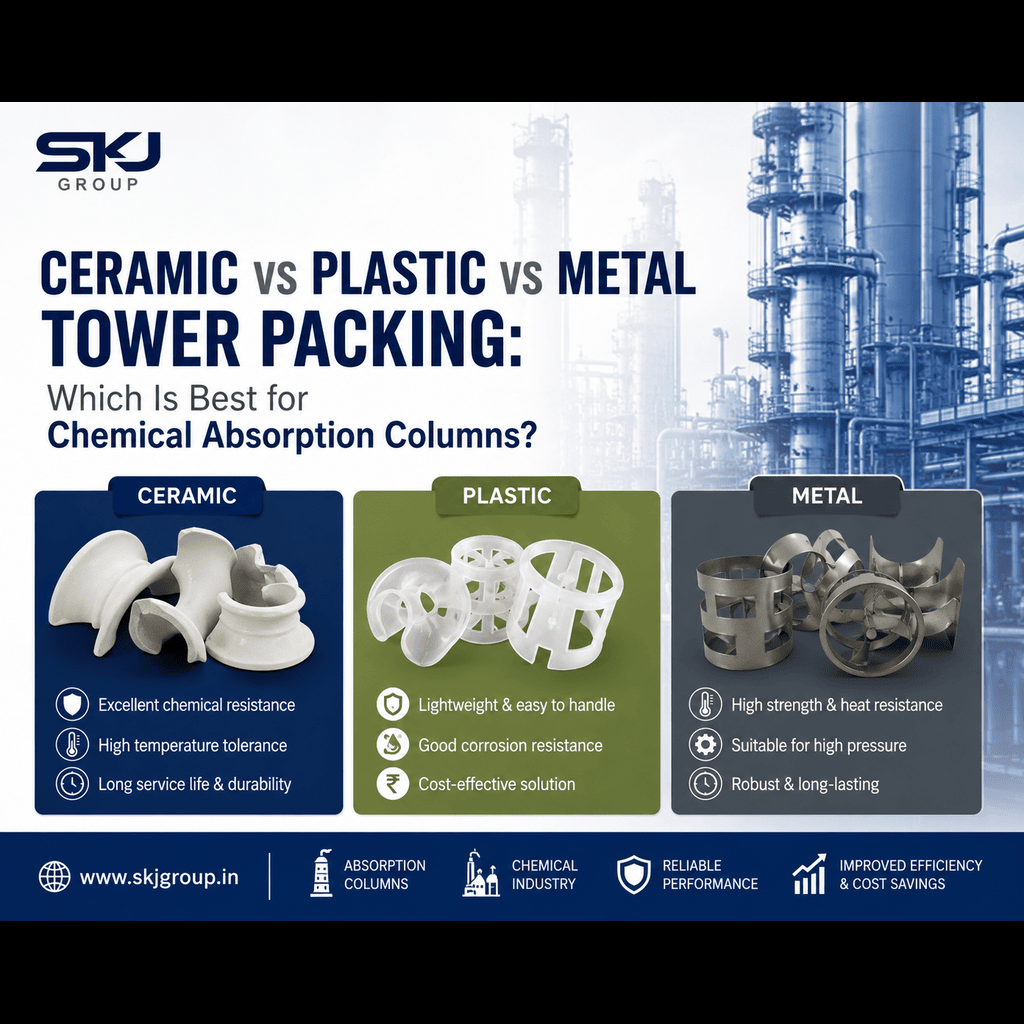
Choosing the right packing material can make or break the efficiency of your absorption column. Get it wrong, and you’re looking at higher pressure drops, poor mass transfer, or packing that corrodes within months. Get it right, and your column runs smoothly for years with minimal maintenance. At SKJ Group, we’ve seen firsthand how the right packing choice changes the entire performance of a column, which is why we’ve put together this straightforward comparison.
If you’re comparing ceramic tower packing, plastic packing, and metal packing for your next project, this guide breaks down the real differences, not just the textbook ones.
Why Packing Material Selection Matters
Tower packing sits at the heart of absorption, distillation, and scrubbing columns. Its job is simple on paper: create surface area for gas and liquid to interact. But the material you choose determines:
- How well it resists chemical attack
- How much heat and pressure it can handle
- How long it lasts before replacement
- How much it costs to install and maintain
There’s no single “best” material. The right choice depends on your process conditions, the chemicals involved, and your budget. Let’s look at each option.
Ceramic Tower Packing: Built for Harsh Chemical Environments
Ceramic packing has been a trusted choice in chemical processing for decades, and for good reason. It handles aggressive acids, strong alkalis, and high temperatures better than almost any other material.
Where ceramic packing shines:
- Excellent resistance to acids (except hydrofluoric acid) and most organic solvents
- Stable at high temperatures, often above 800°C
- Long service life in corrosive environments
- Cost-effective compared to specialty metals
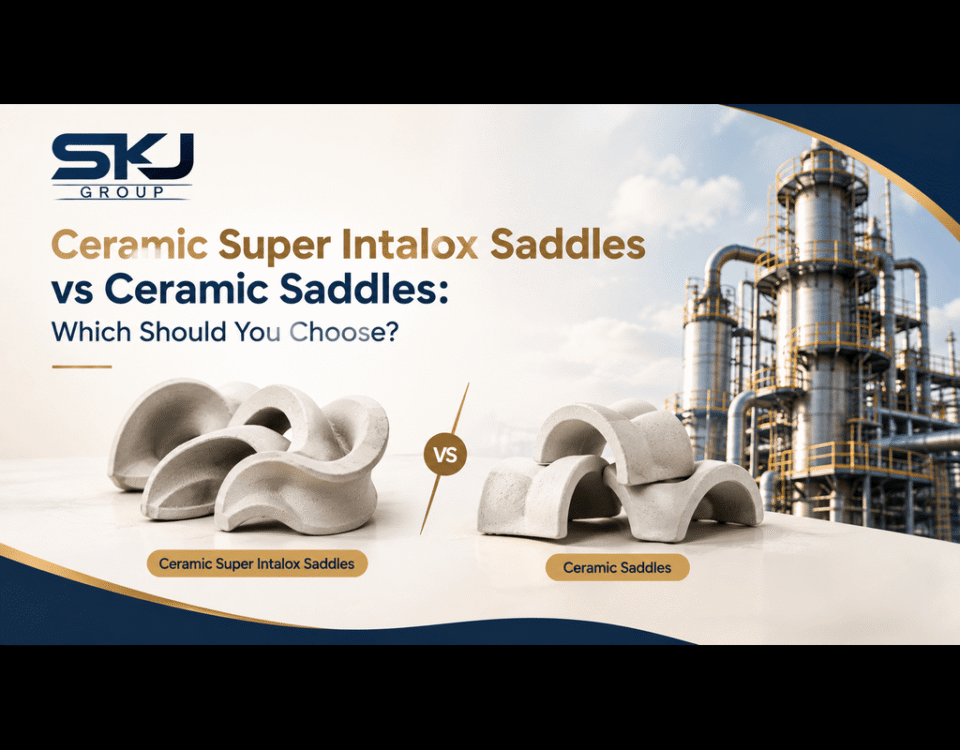
One popular form is ceramic saddle packing, shaped like Berl or Intalox saddles. These shapes offer good liquid distribution and reasonable pressure drop, making them a common choice in gas scrubbing towers, drying towers, and sulfuric acid plants.
The tradeoff is weight and brittleness. Ceramic packing is heavier than plastic and can crack under sudden mechanical shock, so it needs careful handling during installation.
Polypropylene Pall Rings: Lightweight and Chemically Versatile
If your process doesn’t involve extreme heat but does involve a wide range of chemicals, polypropylene pall rings are worth serious consideration. Pall rings improve on the older Raschig ring design by adding window-like openings that boost liquid distribution and reduce pressure drop.
Why plants choose polypropylene pall rings:
- Resistant to a broad range of acids, alkalis, and salts
- Much lighter than ceramic or metal, which reduces structural load on the column
- Lower cost per unit, especially for large-volume installations
- Easy to handle and install without special equipment
The catch is temperature tolerance. Polypropylene typically softens above 100 to 120°C, so it’s not suitable for high-temperature applications like some thermal oxidizers or hot acid recovery systems. It also isn’t the right fit where strong oxidizers or certain solvents could degrade the plastic over time.
Metal Tower Packing: Strength Where It Counts
Metal packing, usually stainless steel, is the go-to when you need mechanical strength combined with heat resistance. It’s common in high-pressure distillation columns and processes where thermal cycling is frequent.
Strengths of metal packing:
- High mechanical strength, resists crushing under column weight
- Performs well at high temperatures and pressures
- Thinner wall structures allow more open area for better vapor-liquid contact
- Good for processes needing high efficiency in a compact column
Metal packing costs more upfront than plastic and often more than ceramic, especially in specialty alloys like Hastelloy for extremely corrosive service. It can also be vulnerable to certain acids and chlorides, so alloy selection matters a lot here.
Quick Comparison
| Factor | Ceramic | Polypropylene | Metal |
| Chemical resistance | Very high (except HF) | High, but limited by heat | Depends on alloy |
| Temperature limit | Very high | Low to moderate | High |
| Weight | Heavy | Light | Moderate to heavy |
| Cost | Moderate | Low | High |
| Mechanical strength | Brittle | Moderate | Strong |
How to Choose the Right Packing for Your Column
Ask yourself these questions before deciding:
- What’s the operating temperature range?
- What chemicals will the packing contact, and at what concentration?
- Is mechanical strength or weight a bigger concern for your column design?
- What’s your budget for initial installation versus long-term replacement?
For most acid scrubbing and gas absorption applications, ceramic tower packing remains a dependable, cost-effective standard. For lighter-duty chemical service where weight and cost matter more, polypropylene pall rings offer real advantages. And where heat and pressure are the dominant challenges, metal packing is usually the safer bet.
If you’re still weighing options for a specific application, explore the impact of ceramic saddles on chemical plant efficiency to better understand their role in improving mass transfer and overall column performance before finalizing your tower packing selection.
Frequently Asked Questions
Is ceramic packing better than plastic for absorption columns?
It depends on temperature and chemical exposure. Ceramic handles heat and most acids better, while plastic packing like polypropylene pall rings is lighter and cheaper for lower-temperature service.
Can polypropylene pall rings handle high temperatures?
Generally not above 100 to 120°C. For hotter processes, ceramic or metal packing is a safer choice.
Why do ceramic saddle packing shapes matter?
The saddle shape improves liquid film distribution across the packing surface, which increases contact area between gas and liquid and improves absorption efficiency.
Does metal packing rust or corrode?
Standard stainless steel resists most common process chemicals, but highly corrosive acids or chlorides may require specialty alloys.
How do I know which packing size to choose?
Packing size affects pressure drop and capacity. Larger packing reduces pressure drop but may lower efficiency, so sizing depends on your column diameter and flow rates.
Final Thoughts
There’s no universal winner between ceramic, plastic, and metal tower packing. Each material earns its place depending on your process conditions. If you’re planning a new column or replacing worn packing, SKJ Group can help you match the right packing type, whether that’s ceramic tower packing, ceramic saddle packing, or polypropylene pall rings, to your specific chemical process needs. With years of manufacturing experience behind every batch, we make sure what leaves our facility holds up to the conditions you’re designing for.
Get in touch with the SKJ Group team today for a free consultation on the best packing solution for your absorption column.