Best Tower Packing Materials for Chemical, Fertilizer, Petrochemical, and Refinery Plants

How to Select Ceramic Tower Packing for Acid Recovery and Corrosive Chemical Processes
July 16, 2026
10 Common Mistakes to Avoid When Selecting Tower Packing for Chemical Processing Plants
July 21, 2026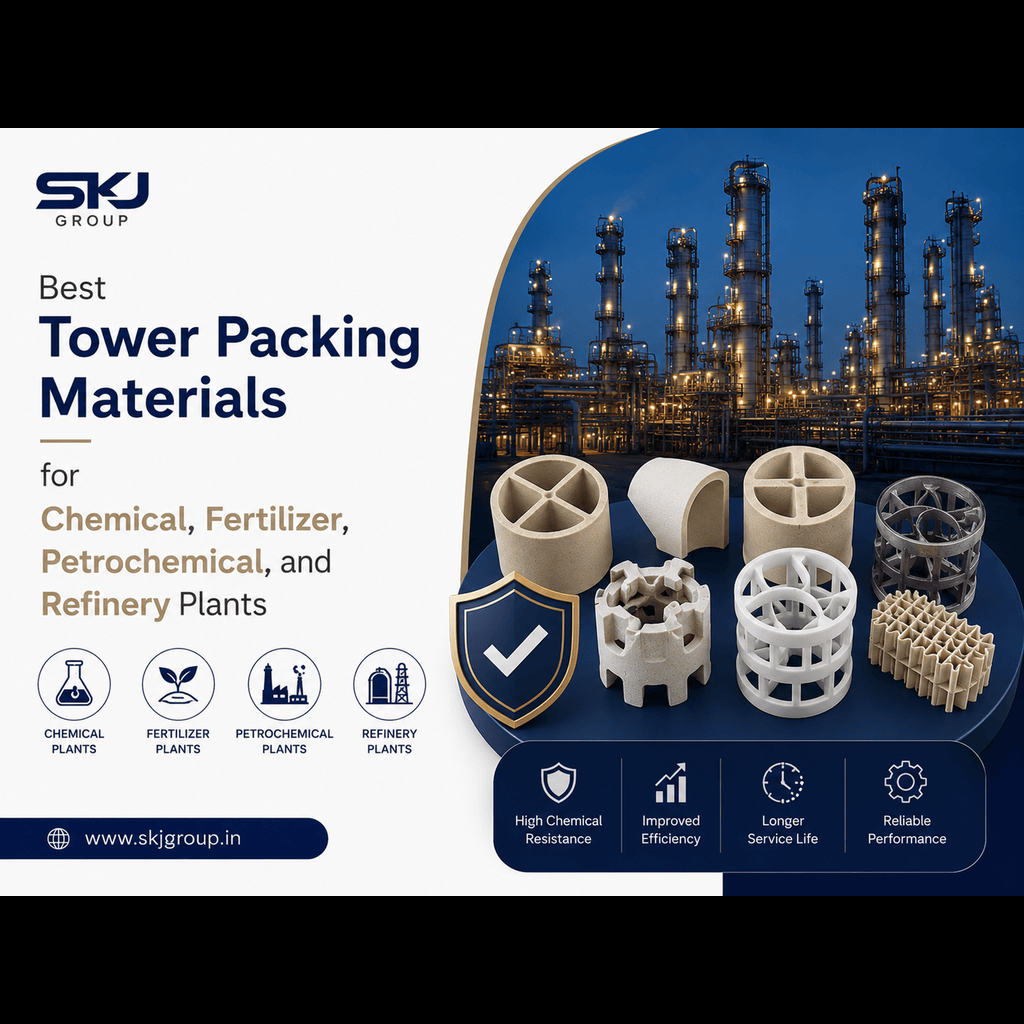
Walk into any chemical, fertilizer, or refinery plant and you will find packed columns doing quiet but critical work, absorbing gases, stripping impurities, or separating liquids. The packing material inside these towers decides how well that process runs. Pick the wrong one and you end up with poor separation, high pressure drop, or packing that degrades within months. Pick the right one and the column runs efficiently for years with very little intervention.
This guide compares the three material families most commonly used across these industries, so you can match the packing to your process rather than defaulting to whatever was used last time.
Why the Material Choice Comes Down to the Process, Not Preference
Every packed tower deals with a different combination of temperature, chemical exposure, and mechanical load. A material that performs beautifully in one plant can fail quickly in another simply because the conditions are different. Before choosing, it helps to ask three questions:
- How corrosive or acidic is the process fluid?
- What temperature range does the tower operate at?
- Does the application need high mechanical strength or is weight and cost more important?
The answers usually point clearly toward one of the following material types.
Ceramic Tower Packing: Best for Heat and Corrosion
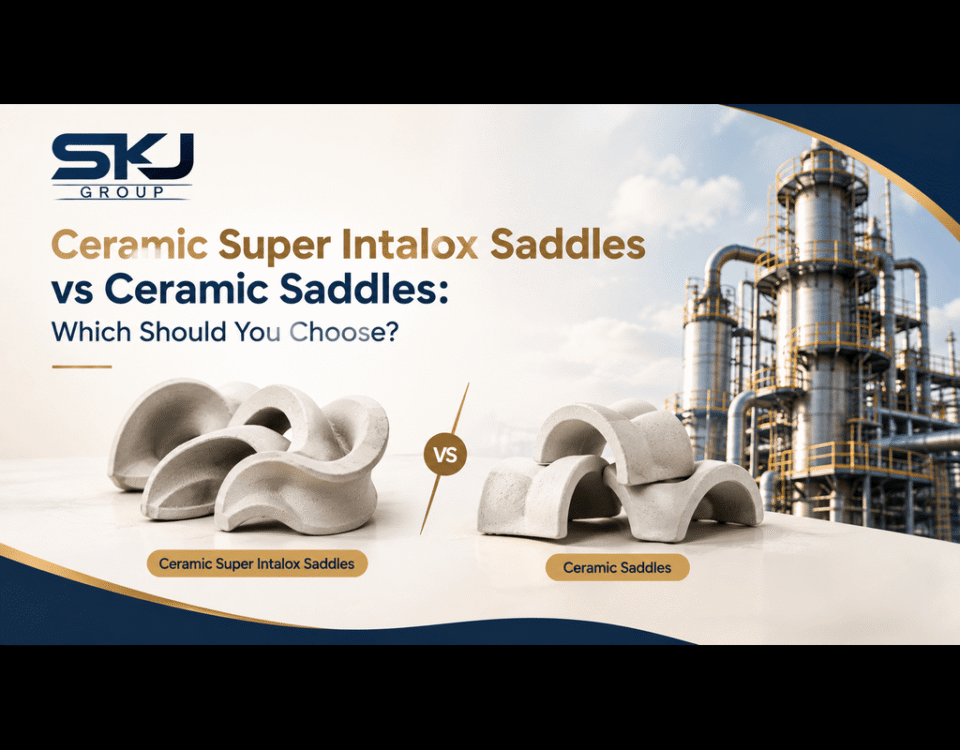
Ceramic tower packing remains the standard choice wherever a column deals with high temperatures, strong acids, or aggressive gas streams. It is chemically inert to almost everything except hydrofluoric acid and strong alkalis, and it does not soften or deform under heat the way plastics can.
- Ideal for sulphuric acid recovery, nitric acid production, and flue gas treatment
- Performs reliably in refinery units handling hot, corrosive vapour
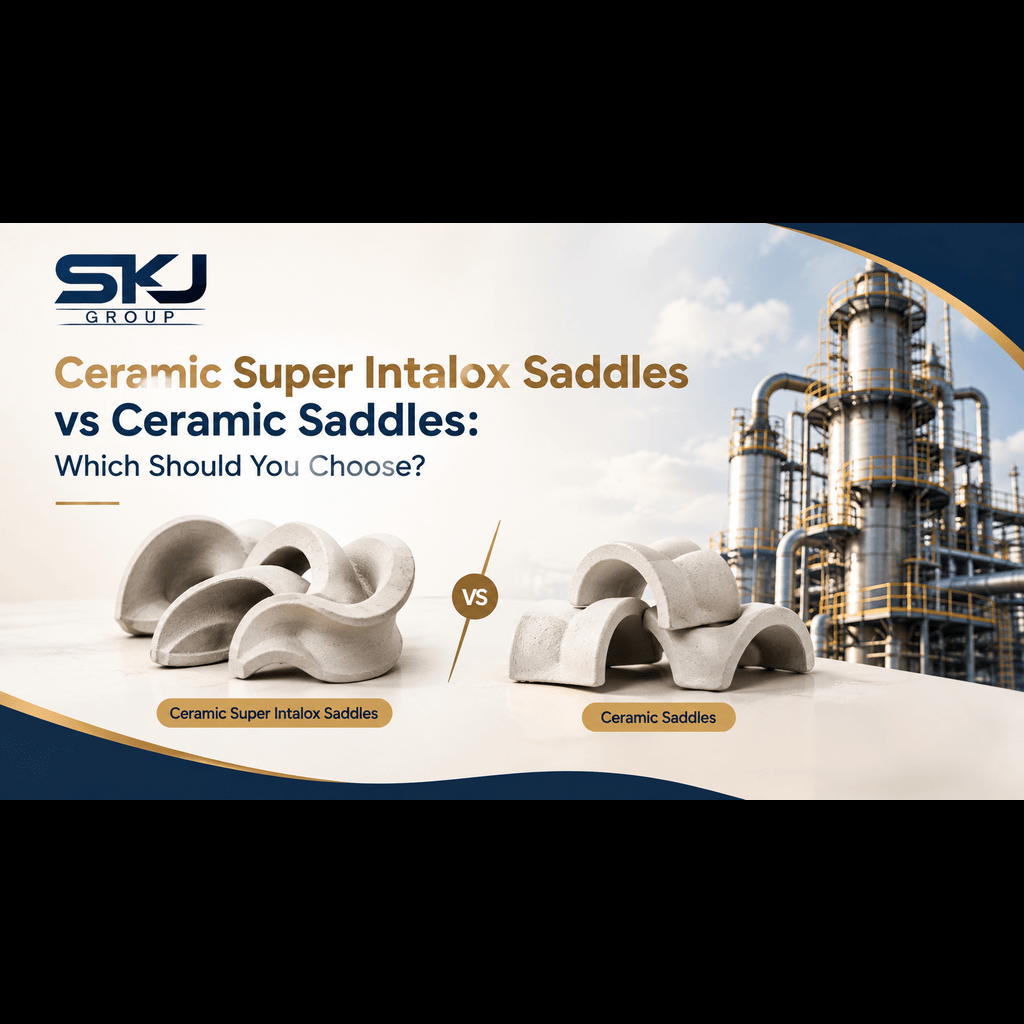
- Available in saddle and ring shapes depending on pressure drop and mechanical load requirements
- Long service life, often five to ten years or more in demanding conditions
The trade off is weight and cost. Ceramic is heavier than plastic packing and generally costs more upfront, but for high heat or highly corrosive service, it is usually the only material that lasts.
Polypropylene Pall Rings: Best for Cost Efficient Mass Transfer
For moderate temperature applications where cost and weight matter, polypropylene pall rings are one of the most widely used packing types across chemical and petrochemical plants.
- Excellent resistance to a wide range of acids and alkalis at moderate temperatures
- Lightweight, which makes installation and column loading much faster
- Open structure with internal windows that improves gas liquid contact and reduces pressure drop
- Lower cost than ceramic or metal alternatives, which matters for large scale installations
These rings are commonly used in distillation columns, scrubbers, stripping towers, and wastewater treatment systems. If you’re evaluating packing options for a new or existing tower, our earlier post on how to choose PP Pall Ring packing materials and dimensions explains the key sizing, material selection, and performance factors that influence packing efficiency and long-term operating results.
PP Saddles: Best for Low Pressure Drop Applications
Where a column needs a random packing shape with a very open bed structure, working with a reliable PP Saddles Supplier becomes important. PP saddles settle naturally into an irregular pattern that creates excellent void space, which keeps pressure drop low even under variable gas and liquid loads.
- Well suited to absorption, stripping, and scrubbing operations
- Chemical resistant to most acids, alkalis, and saltwater exposure
- Lightweight and easy to install, which reduces labour and downtime during maintenance
- A good fit for columns that experience fluctuating flow conditions through the day
Fertilizer plants in particular use PP saddles heavily in ammonia scrubbing and gas absorption systems, where corrosion resistance and low pressure drop both matter.
A Quick Comparison to Guide Your Decision
- High temperature, strong acid exposure → Ceramic tower packing
- Moderate temperature, cost sensitive large scale installation → Polypropylene pall rings
- Variable flow, need for low pressure drop → PP saddles
- Heavy packed bed depth with high mechanical load → Ceramic or metal rings depending on chemical exposure
- Fertilizer plant ammonia or gas scrubbing → PP saddles or PP pall rings depending on tower design
Many plants actually use a mix of materials across different sections of the same tower, choosing ceramic where heat and corrosion are highest and switching to polypropylene lower down where conditions are milder.
What to Verify Before Ordering
- Chemical compatibility data for your exact process fluid, not just a general resistance chart
- Operating temperature range the material is rated for, including startup and shutdown extremes
- Bulk density and void fraction figures, since these affect pressure drop and liquid holdup
- Dimensional consistency across the batch, since uneven packing leads to channeling and reduced efficiency
SKJ Group manufactures ceramic tower packing, polypropylene pall rings, and PP saddles under consistent quality checks, which is one of the reasons plants across chemical, fertilizer, and refinery sectors keep returning for repeat orders rather than testing a new supplier each time.
Frequently Asked Question’s
1. Which tower packing material is best for fertilizer plants?
PP saddles and polypropylene pall rings are commonly preferred in fertilizer plants for ammonia scrubbing and gas absorption because of their corrosion resistance and low pressure drop at moderate temperatures.
2. Can plastic packing be used in high temperature refinery columns?
Generally no. Polypropylene packing has a limited temperature tolerance, so refinery columns dealing with high heat or aggressive vapour usually rely on ceramic tower packing instead.
3. What is the difference between PP saddles and PP pall rings?
PP saddles offer a more open, irregular bed structure with lower pressure drop, while PP pall rings provide slightly higher mechanical strength and are often preferred for deeper packed beds.
4. How long does polypropylene packing typically last in industrial service?
With correct chemical and temperature matching, polypropylene packing commonly lasts several years, though its service life is generally shorter than ceramic packing in high heat or highly corrosive conditions.
5. Is ceramic tower packing more expensive than plastic packing?
Yes, ceramic packing usually costs more upfront due to its weight and manufacturing process, but it often proves more cost effective long term in high temperature or highly corrosive applications where plastic would degrade quickly.
Final Thoughts
There is no single best tower packing material for every plant. Ceramic handles heat and corrosion better than anything else, polypropylene pall rings offer cost efficient performance for moderate conditions, and PP saddles keep pressure drop low in variable flow systems. Matching the material to your actual process conditions is what determines whether your tower runs smoothly for years or needs constant attention.
If you are planning a new column or reviewing packing for an existing one, our team at SKJ Group can help you select the right material and shape based on your plant’s specific requirements. Get in touch with us to discuss your application and get technical guidance suited to your process.