Cecebe HP Porcelain Saddles: 10 Specifications to Check Before Bulk Ordering

Powdered vs Granular Wood-Based Activated Carbon: Which One Does Your Plant Need?
September 19, 2026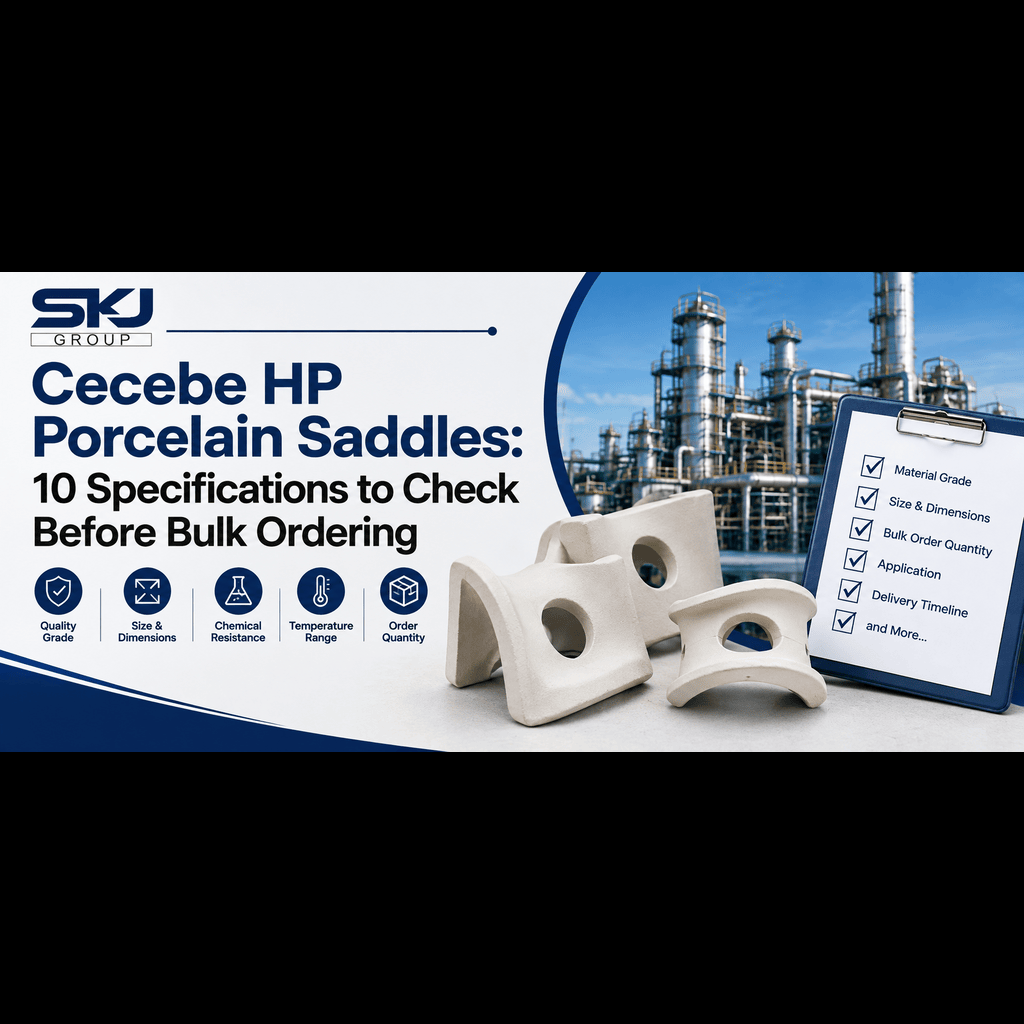
Before placing a bulk order for Cecebe HP Porcelain Saddles, verify 10 core specifications: saddle size, specific surface area, void fraction, bulk density, crushing strength, material grade, chemical resistance rating, operating temperature range, dimensional tolerance, and quality certification compliance. Missing even one of these can lead to poor column performance, batch rejection, or costly unplanned shutdowns.
Why Specifications Matter More in Bulk Orders
Ordering a small sample is one thing. Placing a bulk order for industrial tower packing is a different decision entirely. At volume, even a minor specification gap compounds. A saddle with slightly lower crushing strength than your process requires may hold up in a sample test but fracture under the actual bed loading of a full column. A surface area figure that looks similar to your design spec on paper may fall short enough to reduce absorption efficiency and force you to run columns longer than planned.
Procurement teams often focus on price and lead time when ordering in bulk. That makes sense. But the plants that consistently avoid performance issues are the ones that lock in specifications before the order is confirmed, not after the delivery arrives.
The 10 Specifications to Check Before Placing Your Bulk Order
SPEC 1: Saddle Size and Nominal Diameter
Why it matters for your column
Saddle size directly controls how the packing fills your tower and how gas and liquid flow through it. Confirm the nominal size (typically 25mm, 38mm, or 50mm) matches your column diameter and design flow rates. Using an oversized saddle in a narrow column creates channeling. Using an undersized one increases pressure drop and can cause flooding at high throughput.
- 25mm saddles: suited to columns up to 600mm diameter
- 38mm saddles: suitable for mid-diameter columns in the 600 to 1200mm range
- 50mm and above: used in large-diameter scrubbers and absorbers
SPEC 2: Specific Surface Area (m2/m3)
The number that drives mass transfer efficiency
Specific surface area tells you how much active contact area is available per cubic meter of packed bed. A higher value means more gas-liquid contact and better absorption. Verify the figure against your process design sheet. If the supplier’s quoted value is lower than your requirement, your column will underperform even if everything else is correct.
SPEC 3: Void Fraction (% Free Space)
Controls your pressure drop and flooding capacity
Void fraction is the percentage of empty space within the packed bed. A higher void fraction means lower pressure drop and a higher capacity for gas and liquid flow before flooding occurs. For most industrial absorption columns, you want a void fraction between 70 and 80 percent. Ask your supplier to confirm this figure with test data, not just a catalogue spec.
SPEC 4: Bulk Density (kg/m3)
Affects structural load calculations for your tower
Bulk density determines the total weight load that your packed bed will impose on the column internals and support grid. If you are retrofitting an existing column, this number must match or stay within the original structural design limits. Ordering a denser saddle without checking can overload column supports and create a safety issue.
Need technical data sheets or custom size specifications before you order? Get a Specification Sheet from SKJ Group Today
SPEC 5: Crushing Strength (kg/piece or N)
The most overlooked spec in bulk procurement
Crushing strength is how much compressive load each individual saddle can withstand before fracturing. In a deep packed bed, the saddles at the bottom carry the weight of the entire bed above them. If your supplier’s crushing strength figure does not meet the load requirements for your bed depth, you will see progressive fracturing over time, generating ceramic fines that foul downstream equipment.
- Always match crushing strength to your calculated bed depth loading
- Request batch test data, not just catalogue averages
- For beds deeper than 3 meters, use larger saddle sizes to reduce weight per piece
SPEC 6: Material Grade and Alumina Content
Not all porcelain is manufactured equal
Porcelain saddles vary in alumina (Al2O3) content. Higher alumina content generally means better mechanical strength and higher thermal resistance. Standard porcelain may contain 20 to 40 percent alumina, while high-alumina grades push above 60 percent. Confirm the alumina content against your process temperature and mechanical load requirements before ordering at volume.
SPEC 7: Chemical Resistance Rating
Verify compatibility with your actual process fluids
Cecebe HP Porcelain Saddles offer broad chemical resistance, but the specific process stream matters. Hydrofluoric acid (HF) attacks silica-based ceramics and porcelain. Strong caustics at high temperature can degrade some grades. Ask your supplier for a chemical resistance chart covering your specific acids, solvents, or alkalis before finalizing the bulk order. This is especially critical for pharmaceutical, specialty chemical, and refinery applications.
SPEC 8: Operating Temperature Range
Match the grade to your process conditions
Standard porcelain saddles handle temperatures up to 800 degrees Celsius. High-alumina grades can go higher. The concern is not just maximum temperature but thermal cycling. If your column goes through frequent heat-up and cool-down cycles, verify that the saddle grade can handle the thermal shock without cracking. Ask for the thermal shock resistance rating alongside the maximum operating temperature.
SPEC 9: Dimensional Tolerance and Shape Consistency
Inconsistent shapes cause uneven packing and dead zones
Porcelain saddles need consistent dimensions to pack uniformly inside a column. Dimensional variation leads to uneven liquid distribution, channeling, and reduced contact efficiency. Before a bulk order, request a dimensional inspection report or ask for a sample batch to measure. Key tolerances to verify are overall length, width, and the radius of curvature of the saddle shape.
- Acceptable dimensional tolerance: typically plus or minus 2 to 3 percent of nominal size
- Irregular edges or chips increase breakage during loading
- Shape consistency also affects bulk density measurements
SPEC 10: Quality Certification and Test Reports
The document every bulk buyer should request before payment
A certificate of conformance or material test report ties the actual delivered batch to verified specification data. It should cover material composition, crushing strength test results, dimensional inspection, and where applicable, compliance with international standards. For export orders, this document also supports customs clearance and plant acceptance procedures.
- Ask for batch-specific test reports, not generic product certificates
- For large orders, third-party inspection at the manufacturing facility is worth requesting
- Retain test reports with your procurement records for audit and warranty purposes
Quick Pre-Order Specification Checklist
Use this before confirming any bulk order for high-performance porcelain saddles:
- Saddle nominal size confirmed against column diameter and design flow rate
- Specific surface area (m2/m3) matches process design requirement
- Void fraction confirmed and pressure drop calculations verified
- Bulk density within structural load limits of your column
- Crushing strength adequate for your bed depth and operating load
- Material grade and alumina content suited to process temperature
- Chemical resistance confirmed for all process fluids, concentrations, and temperatures
- Operating temperature range and thermal shock resistance verified
- Dimensional tolerance inspection data available
- Batch-specific quality certificate or material test report requested
If you want to understand how these saddles perform inside your specific column type, our earlier guide on the impact of Cecebe HP Saddles on process efficiency and output quality covers the performance side in detail. That guide focuses on what happens after the saddles are installed. This one focuses on what to verify before the order ships.
Frequently Asked Questions
Q1: What size of Cecebe HP Porcelain Saddles is best for absorption towers?
The right size depends on the tower diameter and the gas-liquid flow rates in your process. Smaller saddles (25mm) suit narrower columns with lower flow, while larger saddles (50mm and above) are used in wide-diameter towers with high throughput. Confirm this with your supplier before ordering to prevent loading problems and pressure drop issues.
Q2: What material grade do Cecebe HP Porcelain Saddles use?
They are manufactured from high-grade porcelain with varying alumina content depending on the grade. Higher alumina grades offer better mechanical strength and thermal resistance. Always specify your operating temperature and process conditions when confirming the grade with your manufacturer.
Q3: Can Cecebe HP Porcelain Saddles handle strong acids and alkalis?
Yes, porcelain saddles resist most strong acids and alkalis, making them suitable for sulfuric acid plants, HCl towers, caustic scrubbers, and similar applications. Hydrofluoric acid is the key exception. Always verify specific chemical compatibility with your supplier for unusual or high-concentration process streams.
Q4: What is the typical operating temperature range for these saddles?
Standard porcelain saddles typically withstand operating temperatures up to 800 degrees Celsius. For processes involving frequent thermal cycling, also ask for the thermal shock resistance rating, since the temperature range alone does not tell you how the material handles rapid temperature changes.
Q5: Why does specific surface area matter when ordering porcelain saddles in bulk?
Specific surface area per cubic meter determines how efficiently gas and liquid contact each other inside the tower. If the surface area is lower than your process design requires, you will need a taller packing bed to achieve the same absorption efficiency, which increases both capital cost and operating pressure drop.
Q6: How do I verify quality certifications for a bulk order from India?
Ask your supplier for a batch-specific material test report or certificate of conformance. This should include material composition data, dimensional inspection records, and crushing strength test results for the actual batch being dispatched. For large volume orders, third-party inspection at the manufacturing facility is also worth requesting before shipment.
Q7: Can Cecebe HP Porcelain Saddles be customized for non-standard column sizes?
Yes. Manufacturers who supply to chemical, petrochemical, and refinery plants can produce porcelain saddles to buyer-specified dimensions and alumina grades. Raise your customization requirements early in the procurement process, well before placing the order, to avoid production delays.
Final Thought
Bulk ordering industrial tower packing without verifying specifications is a risk that shows up later, inside the column, during a shutdown, or in your absorption efficiency numbers. Checking these 10 specifications takes time upfront but saves significantly more time and cost downstream.
If you are sourcing Cecebe HP Porcelain Saddles in Mandsaur or need reliable supply for a chemical, petrochemical, or water treatment plant anywhere in India or internationally, the team at SKJ Group can provide full technical data, sample batches, and batch-specific test reports before your order is confirmed.
Ready to place a bulk order or need technical specifications first? Talk to SKJ Group Before You Order