Ceramic Packing Inspection: 7 Checks Before You Accept

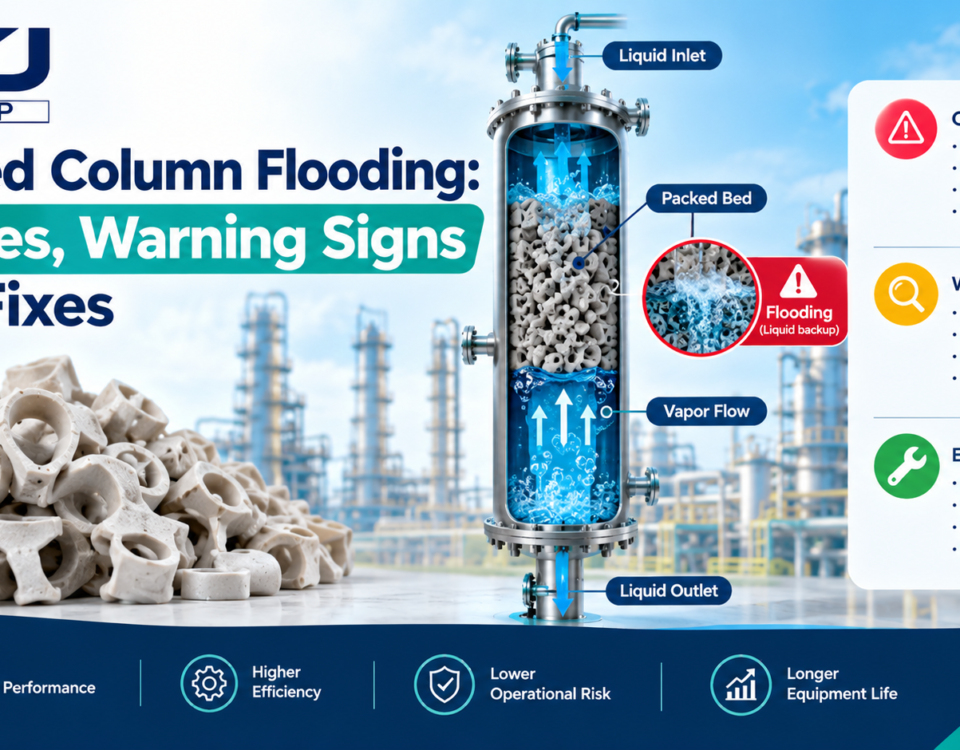
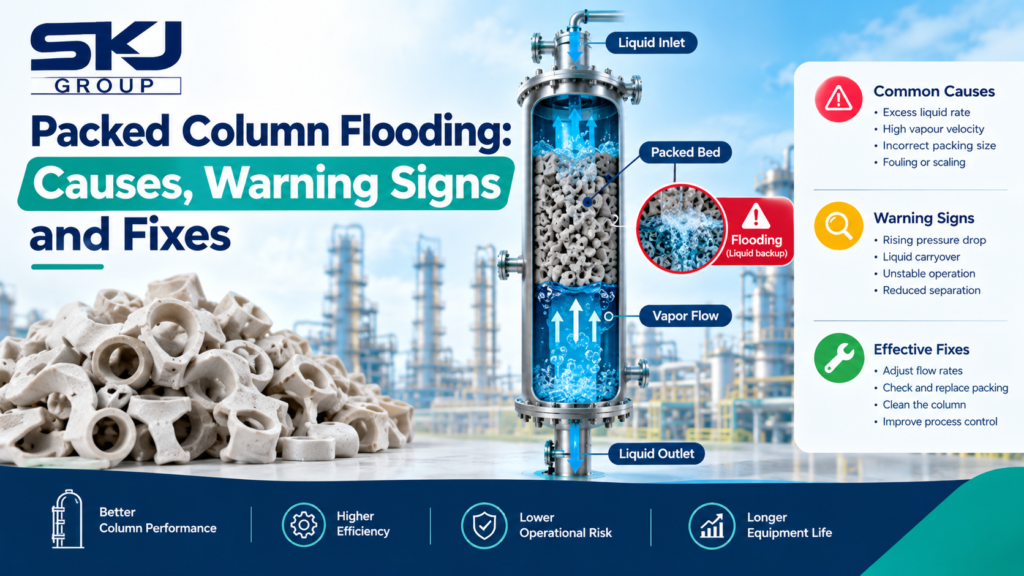
Packed Column Flooding: Causes, Warning Signs and Fixes
October 16, 2026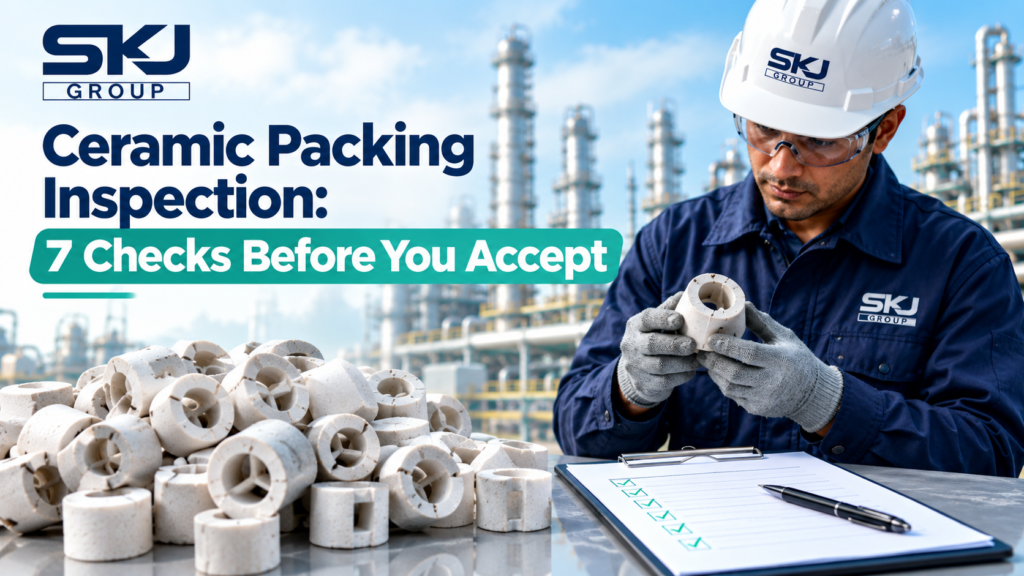
Ceramic packing inspection before you accept a delivery comes down to seven checks: visual condition, size and wall thickness, tap sound, crushing strength, water absorption, acid resistance, and quantity with breakage count. If the lot matches your agreed datasheet on all seven, accept it. If it fails even one, hold the payment and raise a written claim with photos and measurements. A few hours at the gate can save you a failed column run later.
Why Check the Lot Before It Goes Into the Tower?
Once packing is inside a column, fixing a bad batch means a shutdown, unloading and reloading. Weak or chipped pieces break under the weight of the bed. The broken bits pack tightly, block gas flow and raise pressure drop. This matters most when you buy wholesale ceramic rings, because one poor batch can fill an entire tower.
Keep these ready before the truck arrives:
- Your purchase order and the signed datasheet (size, tolerance, material grade)
- A vernier caliper and a weighing scale
- A clean bucket, water and a marker
- A tally sheet and a phone camera for proof
The 7 Checks
1. Look Closely at the Rings
Open bags or boxes from several pallets, not just the top ones. Spread a few hundred pieces on a clean surface and look for:
- Cracks, including hairline cracks along the wall
- Chipped or broken edges
- Warped, oval or fused pieces
- Dark cores, spots or uneven colour, which can signal poor firing
- A rough, powdery surface
The same applies to saddles. If you also buy from a ceramic saddles supplier, check the thin curved edges first, because they chip most easily.
Accept if: defects stay within the limit written in your purchase order.
2. Measure Size and Wall Thickness
Pick 20 to 30 rings at random. Measure the outer diameter, height and wall thickness, then compare each with the datasheet tolerance. For example, SKJ Group’s ceramic ring size table allows 50 ± 3 mm on both diameter and height for a 50 x 50 x 6 mm ring.
- Mixed sizes change bed density and void space, which changes pressure drop
- Thin walls mean weaker rings, and thick walls mean less open space
- Write down every reading so you can show it later
3. Do the Tap Test
Hold one ring loosely between your fingers and tap it lightly with another. A sound ring gives a clear, ringing note. A dull thud or rattle usually means a hidden crack. Set those aside and count them. This test costs nothing and catches flaws your eyes miss, but it does not replace a lab test.
4. Confirm Crushing Strength
Rings carry the weight of everything above them. ASTM C515, the standard for chemical-resistant ceramic tower packing, asks ring packing to withstand at least 25 lbf per linear inch of crushing load, which is roughly 4.4 N per mm. Your datasheet may set a higher figure for tall beds.
- Ask for the supplier’s crush test report for this batch
- For large or critical orders, send random samples to a third-party lab
Need a datasheet to measure against? Tell us your size and service, and we will share one.
5. Test Water Absorption
Low water absorption means a dense, well-fired body. ASTM C515 caps it at 0.5% for porcelain packing and 3% for stoneware packing. For a rough check on site:
- Weigh a dry sample of rings
- Soak them in water, wipe the surface dry and weigh again
- Water absorption % = (wet weight − dry weight) ÷ dry weight × 100
A soak test is only an indicator. Formal results follow the lab method in ASTM C373, so ask for the lab report if your number looks close to the limit.
6. Verify Acid Resistance and Composition
Most porcelain-grade ceramic packing datasheets quote acid resistance above 99%, along with alumina and silica content and a maximum temperature. Match each figure on the test certificate to your datasheet. Reputable ceramic ring manufacturers issue a certificate for every batch.
- The batch number on the certificate must match the batch number on the bags
- A missing certificate is a reason to pause, not to sign
- Ceramic packing does not resist hydrofluoric acid, so confirm your process media
7. Count the Lot and Record Breakage
- Compare delivered quantity, by weight or volume, with the purchase order
- Check that bags or pallets are wrapped and labelled with size and batch number
- Photograph any damage before unloading and note it on the transporter’s receipt
- Pour out a sample bag, weigh the broken pieces and dust, and work out the breakage percentage
Agree an allowable breakage percentage in the purchase order. There is no single number for every plant, so set it with your supplier before dispatch.
Quick Reference: Accept or Reject
| Check | Quick method | Reject when |
| 1. Visual | Spread a sample and inspect | Defects exceed the order limit |
| 2. Size | Caliper on 20 to 30 pieces | Readings fall outside tolerance |
| 3. Tap | Tap two rings together | Dull sound or rattle |
| 4. Strength | Supplier or lab report | Below the datasheet value |
| 5. Water absorption | Soak test or lab report | Above 0.5% (porcelain) or the datasheet limit |
| 6. Acid resistance | Batch test certificate | Missing or mismatched |
| 7. Count and breakage | Weigh and tally | Short quantity or excess fines |
What to Do If the Lot Fails
- Stop unloading and keep the rejected material separate
- Record photos, measurements and batch numbers
- Send a written notice with evidence within the claim period in your order
- Ask for a replacement or credit, and keep retained samples
A dependable ceramic ring supplier agrees to this process before the order, not after the problem. And if the lot passes, protect it during loading. Our guide on wet vs dry loading of ceramic tower packing shows how to fill the column without breaking good pieces.
How SKJ Group Helps You Pass Inspection
SKJ Group, based in Mandsaur, Madhya Pradesh, is one of the ceramic ring manufacturers in India that supply rings from 15 x 15 mm to 75 x 75 mm with published size tolerances. We also make saddles, partitioned rings and inert ceramic balls, and we can design custom sizes when a standard product does not fit your column. Our product pages list size, tolerance and weight per cubic metre, so you know exactly what to check when the truck arrives. Ask for the datasheet and batch test reports along with your quote.
FAQs
1. What is ceramic packing inspection?
It is the set of checks you run on delivered tower packing before accepting it. These cover visual condition, size, strength, water absorption, chemical resistance and quantity, all measured against the agreed datasheet.
2. How do you check the quality of ceramic rings?
Start with a visual check and a tap test, then measure 20 to 30 pieces with a caliper. Confirm strength, water absorption and acid resistance from a batch test certificate or lab report.
3. What water absorption is acceptable for ceramic tower packing?
ASTM C515 allows up to 0.5% for porcelain packing and 3% for stoneware packing. Your signed datasheet is the figure that governs the order.
4. How much breakage is acceptable in a delivery?
There is no single number for every plant. Agree a percentage in the purchase order, then measure it by weighing broken pieces and dust from sample bags.
5. Which documents should arrive with ceramic packing?
A packing list, invoice, datasheet and a batch-wise test certificate. The batch number on the paperwork should match the batch number on the packing.
Conclusion
Good inspection is simple: look, measure, tap, test, verify, count and record. Do it at the gate, and a bad batch never reaches your column. If you want rings that match their datasheet, talk to the SKJ Group team.
Ready to order ceramic rings that pass inspection?