Plastic Corrugated Plate Packing vs Random Packing: Key Differences, Uses and Selection Guide

Pelletized vs Granular Activated Carbon: When Should You Use Each?
September 13, 2026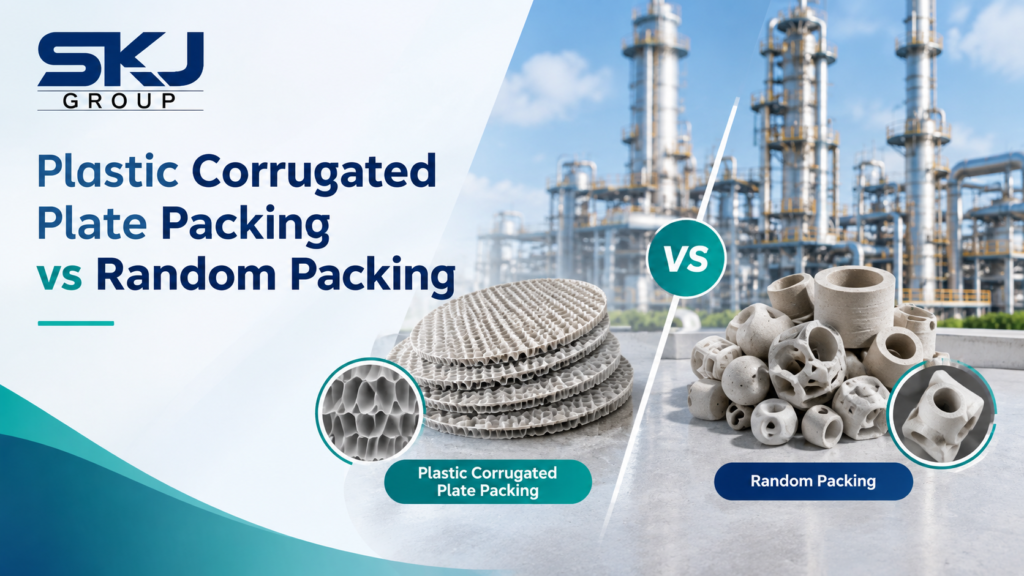
Plastic corrugated plate packing is a structured packing made of stacked, corrugated plastic sheets arranged in a fixed pattern, while random packing is made of loose individual pieces poured into a column. The structured version delivers higher separation efficiency and lower pressure drop in the same column height. Random packing costs less upfront and handles fouling streams better. Which one suits your tower depends on whether you are optimizing for efficiency or for tolerance to dirty service.
Poured In vs Built In: The Real Difference
Random packing is dumped in. Structured packing is built in.
That single distinction drives almost every performance difference between the two. Random pieces settle wherever gravity puts them, which means flow paths through the bed are unpredictable. Corrugated plate packing is installed as pre-formed blocks with a fixed geometry, so liquid and gas follow the same engineered path every time.
Side-by-Side Comparison
| Factor | Plastic Corrugated Plate Packing | Random Packing |
| Separation efficiency | High, predictable | Moderate, varies by bed |
| Pressure drop | Low | Higher |
| Upfront cost | Higher | Lower |
| Installation | Placed as structured blocks | Poured in loosely |
| Fouling tolerance | Lower, can clog | Higher, handles solids better |
| Liquid distribution | Uniform by design | Depends on bed settling |
| Best flow range | Consistent flow rates | Variable flow rates |
The Detail Most Buyers Never Ask About: Corrugation Angle
Not all structured plastic packing is built the same way, and the corrugation angle is the spec that separates a good fit from a mismatched one.
- X-type packing (30° angle) favors lower pressure drop, better suited to vacuum service or where blower energy cost is the priority
- Y-type packing (45° angle) favors higher mass transfer efficiency, better suited where separation performance matters more than energy draw
Getting this backwards doesn’t cause failure, but it does mean paying for structured packing without getting the specific benefit you actually needed it for.
Where Corrugated Plate Packing Wins
The corrugated sheets create channels that force gas and liquid across each other at a controlled angle. That does three useful things at once.
- Lower pressure drop. Gas moves through open, predictable channels instead of squeezing past randomly stacked pieces, which directly cuts blower energy cost in continuously running towers.
- More transfer units per meter. More separation happens in less column height, so you can often use a shorter tower or push more throughput through an existing one.
- No channeling. Liquid spreads evenly across the full cross-section rather than running down one side and starving the rest of the bed.
- Consistent performance. Because geometry is fixed, the bed behaves the same on day one and after a shutdown and restart.
This is why cooling towers, scrubbers, and gas absorption columns handling clean streams increasingly specify structured plastic packing over loose media.
➜ Not sure which packing suits your column? Get a free technical recommendation from our team
Where Random Packing Still Makes More Sense
Structured packing is not automatically the better choice, and plants that assume it is often regret the decision.
- Dirty or fouling streams. Suspended solids clog the tight channels of structured packing. Random beds have larger, more forgiving gaps that keep working as solids pass through.
- Budget-constrained retrofits. Random media costs meaningfully less per cubic meter, which matters when repacking a large column.
- Highly variable flow. Random beds tolerate swings in flow rate without the sharp efficiency drop structured packing can show outside its design range.
- Awkward column internals. Dumping media into an irregular vessel is simpler than fitting structured blocks around obstructions.
If your process runs clean and steady, structured wins. If it runs dirty or unpredictable, random usually wins.
Choosing Between the Two: A Quick Decision Path
Work through these four questions in order, and the answer usually becomes obvious:
- Does your stream carry suspended solids? If yes, lean random packing. Fouling will undo any efficiency advantage structured packing offers.
- Is energy cost a significant part of your operating budget? If yes, the lower pressure drop of corrugated plate media pays back its higher purchase price.
- Are you constrained by column height? If yes, structured packing gets more separation into less vertical space.
- Does flow rate vary widely across the day? If yes, random packing handles the swings more gracefully.
Most plants find that one or two of these questions dominate the decision, and the rest follow.
Material Matters as Much as Format
Plastic packing is usually made from polypropylene, PVC, or PVDF, and the choice affects both temperature range and chemical compatibility. Polypropylene covers the majority of applications at moderate temperatures, generally up to around 80°C for gauze-type constructions, and resists most acids and solvents. PVDF handles higher temperatures and more aggressive chemistry but costs considerably more.
Before comparing quotes from any Plastic Corrugated Plate Packing suppliers, confirm which resin the quoted price refers to. Two quotes that look similar per cubic meter can represent very different materials, and that gap shows up as premature failure eighteen months into service.
What to Verify Before You Order
A few checks separate a reliable supplier from a risky one:
- Specific surface area figures in m²/m³, not a vague claim about high efficiency
- Corrugation angle and type, X or Y, matched to whether you need lower pressure drop or higher efficiency
- Resin grade and virgin material confirmation, since recycled plastic content reduces chemical resistance
- Temperature and chemical compatibility data for your actual process stream
- Block dimensions matched to your column diameter so installation does not leave gaps at the wall
- Sample availability before committing to a bulk order
Any established Plastic Corrugated Plate Packing manufacturer will supply this documentation without hesitation. Vague answers on resin grade or surface area are a signal to keep looking.
If you are weighing structured options against loose ceramic media more broadly, our guide on how ceramic tower packing has evolved covers where random designs still hold their ground and why.
A Note on Installation
Structured packing rewards careful installation in a way random media does not. Blocks need to sit flush against the column wall, because any gap at the perimeter becomes a bypass channel that lets gas skip the packing entirely. The liquid distributor above the bed also needs to match the packing geometry, since a distributor sized for random media rarely spreads liquid finely enough for corrugated sheets to perform at their rated efficiency.
Plants that swap random for structured packing without revisiting the distributor often report disappointing results, and the packing usually gets blamed when the distributor was the real problem.
Frequently Asked Questions
1. What is the main difference between plastic corrugated plate packing and random packing?
Corrugated plate packing is a structured media installed as pre-formed blocks with fixed geometry, while random packing consists of loose individual pieces poured into the column. Structured packing offers higher efficiency and lower pressure drop; random packing costs less and tolerates fouling better.
2. Which packing type has lower pressure drop?
Plastic corrugated plate packing has significantly lower pressure drop because gas flows through open, engineered channels rather than navigating around randomly settled pieces. X-type (30°) corrugation delivers the lowest pressure drop within the structured category.
3. Is structured plastic packing worth the higher cost?
In clean, continuously running service with meaningful energy costs, yes. The reduced pressure drop and higher efficiency typically justify the price difference. In fouling service or highly variable flow, random packing often remains the better value.
4. Can plastic corrugated plate packing handle high temperatures?
It depends on the resin. Polypropylene suits moderate temperatures, while PVDF handles higher heat and more aggressive chemistry. Always confirm the resin grade against your operating temperature before ordering.
5. What applications use plastic corrugated plate packing most often?
Cooling towers, gas absorption columns, scrubbers, and water treatment systems where the stream runs relatively clean and separation efficiency matters.
6. Does structured packing need a different liquid distributor than random packing?
Usually yes. Structured packing needs finer, more even liquid distribution to perform at its rated efficiency, so a distributor designed for random media often needs upgrading during a changeover.
Get the Right Packing for Your Column
The wrong packing choice costs far more in lost efficiency and unplanned shutdowns than the price difference between the two options ever saves. If you are specifying media for a new tower or planning a repack, SKJ Group can help match the right format, resin, corrugation angle, and block sizing to your actual process conditions.
➜ Request a Quote and Technical Datasheet and our team will walk you through options suited to your column.