Use of Advanced Ceramics in Heavy Duty Industrial Equipment

Role of Alumina Ceramics in Petrochemical and Refinery Systems
May 2, 2026
Use of Inert Ceramic Balls in Refinery and Gas Processing Plants
May 5, 2026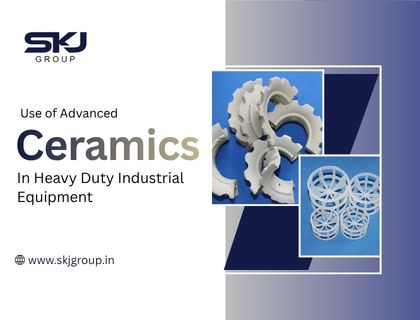
Advanced ceramics are high-performance inorganic materials processed at high temperatures to achieve specific mechanical, thermal, and chemical properties. Unlike standard ceramics used in everyday products, engineering ceramics for industrial equipment are precisely engineered to survive conditions that would destroy metal, plastic, or rubber components.
Fact: According to the American Ceramic Society, advanced ceramics account for nearly 50% of all ceramic industry revenue globally, with industrial and engineering applications being the single largest segment. In India, the ceramics manufacturing sector employs over 500,000 people, and ceramics in India contribute significantly to the country’s industrial output across multiple heavy sectors.
Heavy duty industrial equipment operates under conditions of extreme heat, constant abrasion, aggressive chemical exposure, and heavy mechanical load. Traditional materials wear out, corrode, or fail thermally under these conditions. High performance ceramics in manufacturing solve these problems by delivering properties that no other class of material can match at a comparable cost.
Ceramics in Mandsaur represent one of India’s recognized centers for producing these industrial ceramic components, supplying manufacturers and industries across the country and internationally.
Why Ceramic Material Withstands High Temperatures
One of the most common questions about ceramics is why they handle heat so much better than metals or plastics. The answer lies in their atomic structure.
Ceramics are held together by strong ionic and covalent bonds. These bonds require extremely high energy to break, which is why ceramics remain stable at temperatures where metals soften and plastics melt. High temperature resistant ceramic materials like alumina and silicon carbide can continuously operate at temperatures from 1000°C to over 1600°C.
In heavy industrial equipment such as kilns, furnaces, reactors, and heat treatment systems, this thermal stability is not just useful but essential. Equipment lined with ceramic materials continues performing reliably at operating temperatures that would cause metal components to deform or fail within hours.
This property also means that ceramics in India used in power plants, steel mills, and chemical reactors save significant maintenance and replacement costs over the life of the equipment.
6 Key Uses of Advanced Ceramics in Heavy Industrial Equipment
Advanced ceramics in industrial applications serve many functions. Here are six of the most important uses that demonstrate why ceramics manufacturers and ceramics suppliers are critical partners for heavy industry.
1. Wear-Resistant Linings for Crushing and Grinding Equipment
Mining and cement industries use crushers, ball mills, and grinding equipment that process hard abrasive materials continuously. Wear resistant ceramic parts for heavy machinery are fitted as liners inside these machines. Ceramic liners last several times longer than steel liners in the same application, reducing downtime and replacement frequency significantly.
2. Ceramic Seals and Pump Components
Chemical processing plants and refineries use pumps that handle abrasive slurries and corrosive fluids. Ceramic pump impellers, shaft sleeves, and seal faces resist both the abrasion of solid particles and the chemical attack of process fluids. Corrosion resistant ceramics in industrial systems like these extend pump service intervals and reduce seal replacement costs.
3. Kiln Furniture and Furnace Components
Ceramics manufacturers themselves rely on ceramic kiln furniture to support products during firing. In industrial furnaces used for heat treatment of metals, castings, and electronic components, ceramic setters, beams, and rollers provide stable support at very high temperatures without reacting with the materials being processed.
4. Ceramic Insulators for Electrical and Thermal Applications
Heavy industrial equipment often requires components that insulate electrically while also withstanding high heat. Engineering ceramics for industrial equipment fill this dual role. Ceramic insulators are used in arc furnaces, induction heaters, and high-voltage electrical systems where both electrical isolation and thermal stability are required simultaneously.
5. Ceramic Nozzles and Flow Control Components
In sandblasting equipment, spray drying systems, and chemical injection systems, nozzles are subject to intense abrasive wear. Durable ceramic solutions for extreme environments include alumina and silicon carbide nozzles that last many times longer than metal nozzles in abrasive flow applications. This reduces downtime and lowers the cost per unit of production.
6. Ceramic Liners and Coatings for Equipment Protection
Pipelines, chutes, hoppers, and mixing vessels handling abrasive or corrosive materials are lined with ceramic tiles or coatings. Ceramic liners and coatings for equipment protection prevent the base metal structure from wearing through, significantly extending the working life of the equipment.
Are There Different Grades of Ceramic?
Yes, ceramics come in many grades, each suited to different industrial conditions. Here is a comparison of the most commonly used grades in heavy duty applications:
| Ceramic Grade | Key Property | Typical Industrial Use |
| Alumina 92% | High hardness, good chemical resistance | Pump components, liners, nozzles |
| Alumina 95% | Higher wear resistance, better thermal stability | Grinding media, kiln furniture |
| Alumina 99% | Maximum purity and temperature resistance | Precision equipment, high-purity processes |
| Silicon Carbide | Extreme hardness, excellent thermal conductivity | Heat exchangers, seal faces, blast nozzles |
| Zirconia | High toughness, thermal insulation | Valve components, cutting tools, wear parts |
| Cordierite | Low thermal expansion, good thermal shock resistance | Kiln supports, catalyst carriers |
| Steatite | Excellent electrical insulation | Electrical components in industrial equipment |
A qualified ceramics manufacturer will recommend the correct grade based on your operating temperature, the chemicals present in your process, and the mechanical loads on the component.
Ceramics in Mandsaur: Supporting Heavy Industry Across India and Beyond
Ceramics in Mandsaur have grown from a regional manufacturing activity into a recognized supply base for industrial ceramics serving heavy industries across India. Mandsaur in Madhya Pradesh benefits from access to raw materials, an experienced ceramics manufacturing workforce, and established logistics connections to major industrial centers.
Ceramics suppliers operating from Mandsaur produce a wide range of industrial ceramic components including alumina balls, ceramic rings, tower packing, wear-resistant liners, and custom-shaped components for heavy machinery applications.
Ceramics in India as a sector has grown significantly due to rising demand from industries including:
- Steel and metals processing
- Chemical and petrochemical manufacturing
- Power generation including thermal and nuclear plants
- Mining and mineral processing
- Cement and construction materials production
- Automotive and heavy engineering manufacturing
For buyers across these sectors, sourcing from a domestic ceramics manufacturer in India reduces lead times, lowers import costs, and provides access to technical support teams who understand local industrial operating conditions.
International buyers also benefit from sourcing ceramics India through experienced exporters who can supply certified products with full documentation and competitive pricing.
Case Study
Background: A large cement manufacturing plant in Madhya Pradesh was experiencing severe wear problems in the chutes and transfer points of its raw material conveying system. Limestone and clinker, both highly abrasive materials, were wearing through the mild steel liners in the conveyor chutes at a rate that required replacement every 4 to 5 months.
Challenge: Each liner replacement required a full shutdown of the conveyor section involved. With multiple transfer points in the system, the plant was spending significant time and money on liner replacement cycles. Steel liner procurement and installation costs were rising year on year. The frequent shutdowns were also affecting overall plant production output.
Solution: The plant maintenance team worked with a certified ceramics supplier to evaluate ceramic lining options. After reviewing the abrasion characteristics of limestone and clinker, a 92% alumina ceramic tile lining system was selected. The tiles were bonded to the chute surfaces using industrial ceramic adhesive and mechanical anchoring in high-impact zones.
Installation: Ceramic lining was installed across 14 chute sections and 6 transfer points during a planned maintenance shutdown. The installation was completed within the scheduled window and the conveyor system was returned to service on time.
Results after 36 months of operation:
- No ceramic liner replacement was required during the entire 36-month monitoring period
- Liner service life improved from 4 to 5 months to over 3 years with ceramic tiles still in serviceable condition at the monitoring endpoint
- Annual maintenance cost for conveyor liners reduced by approximately 65%
- Production downtime caused by liner replacement shutdowns was eliminated for the monitoring period
- The maintenance team confirmed the ceramic lining system paid back its installation cost within the first 8 months of operation
Lesson: Wear resistant ceramic parts for heavy machinery deliver measurable, rapid return on investment in high-abrasion industrial applications. The case demonstrates that working with an experienced ceramics manufacturer who understands the specific wear conditions of your equipment produces results that standard metal solutions cannot match.
FAQs About Ceramics
Q1. What are 6 uses of ceramics in industrial equipment?
The six main uses of ceramics in heavy industrial equipment are wear-resistant linings for crushers and mills, ceramic seals and pump components, kiln furniture and furnace components, ceramic insulators for electrical and thermal applications, ceramic nozzles for abrasive flow systems, and ceramic liners and coatings for chutes, pipelines, and mixing vessels.
Q2. Why does ceramic material withstand high temperatures better than metal?
Ceramics are held together by strong ionic and covalent atomic bonds that require very high energy to break. This gives them thermal stability at temperatures where metals soften, deform, or melt. High temperature resistant ceramic materials like alumina remain structurally stable at temperatures exceeding 1500°C, making them essential in furnaces, kilns, and high-heat reactors.
Q3. Are there different grades of ceramic for industrial use?
Yes. Industrial ceramics come in multiple grades including alumina at 92%, 95%, and 99% purity, silicon carbide, zirconia, cordierite, and steatite. Each grade offers different combinations of hardness, temperature resistance, chemical resistance, and toughness. A qualified ceramics manufacturer will recommend the correct grade for your specific operating conditions.
Q4. Where can I find ceramics manufacturers in India?
Ceramics in India are manufactured in several regional hubs. Mandsaur in Madhya Pradesh is one recognized center for industrial ceramic production. Other manufacturing clusters exist in Gujarat, Rajasthan, and Maharashtra. Look for ISO-certified manufacturers who provide material test data and technical support.
Q5. How long do ceramic liners last compared to steel liners in abrasive applications?
In typical high-abrasion applications like cement chutes and mining transfer points, ceramic liners last 3 to 8 times longer than steel liners. Exact service life depends on the abrasive material, impact levels, and ceramic grade selected. A reliable ceramics supplier can estimate expected service life based on your specific operating conditions.
Q6. What is the difference between standard ceramics and advanced ceramics?
Standard ceramics include everyday products like tiles and pottery made with less precise material control. Advanced ceramics are engineered materials with precisely controlled composition, microstructure, and properties designed for specific industrial performance requirements. High performance ceramics in manufacturing are advanced ceramics optimized for properties like extreme hardness, thermal stability, or chemical resistance.
Q7. Can ceramics be used in high-pressure industrial environments?
Yes. Certain ceramic grades, particularly zirconia and silicon carbide, have high fracture toughness that allows them to perform in high-pressure applications including seals, valve components, and pump housings. Component design and grade selection are critical for high-pressure use. Consult a qualified ceramics manufacturer for guidance.
Q8. Do ceramics suppliers in Mandsaur export to international markets?
Yes. Several ceramics suppliers operating from Mandsaur export industrial ceramic products to markets in the Middle East, Southeast Asia, Africa, and Europe. They provide export documentation, material certificates, and appropriate international packaging. Indian ceramics are valued in export markets for competitive pricing combined with acceptable quality standards.
Conclusion
Advanced ceramics have become an essential part of heavy duty industrial equipment across multiple sectors in India and globally. Their unique combination of heat resistance, wear resistance, corrosion resistance, and electrical insulation properties allows industries to operate equipment in conditions that would rapidly destroy conventional materials. Ceramics in Mandsaur and across India represent a strong and growing manufacturing capability that supports steel, chemical, power, mining, and cement industries with reliable, certified ceramic components. Choosing the right ceramics manufacturer and the correct ceramic grade for your application directly reduces maintenance costs, extends equipment life, and improves production uptime. As industrial demands continue to grow, advanced ceramics will remain a critical material for any operation that relies on equipment performing reliably in the most demanding environments.